

 Travel Essentials
 Travel Essentials

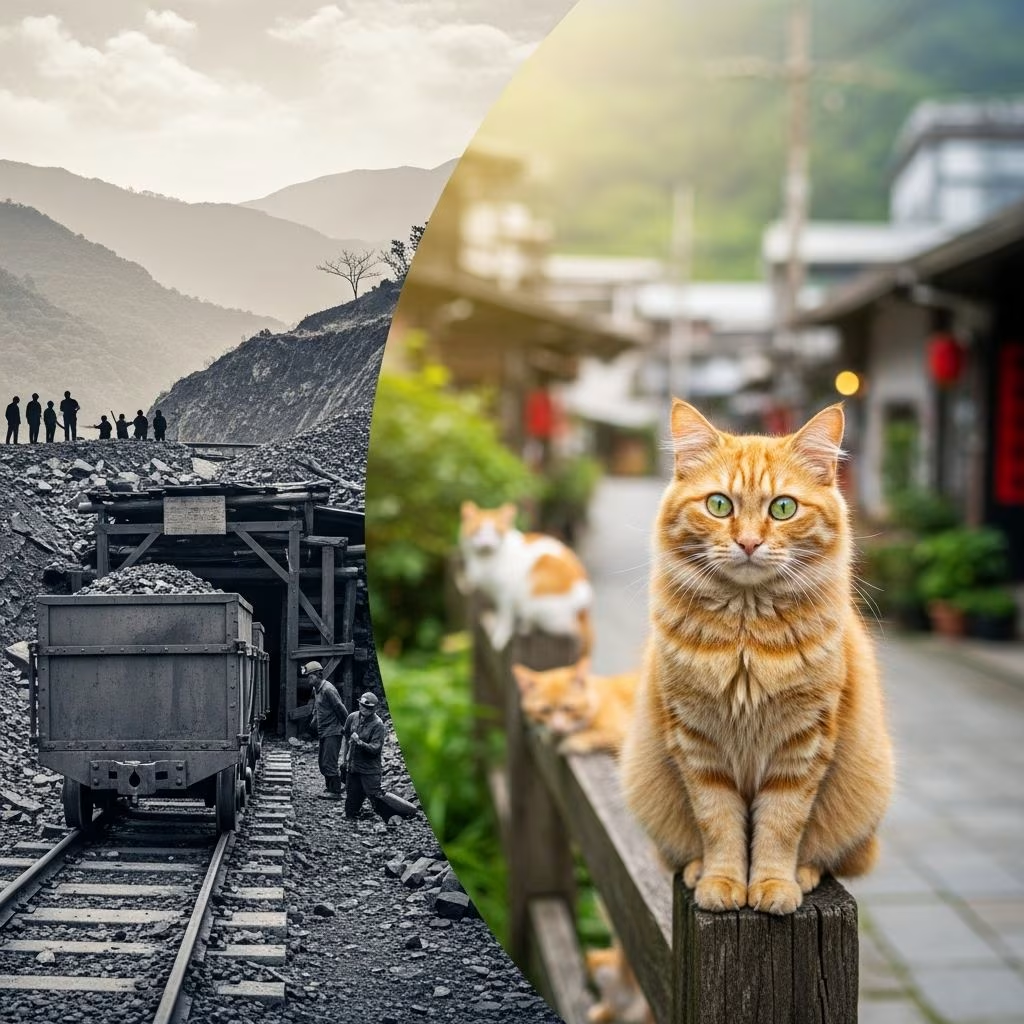
Explore Houtong Cat Village, Taiwan's unique transformation from a thriving coal mining hub to a charming cat-filled destination attracting visitors worldwide.
 Travel Essentials
Nestled in the mountainous regions of New Taipei City, Houtong represents one of the most unexpected yet heartwarming transformations in modern tourism. What was once a thriving industrial center has reinvented itself as a destination where visitors from around the world come to interact with hundreds of friendly felines in a picturesque riverside setting. This remarkable journey from economic decline to cultural resurgence tells a story of community resilience, local innovation, and the unexpected power of cats to revitalize forgotten places.
The name “Houtong” carries significant historical weight, translating to “monkey cave” in English, a reference to the area’s natural landscape features dating back centuries. However, it was the discovery of coal deposits that would fundamentally transform this quiet mountain valley into one of Taiwan’s most economically vital regions during the twentieth century. The geological richness of the area attracted thousands of workers and their families, creating a bustling community that thrived on the extraction and processing of coal.
At its zenith, Houtong was home to more than 6,000 residents who worked in the mines and supported industries directly connected to coal extraction. The town earned the nickname “black gold” territory, reflecting both the valuable resource being extracted and the prosperity it generated. Mining operations created a complex infrastructure of tunnels, processing facilities, transportation networks, and worker housing that transformed the landscape entirely. The economic boom brought schools, shops, restaurants, and entertainment venues, establishing Houtong as a thriving urban center despite its remote mountain location.
The physical evidence of this industrial heritage remains visible today throughout the village. Mining equipment, coal transportation infrastructure, and preserved residential quarters serve as tangible reminders of the town’s former importance in Taiwan’s energy sector. These industrial relics provide historical context that enriches the visitor experience and connects present-day tourism to the area’s authentic past.
Beginning in the 1990s, Taiwan’s coal mining industry experienced a fundamental shift driven by evolving energy policies, improved efficiency reducing labor needs, and the global transition toward alternative energy sources. As mining operations ceased or significantly reduced their workforce, Houtong’s population declined dramatically, leaving behind empty storefronts, abandoned buildings, and a community facing economic uncertainty. The departure of thousands of workers and their families left the once-vibrant town with only a few hundred residents, many of them elderly or unable to relocate due to ties to the community.
The challenge facing Houtong’s remaining residents was profound: how could a town built entirely around a single industry find economic viability once that industry disappeared? Traditional tourism attractions held limited appeal—the mines themselves were not operational, and the location, while scenic, lacked the developed infrastructure or major attractions that typically draw visitors. The town faced the prospect of becoming a forgotten footnote in Taiwan’s industrial history.
The turning point in Houtong’s story arrived unexpectedly in 2008 when a local resident and passionate cat enthusiast began a grassroots initiative to encourage neighbors and community members to care for the stray cat population that had grown throughout the village. This individual’s vision was straightforward but transformative: by creating a welcoming environment for cats and promoting Houtong as a cat-friendly destination, the town could attract visitors and generate economic activity through an entirely new tourism model.
What began as a personal passion project quickly gained momentum as local residents embraced the concept. Volunteer groups organized to care for the cats, build shelters and feeding stations, and establish basic veterinary care. Shop owners and café operators began incorporating feline themes into their businesses, creating a cohesive brand identity around cats. The grassroots nature of this movement meant that the initiative genuinely reflected community values rather than external development schemes, giving it authenticity that resonated with visitors.
The timing of this cultural shift proved fortuitous. As global interest in experiential travel and unique cultural destinations grew, Houtong’s cat village concept generated significant media attention. Social media platforms amplified the story, with travelers sharing images and experiences from the village, creating organic marketing that no traditional tourism board could have engineered. Within a few years, Houtong transformed from a declining industrial town into a must-visit destination on Taiwan’s tourism map.
Today, Houtong is home to hundreds of cats that represent a mix of origins and living situations. Some are domesticated pets belonging to local residents, identifiable by collars and regular feeding routines. Others are semi-wild strays that have become accustomed to human interaction and regular feeding provided by locals and volunteers. The cats have adapted remarkably well to their role as unofficial ambassadors of the village, tolerating human interaction while maintaining sufficient independence to roam freely throughout the community.
The village has developed informal systems for managing this large feline population. Locals maintain feeding stations at strategic locations throughout Houtong, ensuring that even the most independent cats receive regular nutrition. Volunteer groups coordinate care responsibilities, monitor health issues, and work to trap and sterilize animals to prevent population explosions. This managed approach reflects genuine concern for animal welfare while acknowledging the practical realities of maintaining hundreds of cats in an open environment.
Visitors observing the cats quickly notice that the animals appear healthy, well-fed, and accustomed to human presence. The cats typically display curiosity rather than fear, often approaching visitors for attention or food. This behavioral pattern represents years of careful socialization and habituation, allowing tourists to experience close interactions with felines in what feels like an authentic village setting rather than a contrived attraction.
Houtong’s geography centers around the Houtong station, the terminus of the Pingxi Railway Line, making arrival straightforward for travelers coming from Taipei. The station itself has been transformed into a feline-themed attraction, with cat decorations, figurines wearing station master hats, scratching posts, and comfortable rest areas adorning the platform and surrounding areas. First-time visitors often find themselves immediately immersed in cat culture simply by stepping onto the platform.
From the station, visitors access the main village by crossing a dedicated pedestrian footbridge that spans the railway tracks. This bridge marks the transition from transportation hub to tourist destination, and locals have ensured that even this passage features cat-themed elements. Directional signs guide visitors toward the primary attraction area known as the Cat Corridor, the heart of the feline-themed commercial district.
The Cat Corridor comprises a concentrated area of shops, cafés, and feeding stations where the highest concentration of cats congregates. This zone has remained more developed than other parts of the village, with multiple businesses maintaining cat-themed operations despite economic challenges faced by the broader tourism sector in recent years. The corridor provides numerous opportunities for visitor interaction with cats, photo opportunities, and themed merchandise purchases.
The café culture in Houtong has evolved specifically to cater to visitors interested in dining while surrounded by cats. Multiple establishments throughout the village offer food and beverage services with feline-themed presentations and ambiance. These cafés serve practical functions as gathering spaces where visitors can rest between exploring the village while observing cats in their natural habitat.
Cat-themed beverages have become particularly popular, with foam art depicting cats adorning coffee drinks and specialty beverages. While these offerings may appear gimmicky to outsiders, they represent local business owners’ creative attempts to enhance the visitor experience and generate revenue for their establishments. The quality and authenticity of food and service varies between establishments, with some cafés maintaining genuine commitment to hospitality while others operate with minimal effort.
Despite the village’s transformation into a cat destination, Houtong has wisely preserved and presented its mining history to provide visitors with comprehensive understanding of the community’s evolution. The Houtong Coalmine Ecological Park maintains preserved mining equipment, transportation infrastructure, and restored buildings from the industrial era. Museums within the park document the lives of miners through artifacts, photographs, and historical narratives that humanize the industrial narrative beyond simple resource extraction.
One particularly immersive experience involves riding through preserved coal tunnels via restored mining trolleys, allowing visitors to physically experience the working conditions faced by miners during the industry’s heyday. This hands-on engagement with mining heritage provides meaningful context for understanding Houtong’s transformation from industrial powerhouse to cultural attraction. The juxtaposition of mining facilities alongside cat-themed attractions creates an unusual but compelling tourism narrative that appeals to diverse visitor interests.
Houtong’s connection to the Pingxi Railway Line makes it exceptionally accessible for visitors based in Taipei or surrounding areas. The Pingxi Line operates as a heritage railway featuring both modern and vintage trains, with Houtong serving as a primary station. Direct train connections from Taipei Main Station provide convenient access without requiring multiple transfers or complicated itineraries. Travel time from downtown Taipei typically requires approximately one hour, making Houtong suitable for half-day or full-day excursions.
The village also connects naturally to other nearby attractions, including Jiufen Old Street, Shifen Old Street, and Shifen Waterfall, allowing visitors to construct comprehensive day-trip itineraries combining multiple destinations along the Pingxi Line corridor. This interconnectivity has positioned Houtong within a larger tourism ecosystem rather than as an isolated destination, increasing its appeal to travelers seeking varied experiences.
A dedicated visit to Houtong typically requires two to four hours depending on visitor interests and pace. Those primarily interested in cat interaction and photographing felines can accomplish meaningful exploration in approximately two hours. Visitors interested in combining cat village experiences with coal mining heritage exploration benefit from allocating four or more hours to adequately experience both dimensions of the destination.
Recommended itineraries often sequence Houtong as either the first or final stop on Pingxi Line journeys, with visitors spending time in the cat village before or after exploring neighboring attractions. This flexibility allows visitors to structure visits according to personal preferences and energy levels.
Visitors to Houtong should approach their visit with realistic expectations shaped by understanding the destination’s genuine nature and recent history. The cat village represents an authentic community adaptation to economic change rather than a professionally developed theme park or attraction. This authenticity creates genuine charm and emotional resonance but also means that visitor experiences may feel less polished or organized than commercially developed destinations.
The intensity of cat interactions varies throughout the village and by time of day. Peak tourism periods bring crowds that can overwhelm some areas, while visiting during quieter times provides more peaceful exploration and genuine cat interaction opportunities. Weather conditions significantly impact the experience—pleasant weather encourages more cats to be active and visible, while poor weather reduces the visibility of the cat population and diminishes the overall ambiance.
Recent years have witnessed some economic contraction in the commercial sector, with certain shops and cafés operating with reduced hours or becoming temporarily shuttered. This fluctuation reflects the broader challenges of sustaining tourism-dependent economies, particularly following periods of significant travel disruption. However, core attractions including the station plaza, Cat Corridor, and primary cafés remain operational, ensuring that visitors can experience the essential elements that define the Houtong cat village concept.
As visitors engage with Houtong, consideration should be given to supporting the community’s sustainable development. Patronizing local businesses, purchasing from established shops and cafés, and respecting the cats’ boundaries all contribute to creating a tourism model that genuinely benefits the community. The cats themselves deserve ethical treatment—visitors should avoid aggressive petting, forced interactions, or feeding animals unauthorized foods that could compromise their health.
The success of Houtong’s transformation demonstrates that creative community-led initiatives can generate meaningful economic renewal without requiring massive external investment or development interventions. Supporting this model through thoughtful visitation helps validate the approach and encourage similar initiatives in other declining communities.
While cats represent Houtong’s primary draw, the village offers layered appeal for visitors with varying interests. History enthusiasts appreciate the mining heritage and industrial archaeology represented throughout the community. Photography enthusiasts find compelling subjects in the contrast between natural landscapes, industrial relics, and feline subjects. Nature lovers enjoy the riverside setting and mountain scenery. This multidimensional appeal positions Houtong as more than a one-note attraction dependent entirely on novelty.
The village’s evolution from industrial hub to cultural destination reflects broader global trends regarding sustainable tourism, community resilience, and creative economic adaptation. Houtong has managed its transformation without wholesale destruction of authentic character or replacement of genuine community with commercialized simulation. This balanced approach offers lessons for other communities facing similar economic transitions and seeking sustainable development paths.
