

 Travel Essentials
 Travel Essentials

Discover how a lavender-scented teddy bear gifted to China's leader transformed a small Tasmanian farm into a thriving international business and strengthened cultural ties between nations.
 Travel Essentials
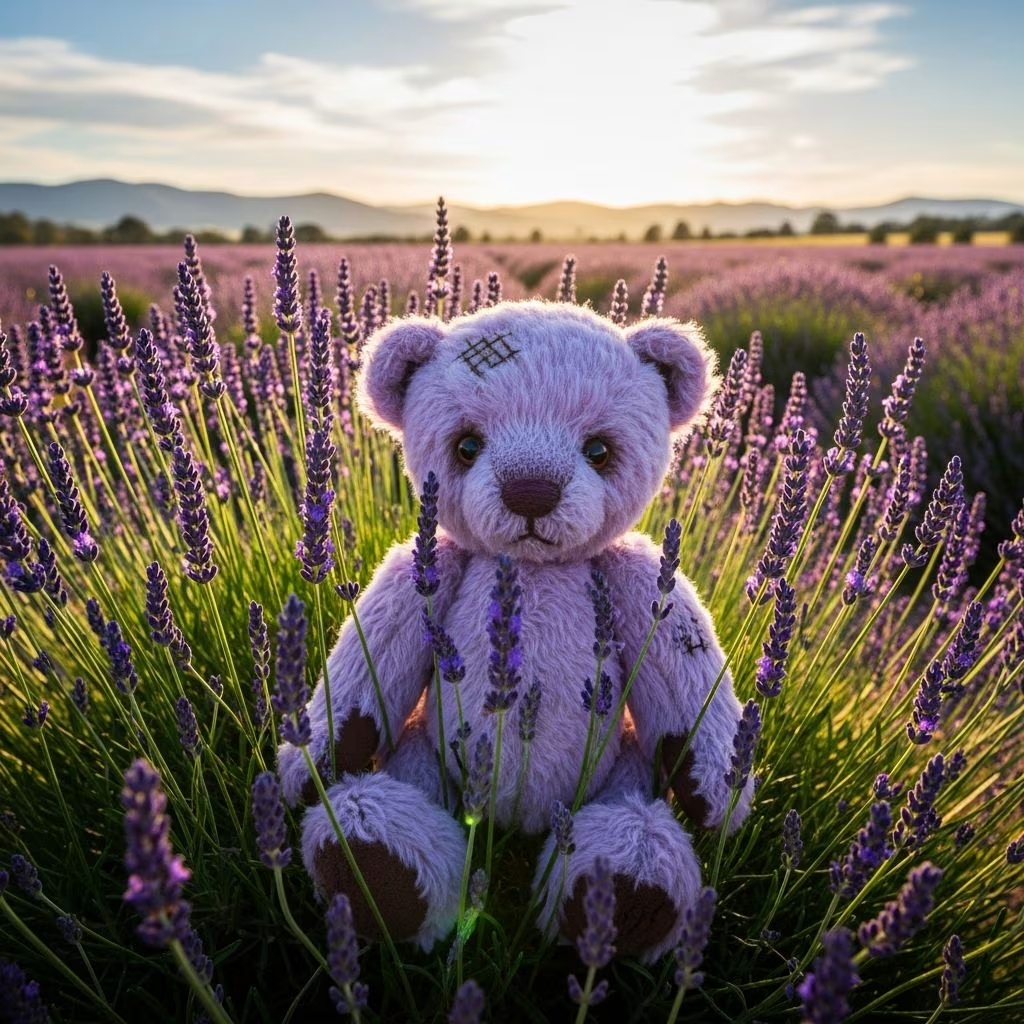
When dignitaries arrive in foreign nations, ceremonial protocols typically dictate the exchange of formal gifts and carefully orchestrated welcomes. However, not all memorable diplomatic moments follow tradition. In November 2014, when Chinese President Xi Jinping touched down at Hobart International Airport in Tasmania, Australia, he received something far more charming than the usual state gifts: a purple, lavender-scented teddy bear named Bobbie.
This seemingly simple gesture—a local children’s presentation of a plush toy filled with lavender and wheat—would become far more significant than anyone anticipated. What began as a thoughtful regional welcome evolved into one of the most successful cross-cultural business stories of the decade, demonstrating how authentic cultural products can transcend borders when combined with the right circumstances and genuine appeal.
Tasmania, Australia’s smallest state, has long been known for its natural beauty, pristine wilderness, and distinctive agricultural products. Among these regional specialties, lavender cultivation represents a significant part of the local economy, with numerous farms scattered throughout the northeastern regions of the island state. The lavender bear was not created specifically for the presidential visit, but rather emerged as a creative product from an existing Tasmanian lavender operation.
Robert Ravens, owner of a lavender farm in Tasmania’s northeast, conceived and developed Bobbie as a unique merchandise offering that combined two quintessentially Tasmanian elements: the region’s famous lavender cultivation and a charming handcrafted quality that reflected local craftsmanship. By filling the bear with both lavender and wheat, the product offered both aesthetic appeal and functional aromatherapy benefits, making it more than merely a decorative item.
The decision to present this bear to President Xi during his visit represented more than promotional thinking—it showcased genuine Tasmanian identity and regional pride. Local children participated in the presentation, emphasizing the connection between the gift and Tasmania’s community.
Diplomatic visits carry significant symbolic weight. When state representatives select gifts, those selections often reflect carefully considered messages about the visiting nation’s values, culture, and priorities. The presentation of Bobbie to President Xi and his wife, Peng Liyuan, served multiple purposes beyond the simple exchange of souvenirs.
The gift represented Tasmania’s commitment to showcasing its unique agricultural heritage and manufacturing capabilities. More importantly, it symbolized the region’s desire to strengthen relationships with China, one of the world’s most significant economic powers and a crucial trading partner for Australian enterprises.
Xi’s acceptance of the bear and his subsequent acknowledgment of its significance created an unexpected endorsement for the product. When leaders of major nations accept and appreciate gifts, those items gain prominence and cultural cachet within their home nations—an effect that would prove transformative for Bobbie.
What transpired following the presidential visit defied conventional commercial expectations. Rather than remaining a quirky diplomatic anecdote, Bobbie captured the imagination and purchasing power of Chinese consumers. The bear’s presence in media coverage of Xi’s Tasmania visit generated enormous public interest within China, creating a surge in demand that rapidly exceeded initial supply capabilities.
The phenomenon reflected several converging factors. First, the bear’s association with the Chinese president provided considerable prestige and cultural significance—what marketing professionals call the “halo effect.” Second, the product’s inherent quality and aesthetic appeal resonated with consumers seeking authentic, distinctive souvenirs representing international connections.
Third, the lavender-infused design appealed to Chinese consumers’ growing appreciation for aromatherapy products and wellness items, aligning with broader wellness trends gaining traction throughout Asia. The bear transformed from a regional novelty into a desirable international product almost overnight.
Supply chains that had produced modest quantities suddenly found themselves struggling to meet exponential demand. Chinese retailers, recognizing consumer enthusiasm, began actively seeking supply agreements. Manufacturers expanded operations to keep pace with orders. What began as a small-scale production operation became an urgent commercial enterprise.
The commercial success of Bobbie did not go unnoticed by business organizations and government trade bodies. Recognizing the entrepreneurial achievement represented by transforming a regional product into an internationally successful venture, Robert Ravens received the inaugural Australia-China Business Award for Entrepreneurship.
This recognition acknowledged not merely commercial success, but the broader significance of Ravens’ achievement in demonstrating how Australian businesses could effectively penetrate Chinese markets through authentic products that resonated with consumer values. The award validated the business model and encouraged other regional entrepreneurs to consider similar international expansion strategies.
The award-winning status further elevated Bobbie’s market position, creating additional credibility and promotional value. Media coverage of the award introduced new audiences to the product and its origin story, continuing to fuel consumer interest and demand.
Following its initial breakthrough in mainland China, Bobbie’s market presence expanded throughout Asia and eventually to international retailers seeking distinctive Australian products. The bear became a symbol of successful regional branding, demonstrating how geographic authenticity could translate into competitive advantage in global markets.
The lavender farm operation expanded its facilities and workforce to accommodate increased production demands. Tourism to the northeastern Tasmanian region increased as consumers and business representatives sought to visit the source of the famous bear. The product catalyzed broader economic benefits for the local community beyond the direct revenue generated by Bobbie sales.
Other Tasmanian producers began developing their own distinctive products for export markets, inspired by Bobbie’s success. The bear essentially opened new commercial pathways for regional businesses by demonstrating viable international market opportunities.
Analyzing Bobbie’s phenomenal success reveals several critical success factors that entrepreneurs and regional development professionals can learn from:
Tasmania’s lavender bear phenomenon offers valuable insights for regional economies seeking to develop international markets. The success demonstrates that geographic remoteness need not limit commercial opportunity when products combine authenticity, quality, and strategic positioning.
Regional governments and business development organizations studied Bobbie’s trajectory to understand how diplomatic engagement could catalyze commercial opportunity. The case became a standard reference in business schools and international trade discussions, illustrating the intersection of diplomacy, commerce, and entrepreneurship.
The bear’s success encouraged other Australian regional products to pursue international markets with greater confidence, supported by infrastructure and insights generated through Bobbie’s pioneering path.
Beyond commercial considerations, Bobbie carried significance for Australia-China relations more broadly. The bear represented a tangible expression of regional goodwill and cultural exchange, embodying President Xi’s statements about building friendship between young people and future generations.
When Xi spoke to Tasmanian children about planting seeds of friendship between China and Australia, the lavender bear became a physical manifestation of that metaphorical language. As consumers throughout China purchased and displayed Bobbie in their homes, the bear served as a quiet ambassador for Australian-Chinese cultural connection.
The gift exchange demonstrated how seemingly small diplomatic gestures could generate substantial positive outcomes for regional relationships and cross-cultural understanding.
