

 Travel Essentials
 Travel Essentials

Learn how government shutdowns disrupt flights with TSA delays and ATC strains. Get tips on early arrivals, flexibility, and safety assurances to travel smarter.
 Travel Essentials
Government shutdowns in the United States create unique challenges for air travelers, primarily through disruptions in federal services critical to aviation. While flights continue to operate, delays at security checkpoints and potential air traffic bottlenecks arise from unpaid essential workers continuing their duties. This guide outlines the key impacts, safety considerations, and practical strategies to ensure smoother journeys during such periods.
During a government shutdown, agencies like the Transportation Security Administration (TSA) and Federal Aviation Administration (FAA) classify most employees as essential, requiring them to work without pay until funding resumes. Air travel persists, but efficiency suffers as the shutdown prolongs. In the initial days, operations resemble normal conditions, but extended periods—beyond one week—lead to noticeable strains.
TSA screeners and air traffic controllers report for duty, maintaining core safety protocols. However, absenteeism rises due to financial pressures; during the 2018-2019 shutdown lasting 34 days, about 10% of TSA workers called in sick, causing screening lines to balloon at major hubs. Air traffic control faces similar risks, with controllers potentially reducing flight volumes at busy airports to manage workloads safely.
Air travel safety does not compromise during shutdowns. The U.S. commercial aviation system upholds rigorous standards, with procedures intact even under stress. Over the past 15 years, U.S. airline fatalities have been minimal—fewer than 70 deaths—far safer than road travel statistically. Disruptions affect service speed, not security integrity.
Federal air marshals, safety inspectors, and other personnel continue operations, ensuring planes remain secure. Any slowdowns, such as wider spacing between aircraft on runways, prioritize caution without elevating risks. Travelers can fly confidently, focusing instead on patience amid inefficiencies.
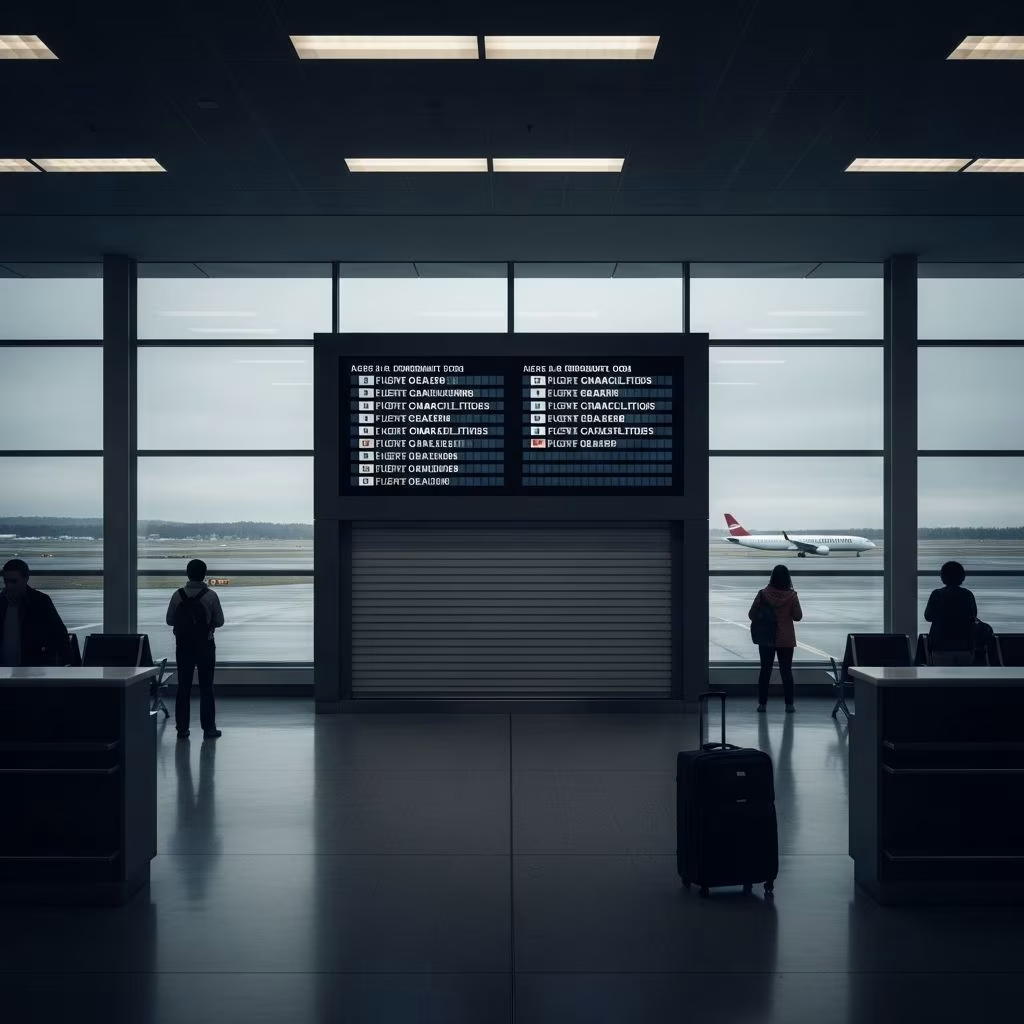
The most visible impact hits TSA checkpoints. Fewer open lanes mean longer waits, especially at high-traffic airports like Atlanta, Houston, and Chicago O’Hare. Videos from past shutdowns show lines stretching hours, exacerbated by low-season travel dips that ironically heighten per-passenger delays.
Plan for double or triple standard wait times—arrive 4-6 hours early at affected hubs.
Less obvious are FAA-related delays. Approximately 13,000 controllers must work unpaid, managing takeoffs and landings. Under duress, they enforce conservative spacing: inbound flights might land every 90 seconds instead of 60, or outbound planes hold short of runways. This self-protective measure prevents overload but cascades into widespread delays and occasional cancellations.
Busy airports throttle volumes to match capacity, potentially canceling flights during peaks. Travelers should monitor real-time tools like FlightAware for inbound traffic patterns signaling slowdowns.
Proactive planning mitigates most headaches. Key steps include:
| Airport Type | Recommended Arrival | Potential Wait |
|---|---|---|
| Small/Regional | 2-3 hours early | 20-45 min |
| Major Hub (e.g., ATL, IAH) | 4-6 hours early | 1-3+ hours |
| International | 5+ hours early | Variable, high |
This table summarizes tailored arrival recommendations based on past shutdown patterns.
Airlines invoke flexibility rules like the “flat tire policy,” rebooking passengers on the next available flight for controllable delays. However, capacity constraints—especially on budget airlines—limit options, so have backups ready. Expect back pay for federal workers post-shutdown, stabilizing operations eventually.
Other travel modes fare better: Amtrak faces minimal disruption, and passport services continue as essential.
Shutdowns cost the economy roughly $1 billion weekly in lost travel revenue, hitting airlines, hotels, and local businesses. The U.S. Travel Association highlights passenger inconvenience compounding these losses. Prolonged impasses amplify effects, underscoring the need for congressional funding resolutions.
Cancellations rise with prolonged shutdowns due to staffing, but most flights operate. Monitor airline apps.
Yes, essential employees receive back pay upon funding restoration.
Not necessary; with preparation, flying remains viable and safe.
Domestic legs face most issues, but customs/immigration could slow if related services strain.
Airlines typically accommodate via the flat tire rule, subject to seats.
Historical events, like the 2018-2019 impasse, reveal patterns: early normalcy gives way to escalating delays. October travel, often slower, softens blows, but holidays amplify risks. Travelers armed with information—arriving early, staying flexible—navigate successfully. As shutdowns recur amid budget battles, these tactics endure.
Stay informed via official channels: TSA’s website for checkpoint stats, FAA for traffic updates. Patience proves the ultimate asset, transforming potential ordeals into manageable trips.
