

 Travel Essentials
 Travel Essentials

Federal shutdowns trigger flight delays, park closures, and billions in losses. Learn impacts on airlines, TSA, visitors, and tips for resilient travel plans.
 Travel Essentials
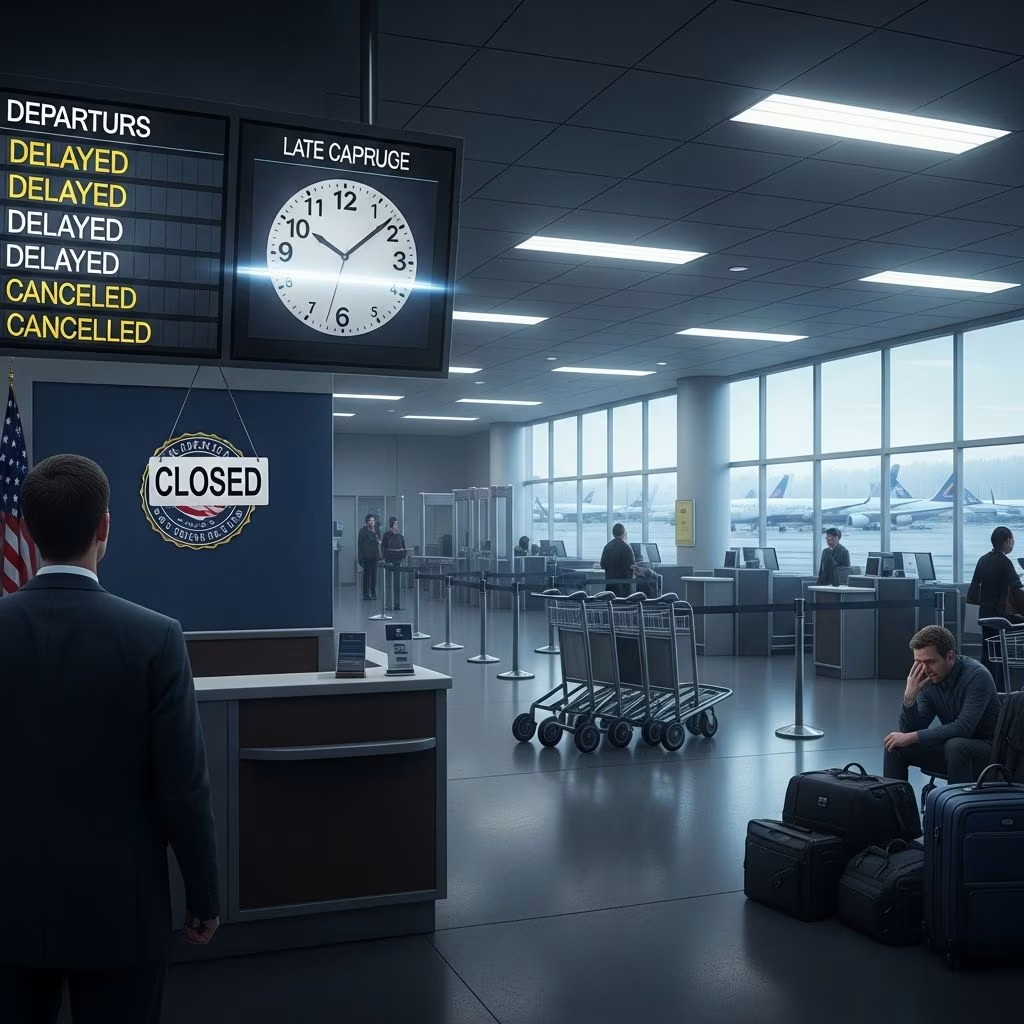
Federal government shutdowns in the United States create widespread chaos for travelers, disrupting air traffic, closing public sites, and inflicting billions in economic damage. These events stem from congressional funding disputes, halting non-essential operations and furloughing workers, with ripple effects felt across aviation, tourism, and local economies.
When Congress fails to pass funding bills, non-essential federal services grind to a halt, affecting agencies like the TSA, FAA, National Park Service, and passport offices. Essential personnel, such as air traffic controllers, continue working without pay, leading to fatigue and absenteeism that cascades into operational breakdowns.
Historical data reveals the scale: a 43-day shutdown caused $6.1 billion in losses to travel sectors, averaging 88,000 fewer daily trips nationwide. This suppression arises from uncertainty, as travelers cancel plans amid fears of delays and closures.
Air travel bears the brunt, with TSA screeners and air traffic controllers unpaid, spiking absenteeism. During the 2018-2019 shutdown, TSA unscheduled absences hit 10%, up from 3%, causing long lines and delays at major hubs like Chicago, Atlanta, and Newark.
Air traffic control faces acute strain. Low staffing led to unstaffed towers, such as a six-hour gap at Hollywood Burbank Airport, forcing pilots to self-coordinate. Airlines reported minimal early cancellations (11 flights Oct 1-29), but numbers exploded to 4,162 from Oct 30-Nov 9, with 3,756 on Nov 7-9 alone due to FAA-mandated reductions at 40 airports.
| Shutdown Phase | Flight Cancellations | Key Cause |
|---|---|---|
| Oct 1-29 | 11 flights | Initial staffing |
| Oct 30-Nov 9 | 4,162 flights | Controller shortages |
| Nov 7-9 peak | 3,756 flights | FAA reductions |
Projections worsened: a 10% FAA flight cut was estimated to cost $285-580 million daily, factoring indirect losses like reduced spending and taxes, excluding passenger time or refunds. Delays extended tarmac times, crew timeouts disrupted connections, and unpredictable staffing eroded planning reliability—unlike weather events carriers can anticipate.
Safety remains intact, prioritizing efficiency over peril, though service plummets in prolonged scenarios. Holiday peaks amplify risks, as seen in 2018-2019 when disruptions pressured resolution.
Iconic destinations like Yellowstone, Yosemite, and the Grand Canyon shutter gates, barring 330 million annual visitors. Rangers go unpaid or furloughed, halting maintenance, patrols, and education programs. Local gateways lose millions; a single extended closure cost communities $250 million in visitor spending.
International travelers face added hurdles with closed welcome centers and limited info, while U.S. outbound trips dip due to domestic uncertainty.
State Department offices processing ESTA, visas, and passports halt, stranding applicants. Wait times balloon from weeks to months, derailing business trips and family reunions. Customs and Border Protection deploys minimally, but inspections slow at ports, exacerbating backlogs.
During past shutdowns, over 30,000 visa interviews were postponed weekly, with global consulates overwhelmed upon resumption. Travelers should apply early and monitor status via contingency portals if available.
Travel supports 15 million U.S. jobs; shutdowns amplify losses through supply chain halts and demand drops. Airlines incur rebooking costs, hotels face no-shows, and small businesses in tourism hubs teeter. A Partnership for Public Service survey highlighted community effects after three weeks: disrupted benefits, furloughed workers’ reduced spending.
Indirect costs compound: state taxes fall, visitor economies idle, and recovery lags months post-resolution due to backlogs.
Proactive steps mitigate chaos:
Airlines like A4A members prioritize reaccommodation, but expect fees waived in crises.
From 1995-1996 (21 days) to 2018-2019 (35 days), patterns emerge: early normalcy yields to week-two strains, peaking in holidays. The longest inflicted $11 billion total losses, underscoring urgency for bipartisan funding.
Controllers moonlighting worsened shortages, mirroring current risks. Aviation experts note October lulls mask brewing storms, but extensions spell havoc.
Will flights still operate? Yes, but delays and cancellations rise after week one due to staffing.
Are national parks open? No, most close; check NPS.gov for exceptions like fee-covered sites.
What about my passport application? Processing stops; renew pre-shutdown.
Is TSA safe during shutdowns? Security holds, but lines lengthen with sickouts.
Can I get refunds for canceled plans? Airlines often waive; insurance helps for parks/hotels.
How long do effects linger? Weeks to months for backlogs and economic recovery.
Industry leaders advocate funded continuity for essential travel ops, recognizing aviation’s GDP role. Bipartisan bills like shutdown prevention acts gain traction post-crises, emphasizing furlough pay and contingency staffing.
Travelers urge voting for fiscal responsibility; meanwhile, diversified plans ensure resilience.
