

 Travel Essentials
 Travel Essentials

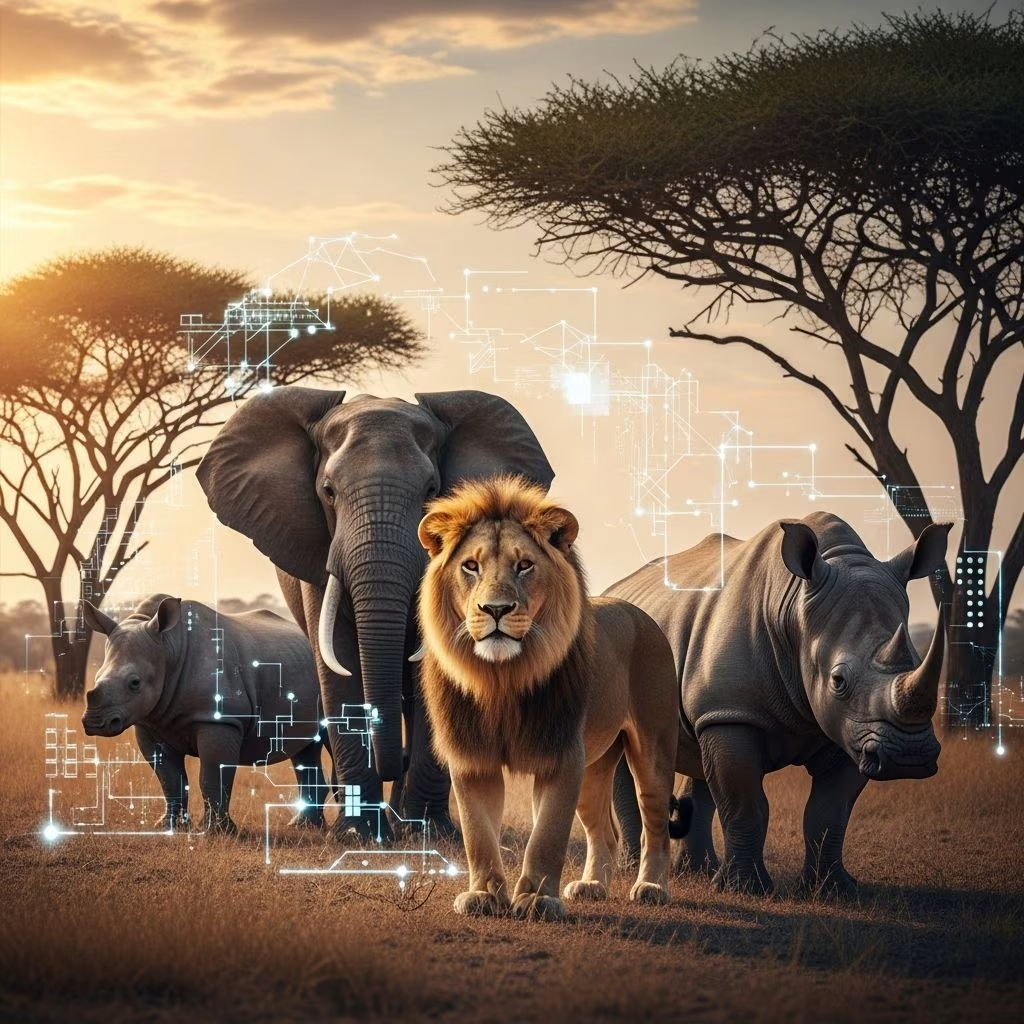
AI is helping conservationists track species, detect poachers, and predict threats faster, improving protection for endangered wildlife.
 Travel Essentials
Artificial intelligence is emerging as a powerful ally in the fight to preserve biodiversity, processing massive datasets from cameras, drones, and sensors to deliver actionable insights for conservationists. This technology accelerates monitoring, predicts threats, and enhances protection strategies, addressing the urgent crisis where over 1 million species face extinction.
AI-powered computer vision analyzes images and videos from trail cameras, identifying animals with unprecedented speed and accuracy. In vast protected areas, where manual review of thousands of photos is impractical, these systems categorize species, count populations, and even recognize individuals, providing ecologists with detailed behavioral data.
For instance, platforms like Wild Me use neural networks to handle diverse species simultaneously, scaling from single animals to entire ecosystems as data volumes grow.
Poaching remains a leading threat to endangered species, but AI-driven camera networks detect intruders instantly. Deployed in over 3,000 locations worldwide, these systems process 65,000 images daily, flagging humans, vehicles, or weapons to enable rapid ranger response.
| AI Tool | Deployment | Key Features | Coverage |
|---|---|---|---|
| EarthRanger | 76 countries, 650 areas | Real-time alerts, poacher detection, animal health monitoring | Africa, US, Latin America, Asia |
| RhinoWatches | 40+ South African reserves | Behavior anomaly detection for rhinos | 1.2M acres, expanding to Kenya/Namibia |
| Wildlife Protection Solutions | 50+ countries | Camera-based poacher monitoring | 250+ projects globally |
These tools integrate with software like EarthRanger, which uses machine learning to predict elephant movements near human settlements, preventing crop raids and retaliatory killings.
Beyond visuals, AI deciphers animal vocalizations from remote microphones. In Yellowstone, systems identify wolf pack acoustics—including howls, growls, and even gunshots—for immediate intervention. Similarly, underwater recordings reveal humpback whale songs, aiding marine population assessments.
Drone footage analyzed by AI surveys inaccessible terrains, detecting invasive species incursions or habitat changes in real time.
AI excels at forecasting ecological risks by integrating variables like climate data, human activity, and vegetation. Models predict deforestation hotspots, guiding patrols in regions like Borneo, or suitable translocation sites based on prey availability and disturbances.
In fisheries, AI monitors trout populations via underwater cameras, informing habitat decisions.
Several organizations lead AI adoption:
MIT researchers explore AI for translating animal communications, potentially unlocking new protection avenues.
Despite promise, AI poses risks. Generative models can fabricate false wildlife data, misleading conservation efforts. The Mammal Society stresses validating AI outputs to avoid inaccuracies in monitoring or predictions.
High data needs require ethical sourcing, and over-reliance may overlook ground truths. Balanced integration with human expertise is essential.
Advancements promise individual animal tracking across species, like boreal birds, yielding comprehensive ecological profiles. Multi-species learning on vast datasets will refine models, enhancing biodiversity strategies.
Global collaborations, powered by accelerated computing, are expanding AI to more regions, sustaining ecosystems amid climate pressures.
AI processes vast data volumes rapidly, enabling real-time monitoring and threat prediction unattainable manually.
Camera networks use computer vision to identify humans or vehicles, sending instant alerts to rangers.
Yes, advanced models recognize unique patterns in stripes, spots, or calls for precise tracking.
Risks include data inaccuracies and fabricated content; rigorous validation is crucial.
Endangered ones like rhinos, elephants, tigers, whales, and wolves see major gains.
