

 Travel Essentials
 Travel Essentials

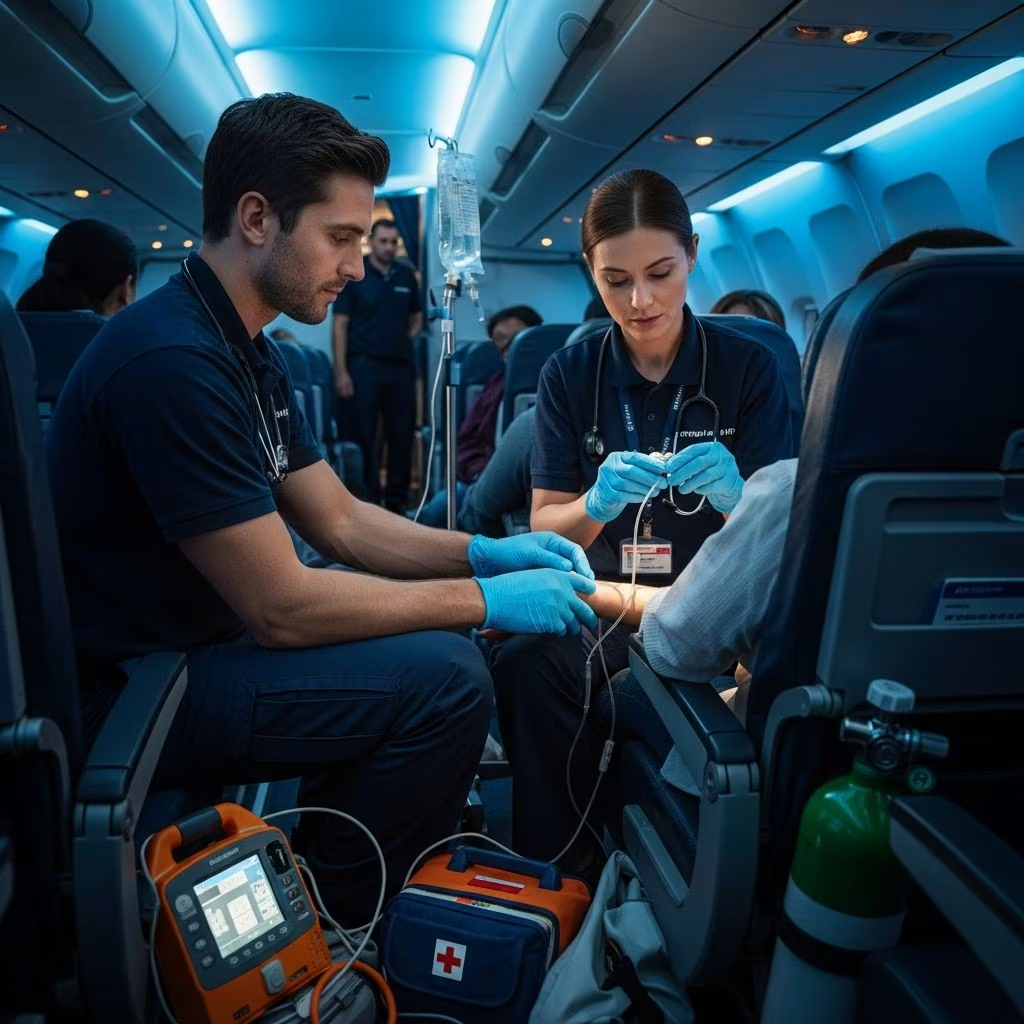
From flight attendants to volunteer doctors, discover how airlines handle in-flight medical emergencies and save lives at 30,000 feet.
 Travel Essentials
Commercial aviation encounters medical emergencies far more often than many passengers realize. Studies indicate that roughly one in every 604 flights faces such an incident, underscoring the vital role of prepared crews and onboard volunteers in maintaining safety. This article delves into the protocols, training, and real-world heroics that transform potential crises into managed situations high above the ground.
At cruising altitudes, passengers can experience a range of health issues, from syncope and respiratory distress to cardiac events and severe allergic reactions. The confined cabin environment, cabin pressure changes, and prolonged immobility contribute to these occurrences. Research from aviation medicine experts highlights that these events demand swift, coordinated responses to prevent escalation.
Airlines have evolved robust systems to address this reality. Flight attendants, often the first responders, receive comprehensive training in basic life support, including CPR, defibrillator use, and oxygen administration. This foundational preparation allows them to stabilize patients until advanced help arrives.
Every major carrier invests heavily in crew education. For instance, Delta Airlines equips its staff with specialized medical response skills and operates a Volunteer Emergency Medical Service (VEMS) program. This initiative encourages licensed healthcare providers among passengers to step forward during crises, streamlining aid delivery.
Similarly, American Airlines mandates first-aid certification for attendants, emphasizing rapid assessment and communication with ground-based medical consultants. These professionals guide crews via satellite phone, advising on everything from medication administration to diversion decisions.
| Airline | Key Training Features | Volunteer Programs |
|---|---|---|
| Delta | Basic life support, AED use | VEMS for passenger doctors |
| American | First aid certification | Passenger volunteer integration |
| Lufthansa Group | Doctor on Board resources | Published aviation medicine guides |
Southwest Airlines, while not publicly detailing a formal medical response team, relies on universally trained crew members who handle incidents effectively through standard protocols. Their approach prioritizes passenger welfare alongside operational efficiency.
Among passengers, doctors, nurses, and paramedics often become impromptu heroes. Airlines actively seek these individuals during announcements, providing them access to medical kits equipped with essentials like epinephrine auto-injectors, nitroglycerin, and aspirin. A poignant example unfolded on a Southwest flight when a healthcare worker responded to a distress call, discovering a passenger in severe distress described as the ‘palest woman’ she had ever seen. Quick intervention stabilized the individual, highlighting the luck of having a skilled volunteer aboard.
These episodes demonstrate the value of self-identification. Programs like those from Lufthansa’s “Doctor on Board” initiative supply volunteers with lanyards and resources, boosting confidence and coordination. Healthcare workers report feeling empowered, knowing their expertise can bridge the gap until landing.
Not all in-flight medical interactions are emergencies; some stem from pre-existing conditions mistaken for contagions. A notable case involved a California nurse, Brianna Solari, who was asked to deplane a Southwest Airlines flight from Burbank to Sacramento due to her neurofibromatosis (NF). This genetic disorder causes visible skin tumors, which staff initially suspected might be chickenpox post-surgery.
Solari offered discharge papers and a surgeon’s note, but initial protocols required EMS clearance. After delays, she reboarded a later flight with compensatory vouchers. This incident sparked discussions on balancing caution with sensitivity, as airlines must prevent infectious disease spread while avoiding discrimination. NF, a non-contagious condition affecting nerve tissue, illustrates the need for better crew education on dermatological variances.
“We’re going to need you to get checked out by emergency medical services before we let you back on the plane.”— Gate agent to Brianna Solari
Aircraft carry FAA-mandated enhanced medical kits beyond basic first aid. These include anti-arrhythmics, bronchodilators, and even blood glucose monitors. Crews consult airline-contracted telemedicine services, where physicians assess via crew descriptions and vital signs relayed over radio.
Upon landing, airport medical teams stand ready. For severe cases, flights divert to equipped facilities, a decision weighing passenger safety against logistical costs. Data shows most incidents resolve without diversion, thanks to proactive measures.
Beyond reactive responses, Southwest supports medical travel through its Medical Flight Network. In the 2025-2026 grant cycle, the airline donated $5.1 million in transportation to 77 hospitals and organizations, facilitating patient access to care nationwide. This philanthropy complements onboard protocols, positioning Southwest as a holistic partner in health mobility.
While specifics on their in-flight teams remain undisclosed, Southwest’s crew training aligns with industry standards, ensuring reliable emergency handling. Stories of swift interventions affirm their effectiveness.
To minimize risks, travelers can adopt proactive habits:
Those with chronic issues should consider travel insurance covering medical evacuations.
Advancements like AI-driven vital monitoring and drone-delivered supplies loom on the horizon. Enhanced crew simulations using VR promise even sharper responses. Collaborative efforts between airlines and health authorities will refine protocols, reducing incidence rates further.
Approximately 1 in 604 flights experiences one, per medical studies.
Alert the crew discreetly and offer credentials for verification.
No, but many encourage volunteer passengers and provide telemedicine support.
Yes, with documentation; airlines may require checks to rule out infections.
Varies by airline; vouchers or rebooking are common, as in Southwest cases.
