 Stays
StaysStays
How Airplane Cabin Air Works: Pressurization, Filtration, and Safety
Explore the engineering behind airplane cabin air: from bleed air systems to HEPA filters ensuring fresh, clean air 20-30 times per hour.
 Stays
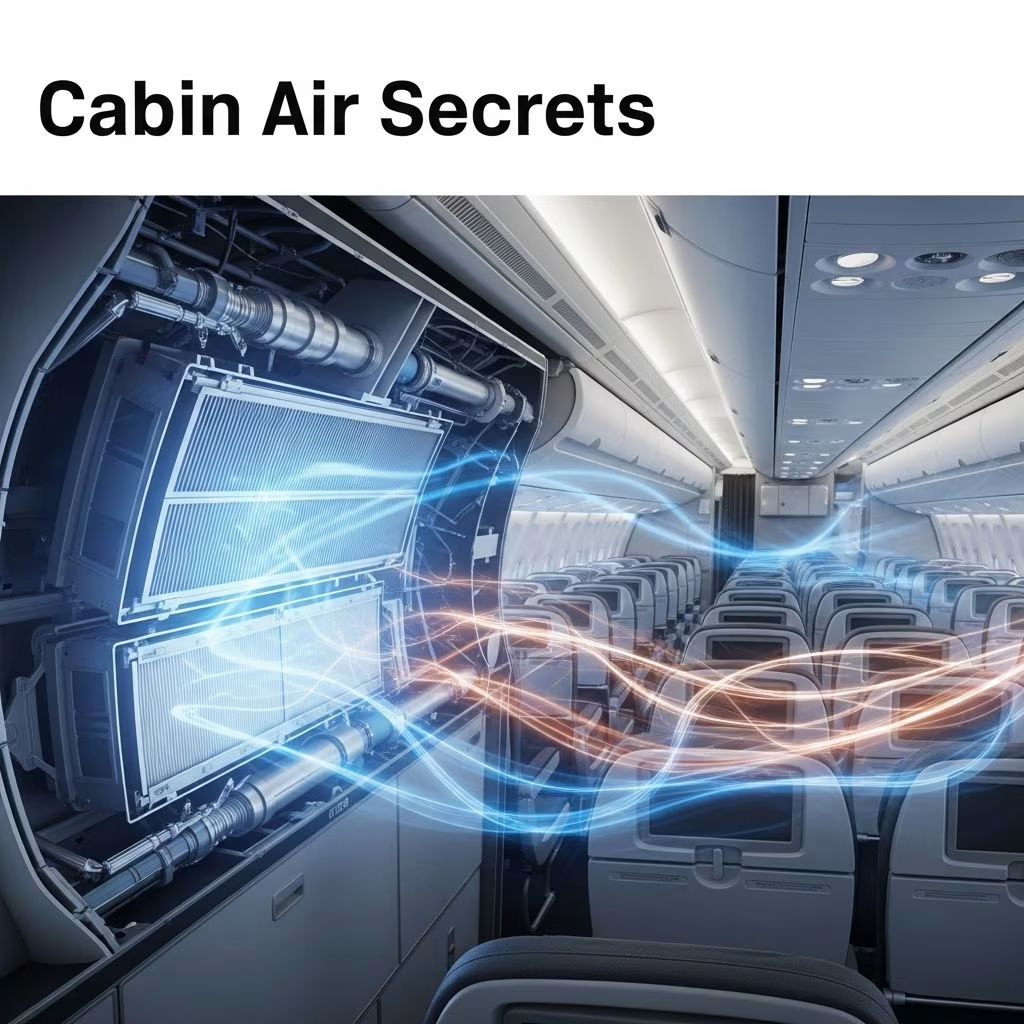
StaysModern aircraft maintain a breathable environment at cruising altitudes where outside air is too thin for human survival. Cabin air systems blend fresh external air with filtered recirculation, ensuring safety through pressurization and purification.
The Journey of Air from Engine to Cabin
Aircraft draw outside air into engines, where it compresses and heats to around 200°C before entering environmental control systems. This bleed air expands in packs, cooling to comfortable levels while mixing with recirculated cabin air for efficiency.
Systems prioritize redundancy: at least two engines supply air, backed by auxiliary power units on ground or emergencies. Distribution occurs via ducts, with outflow valves at the fuselage rear regulating pressure by venting excess air.
Maintaining Safe Pressure Levels
Cabins pressurize to mimic altitudes of 5,000-8,000 feet, not sea level, to minimize fuselage stress via controlled pressure differentials of 7.8-9.4 psi. Automatic controllers adjust outflow valves dynamically, preventing over-pressurization with backup manual options.
| Component | Function | Redundancy |
|---|---|---|
| Pressure Hull | Sealed fuselage containing pressurized air | Multiple safety valves |
| Bleed Air Compressor | Introduces high-pressure air from engines | Dual engines + APU |
| Outflow Valve | Regulates exit air for pressure balance | Automatic + manual control |
This setup ensures the cabin altitude stays low without exceeding structural limits.
Filtration: Keeping Pathogens at Bay
Cabin air combines 50% fresh bleed air—naturally sterilized by engine heat—with 50% recirculated air passing through HEPA filters, capturing 99.97% of particles like viruses and bacteria. These filters match hospital operating room standards.
- Fresh air systems: 100% outside air, renewed in under 2 minutes per volume.
- Partial recirculation: HEPA-filtered loop mixes with fresh air, full exchange in 4 minutes.
- Ionization options: Generate ions to neutralize germs electronically.
Overall, air refreshes 20-30 times hourly—far exceeding offices or malls.
Humidity, Temperature, and Comfort Control
Bleed air cools via expansion, then rewarms through heat exchangers in packs for precise cabin temperatures. Trim air warms cooler zones in large jets. Humidity remains low at 10-20%, prompting hydration advice, but filtration offsets dryness-related issues.
Debunking Common Cabin Air Myths
Myth: Cabin air is stagnant and dirty. Fact: 50/50 fresh-recirculated mix renews faster than most buildings, with HEPA superiority.
Myth: Bleed air carries engine contaminants. Fact: Taken pre-combustion, heated to kill microbes, and filtered rigorously.
Post-Pandemic Enhancements
HEPA efficacy and renewal rates minimized disease transmission risks, as confirmed by aviation bodies. Innovations like electronic bleed air systems optimize flow for anti-icing and comfort.
Safety Protocols and Fail-Safes
Duplicated controllers monitor pressure; rapid decompression triggers oxygen masks. Pilots follow checklists for manual valve control if automatics fail.
Comparing Air Systems Across Aircraft Types
| System Type | Air Source Mix | Renewal Rate | Filtration |
|---|---|---|---|
| Fresh Air Only | 100% Outside | <2 min/volume | Engine heat |
| Recirculation | 50/50 | 2-3 min/cycle | HEPA |
| Ionization Add-On | Varies | Standard + ions | HEPA + electronic |
Choice depends on design; no single system dominates efficacy.
Passenger Tips for Optimal Cabin Experience
- Stay hydrated: Drink water frequently due to low humidity.
- Move periodically: Combat circulation issues from pressure.
- Use provided masks if sensitive: Though air is clean, personal layers add peace.
- Understand ear pops: Normal from pressure shifts; swallow or yawn.
The Future of Cabin Environments
Advancements target higher humidity, advanced ionization, and efficiency to cut fuel use from bleed air. Sustainability drives electric systems reducing engine dependency.
Frequently Asked Questions
Is airplane cabin air safe to breathe?
Yes, HEPA-filtered and renewed 20-30 times hourly, it’s cleaner than many indoor spaces.
How does cabin pressurization work?
Bleed air fills the sealed hull; outflow valves maintain safe differentials.
Why is cabin air so dry?
Outside air at altitude has low moisture; systems prioritize pressure over humidification.
Can viruses spread easily in cabins?
Low risk due to filtration and airflow directionality.
What happens if pressurization fails?
Masks deploy; redundant systems and pilot procedures ensure safety.
References
- Cabin pressurization – Wikipedia — Wikipedia. 2023-10-15. https://en.wikipedia.org/wiki/Cabin_pressurization
- Understanding Air Filtration Systems In Your Cabin — Textron Aviation. 2023-05-20. https://txtav.com/en/journey/articles/articles/understanding-air-filtration
- Aircraft Pressurization Systems: How They Work — Pilot Institute. 2024-02-10. https://pilotinstitute.com/aircraft-pressurization-systems/
- Breathe Easy – 3 Myths About Aircraft Cabin Air — Honeywell Aerospace. 2023-08-05. https://aerospace.honeywell.com/us/en/about-us/blogs/breathe-easy-3-myths-about-aircraft-cabin-air
- Cabin Air & Low Risk of On Board Transmission — IATA. 2024-01-12. https://www.iata.org/en/youandiata/travelers/health/low-risk-transmission/
On This Page
The Journey of Air from Engine to Cabin Maintaining Safe Pressure Levels Filtration: Keeping Pathogens at Bay Humidity, Temperature, and Comfort Control Debunking Common Cabin Air Myths Post-Pandemic Enhancements Safety Protocols and Fail-Safes Comparing Air Systems Across Aircraft Types Passenger Tips for Optimal Cabin Experience The Future of Cabin Environments Frequently Asked Questions← Previous
Best Things to Do in New Orleans: French Quarter, Jazz & Swamp Adventures
Next →
Top Casino Destinations Around the World
Related Reading