

 Travel Essentials
 Travel Essentials

Explore how airplane toilets work with vacuum technology, waste storage, ground disposal, and common myths busted for safer travels.
 Travel Essentials
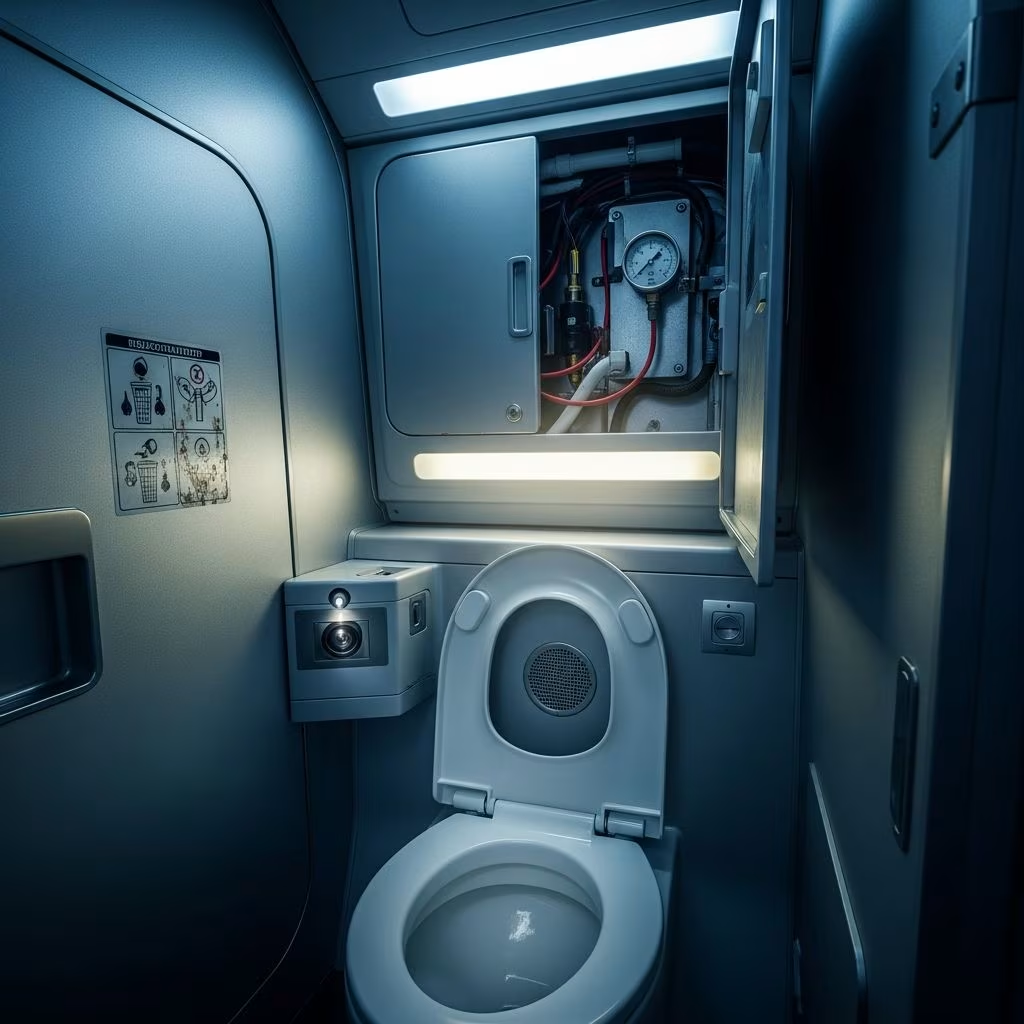
Ever wondered what happens when you press that flush button on an airplane? The resounding whoosh that follows is one of aviation’s most intriguing mysteries. Modern aircraft bathrooms rely on innovative vacuum technology rather than traditional water flushes, ensuring efficiency at high altitudes where water is scarce.
At the heart of every airplane toilet is a **vacuum-powered mechanism** designed for high-altitude efficiency. Unlike home toilets that use gravity and gallons of water, airplane systems employ pressurized cabin air to evacuate waste swiftly. When you activate the flush, a valve beneath the bowl opens momentarily, allowing a powerful rush of air—drawn from the cabin’s higher pressure to the lower external pressure—to suck contents away in seconds.
This process minimizes water use, conserving a precious resource on long flights. Only a small amount of rinse fluid, often blue-tinted for disinfection, coats the bowl. The sound you hear is the air stream, akin to an industrial vacuum, operating in a fully sealed environment to prevent odors and maintain hygiene.
Aviation sanitation has come a long way from early, rudimentary designs. In the dawn of commercial flight, planes lacked onboard facilities, forcing reliance on ground stops. The 1930s introduced basic chemical toilets, but they were bulky and odor-prone.
Post-World War II, gravity-dump systems emerged: waste valves opened directly to the fuselage exterior, expelling contents via slipstream during flight. This was messy, environmentally harmful, and illegal over populated areas by the 1960s. The game-changer arrived in 1975 with the vacuum toilet, pioneered by companies like Boeing and Airbus partners, incorporating non-stick surfaces and bio-deodorizers.
| Era | System Type | Pros | Cons |
|---|---|---|---|
| Pre-1960s | Gravity Dump | Simple | Polluting, unregulated discharge |
| 1975-Present | Vacuum Flush | Efficient, sealed, water-saving | Requires maintenance |
Today’s systems integrate sensors for tank levels, automatically locking toilets if full to avert overflows.
Nothing vanishes into thin air—despite urban legends. Flushed waste hurtles through insulated pipes to holding tanks, typically in the aircraft’s tail or lower fuselage. These tanks, built from durable composites, endure pressure differentials up to 8 psi, freezing temperatures, and turbulence.
On a typical long-haul flight, passengers flush around **1,000 times**, generating 200-250 gallons of sewage. Tanks hold 150-300 gallons depending on aircraft size (e.g., Boeing 747 vs. A320). Sensors alert crew via cockpit displays; at capacity, flushes cease.
Fact: No mid-flight dumping occurs. External safety clips seal tank doors, preventing accidental release.
Post-landing, specialized **lavatory service trucks** (lav trucks) connect to the aircraft’s waste port. A vacuum hose extracts contents into sealed compartments, then transports them to airport sewage treatment plants. This process takes 10-20 minutes per plane.
Regulations from the FAA and ICAO mandate proper disposal, treating waste as biohazardous. Trucks feature anti-spill tech and deodorizers, ensuring sanitary operations even at busy hubs.
Airplane toilets spark wild tales. Here’s the truth:
One quirky anecdote: Passengers mistaking blue fluid for water have emerged with stained faces.
Airplane bathrooms prioritize sanitation amid recycled air. Toilets self-rinse post-flush, and antimicrobial coatings reduce bacteria. Still, follow best practices:
COVID-19 accelerated touchless upgrades, like foot-pedal flushes on newer jets.
Vacuum systems cut water use by 90%, aiding sustainability. Waste treatment at airports employs advanced filtration, reducing pollution.
Future tech includes bio-toilets converting waste to fertilizer (inspired by trains) and waterless designs. Boeing tests microbial fuel cells from waste for onboard power.
Redundancy defines aircraft toilets. Dual valves prevent leaks; tanks have overflow sensors and heaters against freezing. Pressure relief valves equalize during descent. Maintenance checks occur every 600 flight hours per FAA standards.
Flush Stats: Short flight: 50-100 flushes. Transatlantic: 800-1,200. Waste volume: ~1 pint per flush.
The vacuum rush of cabin air into low-pressure pipes creates the signature whoosh.
No—it’s disinfected rinse fluid, not potable. Cabin water is filtered separately.
Tanks are insulated and heated; systems monitor temperatures.
Every flight turnaround, or more if full.
No—fully self-contained until ground servicing.
Flight attendants confirm: tanks rarely overflow on scheduled flights, thanks to monitoring. Turbulence can slosh contents, but seals hold. Passenger volume peaks post-meal services.
In summary, airplane toilets exemplify aerospace engineering—compact, efficient, and foolproof. Next time you flush at 35,000 feet, appreciate the vacuum wizardry keeping everything contained.
