

 Travel Essentials
 Travel Essentials

Cities are turning to bicycles to cut congestion, reduce emissions, and improve health with safer, smarter infrastructure and policy.
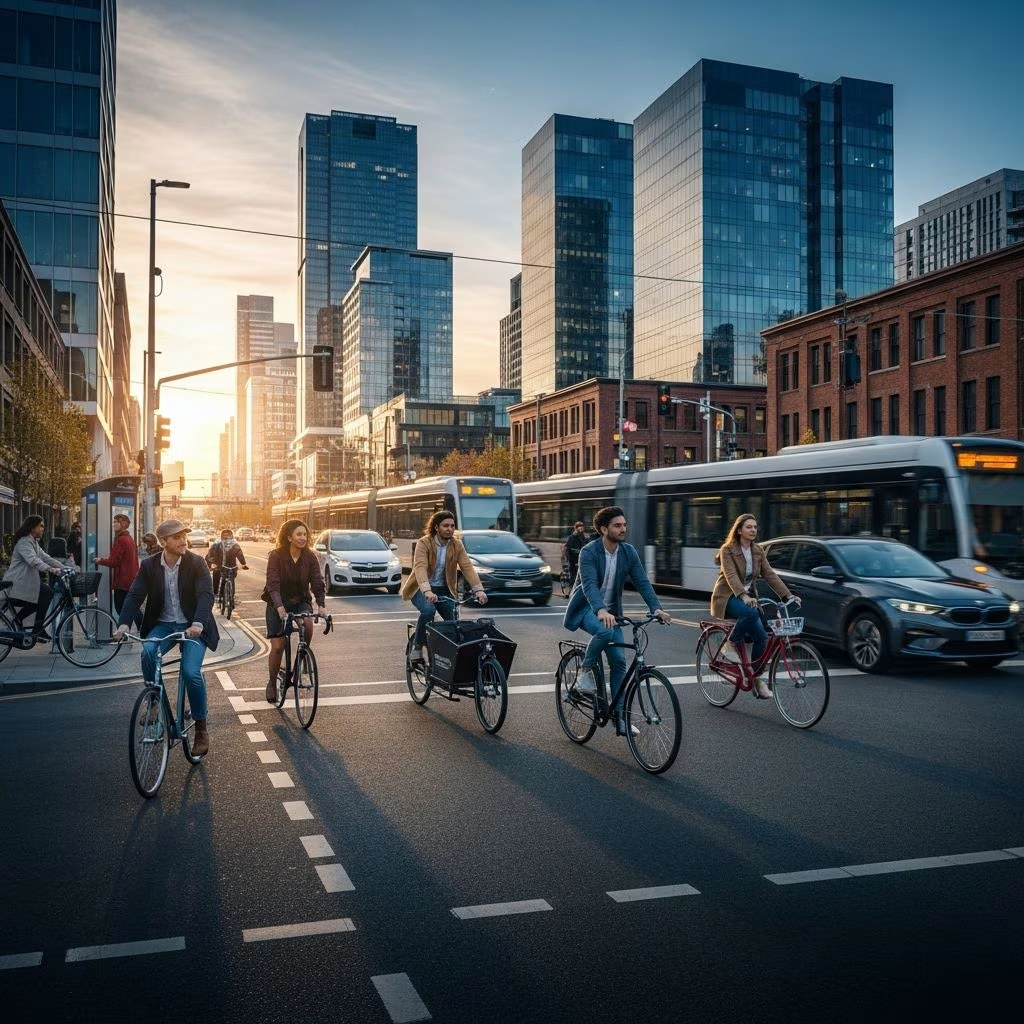 Travel Essentials
Cities worldwide are embracing bicycles as a cornerstone of sustainable transportation, reducing congestion, emissions, and enhancing public health through targeted infrastructure and policy innovations.
Urban areas grapple with escalating challenges like traffic gridlock, poor air quality, and climate pressures, positioning cycling as a vital response. Traditional car-dependent systems exacerbate urban sprawl and environmental degradation, prompting a pivot toward multimodal transport. Cycling not only alleviates these issues but fosters economic vitality by optimizing street use and promoting active lifestyles.
In many metropolises, bike adoption has surged, evolving from recreational activity to essential commuting. This shift demands coherent planning, including Sustainable Urban Transport Plans (SUTPs) that integrate cycling with other modes to curb car dominance.
Forward-thinking cities provide blueprints for scalable success. Chicago exemplifies effective implementation with expanded protected lanes and shared paths that facilitate daily commutes while curbing vehicle reliance. These designs prioritize safety and connectivity, yielding broader gains like cleaner air and quieter streets.
Oslo’s transformation stands out, achieving zero traffic fatalities in 2019 through vehicle slowdowns and center-city restrictions under a comprehensive bicycle plan. This resulted in an 80% cycling increase, demonstrating how prioritizing bikes enhances safety and ridership.
Robust infrastructure hinges on safety, accessibility, and integration. Key elements include lowering speed limits to 30 kph on urban roads, enforcing traffic laws rigorously, and offering universal cycle training, particularly for youth. These measures reshape mobility patterns early, embedding cycling habits.
Seamless public transport integration amplifies reach: bike parking at stations, rental systems with lockers, and digital tools for route planning expand viability for longer trips. Cities must rethink space allocation, prioritizing cyclists via dedicated lanes, traffic signals favoring bikes in rain, and variable message signs for cyclists.
| Element | Benefits | Examples |
|---|---|---|
| Protected Lanes | Safety, reduced emissions | Chicago trails |
| Speed Limits (30 kph) | Lower accidents, calmer streets | European standards |
| PT Integration | Extended range, car alternative | Bike lockers at stops |
| Cycle Training | Skill-building, habit formation | Youth programs |
Emerging tech supercharges cycling’s appeal. E-bikes revolutionize accessibility, enabling longer distances and heavier loads for diverse users, including those previously deterred by hills or fitness limits. Cargo e-bikes emerge as affordable ‘urban SUVs,’ outpacing cars in cost-efficiency for deliveries and family use.
Smart integrations like accident-preventing lights, air-purifying pedals, and traffic-reporting sensors turn bikes into data powerhouses for urban planning. IoT-enabled bikes feed real-time insights, informing infrastructure upgrades and congestion management, positioning cycling as a smart city linchpin.
The pandemic catalyzed a bike boom, with cities pop-up protecting lanes and witnessing sustained uptake, underscoring adaptability’s value.
Cycling delivers profound social, economic, and environmental dividends. It combats overcrowding, purifies air, and boosts health via exercise while slashing pollution and crashes. Equitable access bridges economic divides, fostering community cohesion over highway fragmentation.
Economically, investments yield high returns: reduced healthcare costs, vibrant local commerce, and efficient logistics via cargo bikes. Environmentally, modal shifts cut emissions, aligning with climate goals. Socially, inclusive designs empower all demographics, from children to elders.
Success requires visionary policies beyond infrastructure. Cities must craft clear visions linking cycling to pressing challenges, avoiding vague messaging that stalls progress. Restructuring space for people—via road diets and bike superhighways—prioritizes human-scale mobility.
Behavioral economics aids culture-building: incentives, education, and data-driven nudges encourage shifts. Micromobility like e-scooters complements bikes, demanding holistic regulation. Enforcement, funding, and public buy-in are crucial for scaling.
Barriers persist: perceived dangers, weather concerns, and entrenched car culture. Solutions include comprehensive networks minimizing road exposure, weather-adaptive tech, and advocacy growth from rising ridership. Equity demands affordable e-bikes and inclusive planning.
Global studies from four cities highlight that true transformation restructures urban space holistically, not mere pavement additions.
Envision metropolises where bikes dominate short trips, integrated with transit for all distances. E-bikes and cargo variants expand this to suburbs, while AI-optimized networks predict and adapt. Cities like those analyzed promise equitable, vibrant futures.
Unlocking full potential demands connecting benefits cohesively: no city has maximized this synergy yet, but trends point toward breakthrough.
A bike-friendly city features safe, connected infrastructure, low speed limits, training programs, and public transport links.
E-bikes extend range and accessibility, boosting ridership among non-traditional cyclists and enabling cargo use.
Yes, by shifting modes, optimizing space, and integrating tech for efficient flow.
SUTPs, speed enforcement, and space reallocation prioritizing bikes over cars.
Absolutely: health savings, reduced emissions costs, and commerce boosts.
