

 Travel Essentials
 Travel Essentials

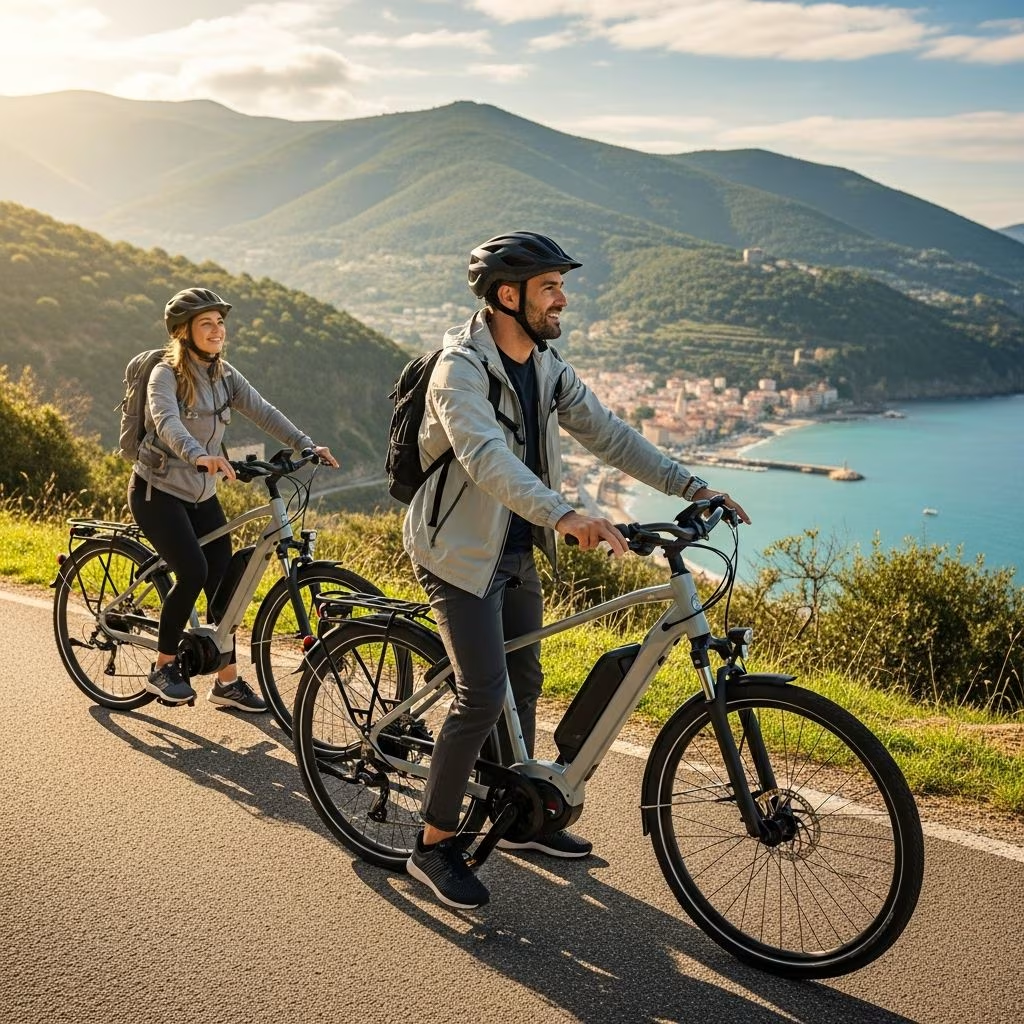
E-bikes are revolutionizing European tourism by making cycling vacations accessible to all fitness levels while enabling travelers to cover greater distances and experience diverse landscapes sustainably.
 Travel Essentials
The landscape of European tourism is undergoing a significant transformation, driven by the emergence of electric bicycles as a preferred travel method. What was once considered a niche market has rapidly evolved into a mainstream phenomenon, fundamentally changing how visitors explore European destinations. From rolling countryside paths to challenging alpine routes, electric bikes are enabling a diverse range of travelers to experience Europe’s natural and cultural treasures in ways that traditional bicycles simply cannot accommodate.
The adoption of electric bikes across Europe reflects broader shifts in transportation preferences and travel values. In Germany, the world’s leading e-bike market, 42.5% of all bicycles sold in 2021 were electric models, demonstrating the magnitude of this transformation. The Netherlands reports that 52% of leisure cycling trips were conducted on e-bikes during the same period. This surge in popularity is not coincidental; it represents a fundamental recognition that electric bikes address long-standing barriers to cycling tourism that have historically limited participation to highly trained cyclists.
Market growth projections underscore the momentum behind this trend. The global e-bike industry sold 5 million units in 2021, representing nearly one-quarter of the 22 million bicycles sold worldwide during that year. Looking forward, forecasts predict an additional 10 million bicycles will be purchased annually by 2030, with electric models comprising an increasingly large portion of these sales.
One of the most significant contributions of electric bikes to European tourism has been their role in democratizing cycling vacations. Historically, extended cycling tours required substantial physical training and conditioning, effectively excluding older travelers, individuals with joint concerns, and families with children of varying athletic abilities. Electric bikes fundamentally reshape this equation by introducing assistive technology that allows riders to control their physical exertion levels while still enjoying the benefits of cycling.
The pedal-assist feature enables travelers to tackle challenging terrain without requiring months of preparation. Someone recovering from a health concern that previously forced them to abandon long-distance cycling can now resume these activities with confidence. Similarly, family members with different fitness levels can now participate together on the same route, with each rider adjusting their assistance level to match their capabilities and comfort zones. This inclusive approach means that age, fitness level, and prior cycling experience no longer serve as restrictive criteria for European cycling vacations.
The accessibility benefits extend beyond physical conditioning. Electric bikes open cycling tourism to individuals who have never seriously considered themselves cyclists, yet who desire authentic, immersive travel experiences. First-time riders can enjoy iconic European cycling routes—such as the Via Verde Pirinexus through the Pyrenees—without requiring extensive prior training or harboring concerns about their abilities.
Electric bikes fundamentally expand the geographic territory accessible during a single vacation. Modern e-bike batteries can provide assistance for distances exceeding 100 kilometers under optimal conditions, with typical daily ranges of 65 kilometers being easily achievable with a single daily charge. This capability transforms vacation planning by enabling travelers to visit more destinations and experience greater geographic diversity within the same timeframe as traditional cycling tours.
The expanded range proves particularly valuable for exploring Europe’s varied topography. Regions that combine challenging elevation changes with cultural richness—such as Tuscany’s rolling hills, the Dolomite Mountains, the Loire Valley, or the Alpine regions—become genuinely accessible to broader audiences. Travelers can navigate steep inclines that would exhaust riders on traditional bicycles, then recover their energy for meaningful exploration of villages, historical sites, and natural attractions located beyond each climb.
This expanded capability also enables new vacation structures. Day trips can now extend substantially further from accommodation bases, allowing travelers to loop back the same day while covering territory that would traditionally require overnight relocations. Alternatively, extended cycling holidays can cover greater overall distances, revealing more regional variation within compact European areas than would be possible with traditional cycling approaches.
The rapid growth of European e-bike tourism has been supported by corresponding investments in infrastructure and services. Battery technology has improved substantially, with modern e-bikes featuring reliable charging systems that integrate seamlessly into vacation planning. Most electric bikes require only a single charging session daily, which travelers can accomplish overnight at their accommodation or during midday rest breaks at restaurants and cafes.
European governments have recognized the economic potential of cycling tourism, with predictions suggesting that cycling tourism could generate approximately €7 billion annually for the EU economy. In response, countries including France, Germany, and the Netherlands have dramatically increased funding for cycling infrastructure, including dedicated bike paths, secure parking facilities, and repair stations. The EU’s ‘European Declaration on Cycling’ formalizes commitments to expanding cycling infrastructure and policies supporting two-wheeled transportation.
Short-term e-bike rental schemes have proliferated throughout European cities and regions, reducing barriers for international travelers who prefer not to transport personal bicycles. These rental networks, combined with improved cycling route signage and digital navigation tools, create an increasingly seamless experience for visitors planning electric bike vacations.
Electric bikes have become particularly transformative for family vacations, addressing the challenge of engaging family members with different ages, fitness levels, and interests. Parents can now design cycling itineraries that incorporate younger children, grandparents, and teenagers simultaneously—a scenario that would be logistically impossible or deeply frustrating with traditional bicycles.
The shared adventure dynamic strengthens family bonds in meaningful ways. Whether families are picnicking in the lavender fields of Provence, marveling at Alpine limestone formations, or exploring medieval European villages, the e-bike enables collective experiences that create lasting memories. These journeys foster connections that extend far beyond the vacation itself, as families share the accomplishment of navigating new terrain and discovering cultural experiences together.
The reduced physical strain also means that family members can engage more fully with destinations rather than becoming fatigued and frustrated. When cycling is enjoyable rather than exhausting, families develop more positive associations with active travel and are more likely to pursue additional cycling vacations in future years.
Beyond accessibility and convenience, electric bikes represent a significant advancement in sustainable tourism practices. Unlike automobile-based travel, cycling—whether electric or traditional—eliminates direct carbon emissions and reduces the environmental footprint of European vacations. E-bikes prove particularly effective at replacing short car trips, particularly in urban environments where they maintain pace with traffic while offering health and environmental benefits.
The sustainability argument resonates strongly with contemporary travelers, particularly younger demographics increasingly concerned with travel’s environmental impact. Families choosing e-bike vacations over automobile road trips, flight-dependent itineraries, or motor-coach tours contribute meaningfully to reducing tourism’s carbon footprint while modeling sustainable travel values to their children.
European governments have responded to these environmental benefits by investing in e-bike infrastructure as part of broader climate mitigation strategies. E-bikes occupy a unique position as transportation solutions that reduce emissions while improving public health through increased physical activity—outcomes increasingly recognized by policymakers as critical to addressing interconnected climate and health challenges.
The proliferation of e-bikes has generated corresponding growth in specialized cycling route infrastructure throughout Europe. Established networks like EuroVelo provide well-developed corridors connecting European countries and regions through dedicated cycling paths. These routes range from flat, leisurely paths suitable for casual riders to challenging alpine terrain demanding technical skill and athletic ability. E-bikes enable individual travelers and families to select routes matching their desired experience level, rather than being constrained by fitness capabilities.
Route diversity extends beyond pure terrain variations. Cycling routes connect cultural attractions, historical sites, culinary destinations, and natural reserves in patterns that reveal regional character more intimately than other transportation methods. Travelers moving at cycling speeds—approximately 15-25 kilometers per hour depending on terrain and assistance level—encounter local communities, regional food specialties, architectural heritage, and landscape variations with greater awareness than faster transportation modes permit.
Electric bikes simplify several logistical challenges that traditionally complicated cycling vacations. Physical conditioning requirements have largely evaporated, eliminating the need for extensive pre-vacation training regimens. This reduction in preparation barriers means that trips can be planned with shorter lead times and with less anxiety about fitness levels.
The practical charging requirements are minimal, as most e-bikes accommodate full battery recharges through standard electrical outlets available in any European accommodation. Many cycling-focused hotels and vacation rental properties now provide dedicated charging stations, while restaurants and cafes routinely offer charging opportunities during lunch breaks. This seamless integration into vacation routines eliminates logistical complications that might otherwise deter potential participants.
Equipment weight considerations also change substantially with e-bikes. While the bicycles themselves are heavier than traditional models, riders experience reduced physical strain, making carrying reasonable luggage quantities feasible. This capacity enables multi-day cycling vacations where travelers carry personal items, eliminating the expense and complexity of luggage transfer services used in traditional cycling tourism.
The expanding e-bike tourism market has generated substantial economic benefits for European regions. Cycling tourism spending supports accommodation providers, restaurants, repair shops, rental companies, and local businesses throughout regions where e-bike infrastructure has developed. Secondary economic benefits accrue to communities along established cycling routes, as visitors discover small villages, local producers, and regional attractions that benefit from cycling tourism expenditures.
Regional economies have responded by strategically developing cycling tourism infrastructure and marketing. Tourism boards highlight cycling routes, arrange specialized accommodations catering to cyclists’ needs, and coordinate services creating comprehensive cycling vacation packages. These investments create employment opportunities while generating sustainable tourism revenue that supports rural and regional economies.
Modern e-bike batteries typically provide assistance for 65-100+ kilometers per day, depending on terrain, rider weight, and assistance level selected. Most vacation riders can comfortably complete daily distances of 50-80 kilometers with a single charge, with overnight recharging at accommodations ensuring reliable daily capability.
E-bikes accommodate virtually all fitness levels, from first-time riders to experienced cyclists seeking less strenuous vacations. The pedal-assist feature allows riders to adjust assistance levels based on terrain difficulty and personal preferences, making fitness prerequisites essentially non-existent.
Yes, e-bike rental networks have expanded substantially across Europe, particularly in established cycling destinations and major cities. Rental availability varies by region, so advance research and booking are advisable for popular destinations during peak seasons.
E-bikes produce no direct emissions during operation, eliminating carbon footprints associated with automobile travel while enabling greater distances and broader accessibility than traditional bicycles. The manufacturing and battery production processes do require energy resources, but the operational benefits far outweigh these initial environmental costs.
Yes, family participation in e-bike vacations has become increasingly common. Options include child seats for smaller children, trail-a-bike configurations for older children, or separate e-bikes for adolescents, enabling multi-generational cycling adventures.
Electric bikes have fundamentally transformed European cycling tourism from a niche activity requiring exceptional physical conditioning into an inclusive, accessible vacation option suitable for diverse travelers across age groups, fitness levels, and backgrounds. The convergence of improved battery technology, expanded cycling infrastructure, government policy support, and growing environmental consciousness has positioned e-bikes as the defining feature of contemporary European cycling vacations.
As technology continues advancing and infrastructure expands further, electric bikes will likely become even more central to European tourism strategies. For travelers seeking authentic cultural experiences, environmental responsibility, family bonding, and outdoor adventure—e-bikes represent an optimal convergence of all these aspirations in a single, sustainable travel mode.
