

 Travel Essentials
 Travel Essentials

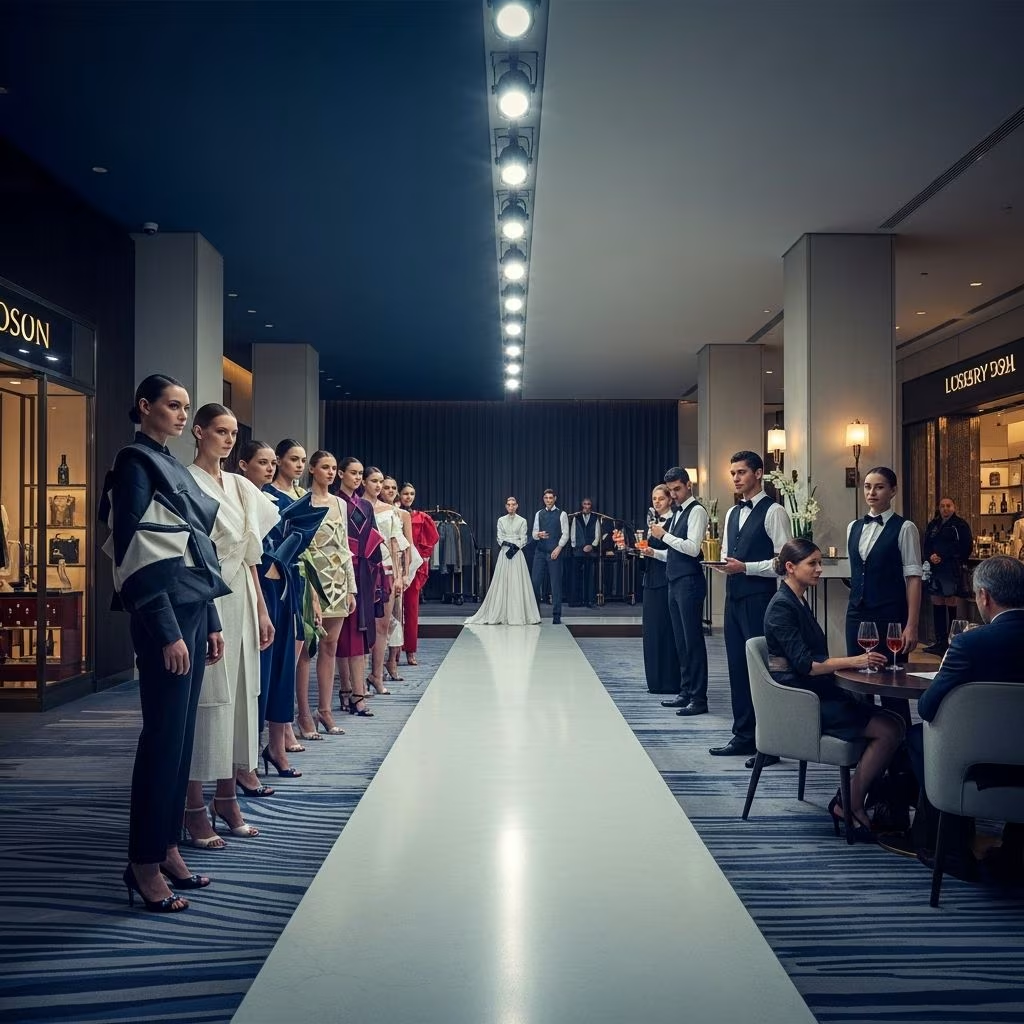
Luxury fashion brands are increasingly teaming up with high-end hotels for immersive experiences, but is this creative synergy reaching its limit amid market saturation?
 Travel Essentials
Luxury fashion houses and premium hospitality providers are increasingly intertwining their worlds, crafting immersive environments where style meets seamless service. This partnership promises elevated consumer journeys but raises questions about sustainability in a crowded market.
In the competitive arena of luxury goods, fashion brands seek novel avenues to captivate affluent clients beyond retail floors. Pairing with hotels allows them to orchestrate holistic lifestyles, blending apparel, accessories, and accommodations into cohesive narratives. These alliances leverage shared values of exclusivity and refinement, transforming transient stays into branded odysseys.
Hotels, in turn, gain prestige by associating with iconic labels, attracting fashion-forward guests who prioritize experiential opulence. This mutual elevation fosters loyalty, as consumers encounter products in contextual splendor—envision slipping into a custom robe post a spa session curated by a couture designer.
Prominent collaborations illustrate this trend’s vibrancy. Louis Vuitton’s forthcoming Paris hotel on the Champs-Élysées exemplifies bold expansion, integrating monogram motifs into architecture and amenities for total brand envelopment. Similarly, Fila’s Shanghai outpost with Hyatt infuses athletic heritage into urban lodging, targeting dynamic lifestyles.
Other ventures include Rosewood London’s tie-up with rental platforms during Fashion Week, granting access to elite wardrobes like Stella McCartney ensembles. Gucci, Bulgari, and Versace have embedded their aesthetics into resorts, from signature scents in lobbies to bespoke uniforms for staff, ensuring every interaction echoes the brand’s DNA.
| Brand | Partner | Key Feature | Location |
|---|---|---|---|
| Louis Vuitton | Self-developed | Branded hotel with integrated retail | Paris |
| Fila | Hyatt | Sport-luxe experiential suites | Shanghai |
| Frame Denim | Ritz Paris | Capsule holiday collections | Paris |
| Onia | Mett Hotels | Swimwear and resort wear edits | Various |
These initiatives not only sell products but cultivate emotional bonds, positioning brands as lifestyle architects.
Post-pandemic travel resurgence emphasizes bespoke adventures over generic escapes. Fashion-hospitality mashups deliver precisely this: personalized wardrobes for jet-setters, location-specific edits that resonate with cultural vibes. A stay at a Bulgari property might include AR try-ons of jewelry, merging digital flair with physical luxury.
Exclusivity reigns supreme—limited drops ensure desirability, while sustainability angles, like Dolce & Gabbana’s eco-resort lines, align with conscious luxury. Guests relish stress-free packing via pre-curated capsules, often co-designed for specific itineraries, enhancing perceived value manifold.
For fashion entities, hotels serve as expansive canvases, extending influence into tangible realms. Revenue diversification mitigates retail volatility, with on-site boutiques and pop-ups yielding direct sales. Cross-promotion taps hotel guest lists, introducing labels to high-net-worth newcomers.
Hospitality operators benefit from heightened occupancy and rates, as fashion cachet justifies premiums. Shared clientele—discerning, affluent—facilitates seamless audience overlap, bolstering long-term loyalty through repeated, evolving encounters.
Despite momentum, proliferation risks dilution. As collaborations multiply—from Vetements with logistics firms to swimwear at beach resorts—consumer fatigue looms. Overexposure could erode exclusivity, the cornerstone of luxury appeal.
Execution pitfalls abound: misaligned aesthetics lead to jarring experiences, while logistical hurdles strain partnerships. Economic pressures, including inflation, challenge premium pricing sustainability. Moreover, authenticity scrutiny intensifies; superficial tie-ins falter against demands for genuine innovation.
Modern luxury mandates responsibility. Fashion-hospitality duos increasingly prioritize eco-practices—sustainable fabrics in linens, zero-waste events, community investments. Brands like those partnering with Cheval Blanc emphasize local sourcing, preserving destinations while enriching guest narratives.
Digital integration furthers this: VR previews minimize travel carbon footprints, personalizing without excess. These efforts not only mitigate backlash but attract values-aligned patrons, fortifying brand resilience.
Projections signal continued growth, with more designer hotels debuting by 2026. Yet, success hinges on differentiation—hyper-personalization via AI, immersive tech, culturally attuned offerings. Brands thriving will prioritize depth over breadth, curating narratives that transcend novelty.
As boundaries dissolve, this fusion redefines luxury, demanding agility amid shifting tastes. Those mastering authenticity amid abundance will lead, while others risk obsolescence.
Primary motivators include revenue diversification, enhanced brand storytelling, and access to experiential marketing platforms that deepen consumer engagement.
Many yield sell-outs and loyalty boosts, though long-term ROI depends on execution and market resonance, with top examples reporting significant upticks in bookings and sales.
It’s central, with partnerships incorporating green materials, local support, and low-impact tech to align with eco-conscious luxury demands.
Likely yes, evolving with tech like AR/VR and personalization, provided brands innovate to avoid saturation.
Shared ethos, complementary strengths, authentic integration, and mutual audience benefits are key.
