

 Travel Essentials
 Travel Essentials

Learn essential strategies from aviation pros to spot bed bugs fast with a simple soap method, inspect rooms properly, and safeguard luggage during hotel stays.
 Travel Essentials
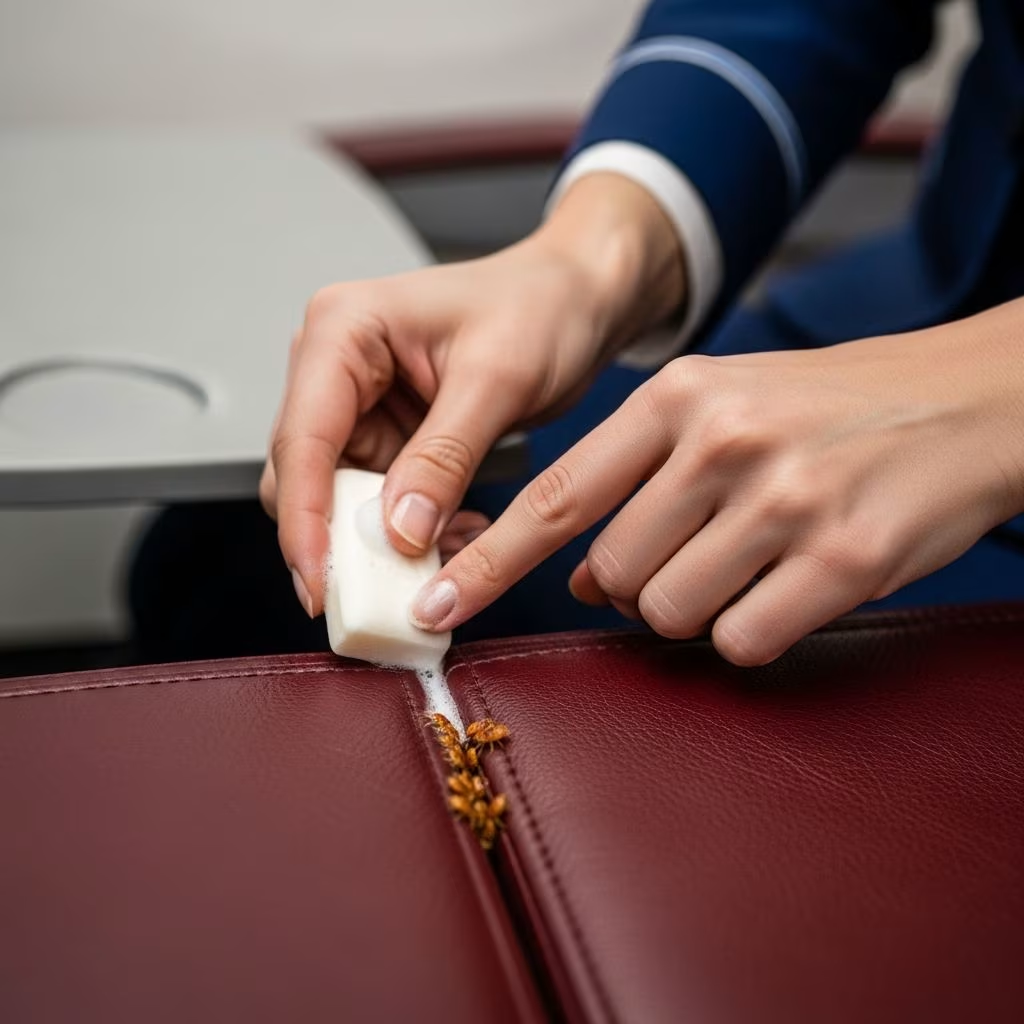
Travelers frequently encounter unexpected challenges in hotel rooms, with bed bugs standing out as one of the most distressing. These tiny pests thrive in sleeping areas, feeding on human blood at night and leaving itchy bites or worse infestations. Flight attendants, who spend countless nights in hotels worldwide, have developed practical detection methods to stay safe. A standout technique involves using a common household item—a bar of soap—to lure and expose these hidden invaders, allowing quick assessment before unpacking.
Bed bugs have surged in prevalence over recent decades, hitching rides in luggage, clothing, and furniture. Hotels, despite cleaning efforts, can harbor them in seams, crevices, and upholstery. Unlike visible insects, bed bugs are nocturnal and flatten their bodies to just 1-5 mm thick, evading casual glances. The Centers for Disease Control and Prevention (CDC) classifies them as a public health nuisance due to psychological distress and secondary infections from scratching bites.
Annual reports from pest control firms indicate millions of infestations in the U.S. alone, with urban hotels particularly affected. Travelers unknowingly transport them home, perpetuating cycles. Understanding their biology—feeding every 3-7 days, surviving months without meals, and reproducing rapidly—highlights the urgency of early detection.
Flight crews advocate a straightforward test: strip the bed completely, exposing the mattress and box spring. Place an unwrapped bar of plain soap at the foot of the bed, ideally in a shallow dish or directly on the fabric. Leave it overnight or for several hours. Bed bugs, drawn by the soap’s scent compounds mimicking human odors or skin oils, emerge to investigate.
This method gains credibility from observations by the German Federal Environment Agency (Umweltbundesamt), which notes bed bugs’ attraction to certain chemical profiles in soaps. Aviation professionals report visible clustering on or near the soap bar if pests are present, confirming infestation without expensive tools. Always use unscented, natural soap to avoid false positives from strong fragrances repelling bugs.
Beyond the soap trick, systematic checks form the backbone of prevention. Start with the bed frame: peer into joints, headboards, and under slats using a phone flashlight. Bed bugs favor these dark, cluttered spots. Examine electrical outlets, baseboards, and behind picture frames nearby, as they disperse from beds during the day.
Nightstands and dressers deserve scrutiny too—open drawers, lift liners, and check undersides. Carpets along walls may hide eggs. Use a credit card to scrape seams for hidden clusters. Professionals recommend the “bed bug sniff test,” where a faint musty odor signals heavy infestation.
| Inspection Area | Common Hiding Spots | Warning Signs |
|---|---|---|
| Mattress & Box Spring | Seams, tags, tufts | Blood spots, fecal pellets (black dots), shed skins |
| Bed Frame | Joints, screws, headboard | Live bugs, eggs (white, rice-like) |
| Furniture | Drawer gaps, upholstery folds | Musty smell, rust-colored stains |
| Walls & Floors | Behind outlets, carpet edges | Tiny white eggs, crawling trails |
Recognition beats assumption. Fecal specks—tiny black or brown dots resembling ground pepper—dot sheets and mattresses from digested blood. Rusty stains arise from crushed bugs. Pale yellow exoskeletons from molting litter hiding areas. Bites appear as red welts in lines or clusters on exposed skin, though reactions vary; some remain asymptomatic.
Eggs, smaller than pinheads, glue to surfaces in batches of 1-5. Live adults are apple-seed sized, wingless, and reddish-brown. The Environmental Protection Agency (EPA) emphasizes these markers in its bed bug identification guide, urging photo documentation for hotel management.
Your suitcase is the primary vector. Never rest it on the bed or carpet; elevate on the bathtub rim or luggage rack. Keep it zipped shut. Upon check-in, unpack immediately into the tub or central room area for inspection. Shake out pockets outdoors if suspicious.
Post-stay, unpack outside or in a garage. Launder all clothes in hot water (at least 120°F/49°C) and dry on high heat for 30+ minutes—heat kills all life stages. Vacuum suitcase interiors thoroughly, then seal in a black trash bag for sunlight exposure, leveraging solar heat. The EPA endorses these heat treatments as non-chemical first lines of defense.
Finding evidence? Do not panic but act decisively. Avoid squishing bugs, which spreads eggs and stains. Request a new room far from the suspect one, preferably on another floor. Notify management discreetly for professional extermination—DIY sprays often fail and disperse bugs.
Travel insurance may cover relocation costs; document everything with photos and timestamps. If bitten, wash areas with soap, apply hydrocortisone, and monitor for infection. The World Health Organization (WHO) notes no disease transmission but stresses mental health impacts from infestations.
Flight crews layer defenses: plastic mattress encasements from home block harbors. Essential oil sprays (tea tree, lavender) deter without toxicity, per some studies. Choose hotels with recent positive reviews on cleanliness platforms. Late check-ins reduce exposure time.
For groups, assign one person as “bug checker.” Carry a magnifying loupe and adhesive lint rollers for spot collections. Post-travel, freeze small items at 0°F (-18°C) for four days to eradicate hitchhikers.
Certain soap ingredients mimic human scents, drawing hungry bugs from hiding during low-activity periods.
3-14 days, varying by individual sensitivity; clusters on arms, legs signal bed bugs over other pests.
Rarely, due to cleaning protocols, but they transfer via passenger bags between flights and hotels.
Yes, with 90%+ accuracy in controlled tests by EPA-approved handlers, though costly for individuals.
Yes, sustained below 0°F for 4 days destroys all stages; use sealed bags in freezers.
Hotels invest in K-9 units, steam treatments (kills at 212°F), and CO2 traps. Travelers benefit from vigilance education. Global spread ties to increased mobility; proactive habits curb it. By adopting flight crew routines, any guest transforms vulnerability into control.
Empower your journeys with knowledge. The soap trick, paired with inspections, equips you against this resilient foe, ensuring restful nights abroad.
