

 Travel Essentials
 Travel Essentials

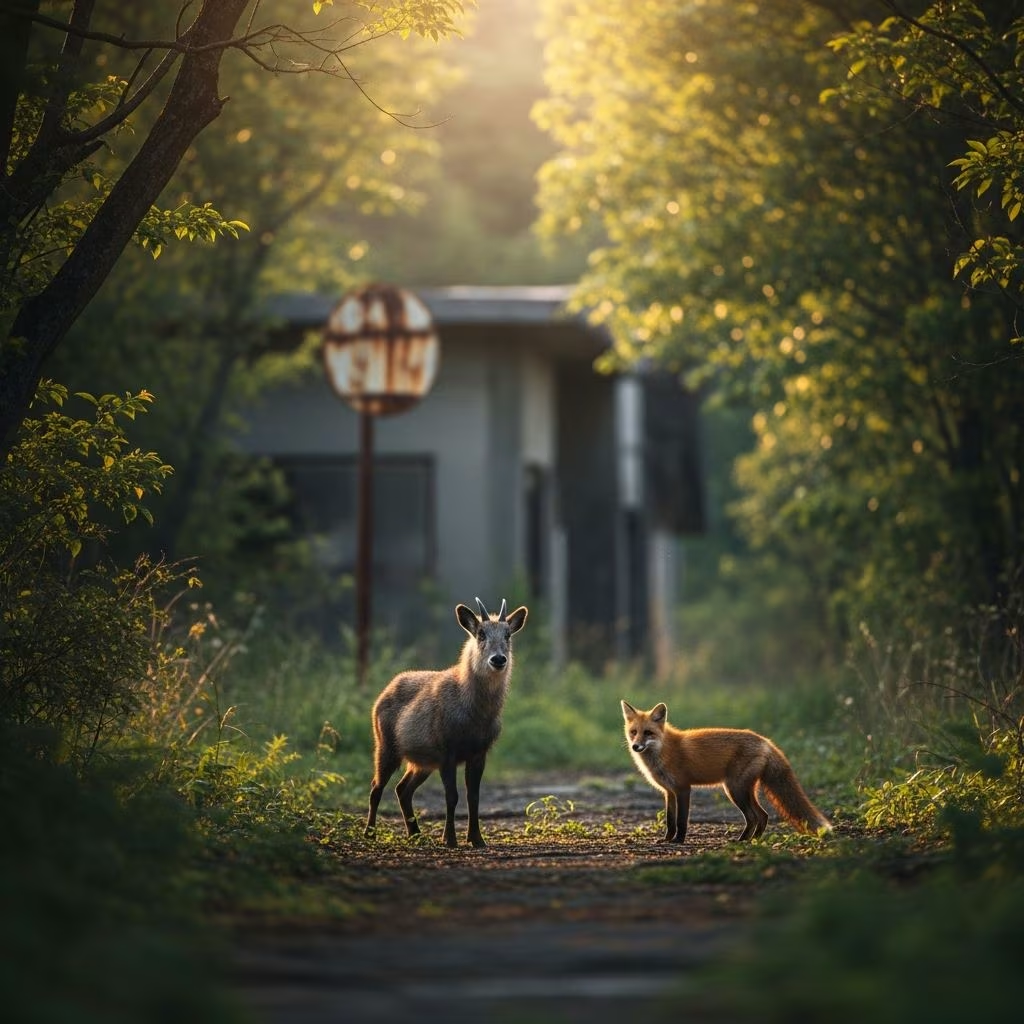
After Fukushima’s evacuation, wildlife surged in the exclusion zone, revealing how quickly nature reclaims abandoned land.
 Travel Essentials
In the shadow of one of history’s most severe nuclear incidents, a remarkable ecological transformation has unfolded. The 2011 Fukushima Daiichi disaster forced the evacuation of over 150,000 people, creating vast uninhabited areas now pulsing with animal life. Far from the desolation one might expect, researchers document booming populations of wild boars, monkeys, hares, and more, highlighting nature’s adaptability in the face of radiation.
The Great East Japan Earthquake on March 11, 2011, unleashed a tsunami that overwhelmed the Fukushima Daiichi Nuclear Power Plant, leading to meltdowns and widespread radioactive releases. Coastal towns and farmlands were devastated, but mountainous interiors and forests provided refuges that quickly became havens for wildlife. With humans gone, traditional pressures like hunting, farming conflicts, and urban expansion vanished overnight.
This human exodus turned former villages into open territory. Rice paddies and lowlands, once bustling, now stand silent, while upland forests—already home to species like Japanese serow and macaques—expanded their reach. Camera trap studies reveal animals venturing into urban ruins, a phenomenon researchers attribute to ‘natural rewilding’ following abandonment.
Over 20 mammal and bird species have been recorded in abundance across the exclusion zone. Wild boars (Sus scrofa) dominate, with over 46,000 images from 120 days of monitoring, more than half from the most contaminated, human-excluded areas. Japanese hares (Lepus brachyurus), macaques (Macaca fuscata), pheasants, martens (Martes melampus), foxes, and raccoon dogs (Nyctereutes procyonoides) follow suit.
These findings come from 106 camera sites divided into zones: fully excluded (highest radiation), restricted (intermediate), and inhabited (low/background levels). Boar detections skewed heavily toward excluded zones—26,000 images versus 13,000 in restricted and 7,000 in inhabited areas—indicating a clear preference for human-free spaces.
While populations boom, radiation’s effects linger subtly. Unlike Chernobyl, where some studies show clearer negative impacts on reproduction or genetics, Fukushima’s data is nuanced. Abundant wildlife persists despite contamination, but researchers caution against assuming no harm. Species in conflict with humans, like boars and macaques, show the strongest gains in excluded zones.
| Zone Type | Radiation Level | Key Species Abundance | Human Presence |
|---|---|---|---|
| Excluded | High | Wild boars (highest), macaques | None |
| Restricted | Intermediate | Moderate boar, foxes | Limited |
| Inhabited | Low/Background | Lowest boar detections | Full |
This table summarizes camera trap data, underscoring how absence of people trumps radiation for many species. Daytime activity shifts, like diurnal boars, signal behavioral changes from relaxed pressures.
As decontamination progresses and residents return to remediated areas, tensions rise. Boars, notorious crop raiders, now invade fields and infrastructure. In repopulated zones, encounters spike, echoing pre-disaster issues but amplified by unchecked growth. ‘Populations have expanded into newly available habitat,’ notes research, previously curbed by hunting.
Monkeys, too, descend from mountains, foraging in villages. This creates a ‘major human-wildlife conflict issue,’ particularly where people resettle. Management strategies, from renewed culling to barriers, are debated, balancing ecological gains with safety.
Fukushima’s zone offers a rare glimpse into rewilding dynamics. Unlike controlled reserves, this ‘accidental’ experiment reveals how quickly nature rebounds without us. Comparisons to Chernobyl highlight parallels: persecuted species like wolves or boars thrive under reduced pressure, even amid radiation.
However, it’s no paradise. Contamination varies by ecosystem—soil, water, flora—affecting bioaccumulation. Long-term studies probe genetic mutations, fertility, and ‘new ecologies’ where nature adapts uniquely. These insights inform conservation worldwide, from post-disaster recovery to urban-wildlife planning.
Curious travelers can explore parts of the zone via guided tours. Radiation levels in most accessible areas match natural background (e.g., air travel), deemed safe by authorities. Focus on outer zones; inner restricted areas require permits.
Ethical visits highlight resilience, funding research without disturbing wildlife. Spot boars from afar or macaques in trees—nature’s comeback story unfolds daily.
By 2026, ongoing remediation expands habitable land, but full return lags. Wildlife management evolves, potentially integrating eco-tourism. Will boars be culled en masse, or corridors preserved? Research continues, tracking if radiation’s toll emerges over generations.
This interplay teaches: humans shape ecosystems profoundly, yet nature endures. Fukushima stands as testament to unintended rewilding’s power.
Populations thrive, but subtle effects like genetic changes may persist. No mass die-offs observed.
Yes, boars and monkeys are common in outer zones via guided visits.
Both show wildlife booms from human absence, though Chernobyl’s impacts appear stronger in some species.
Partially; many areas remain restricted due to contamination.
Wild boars, with tens of thousands estimated.
