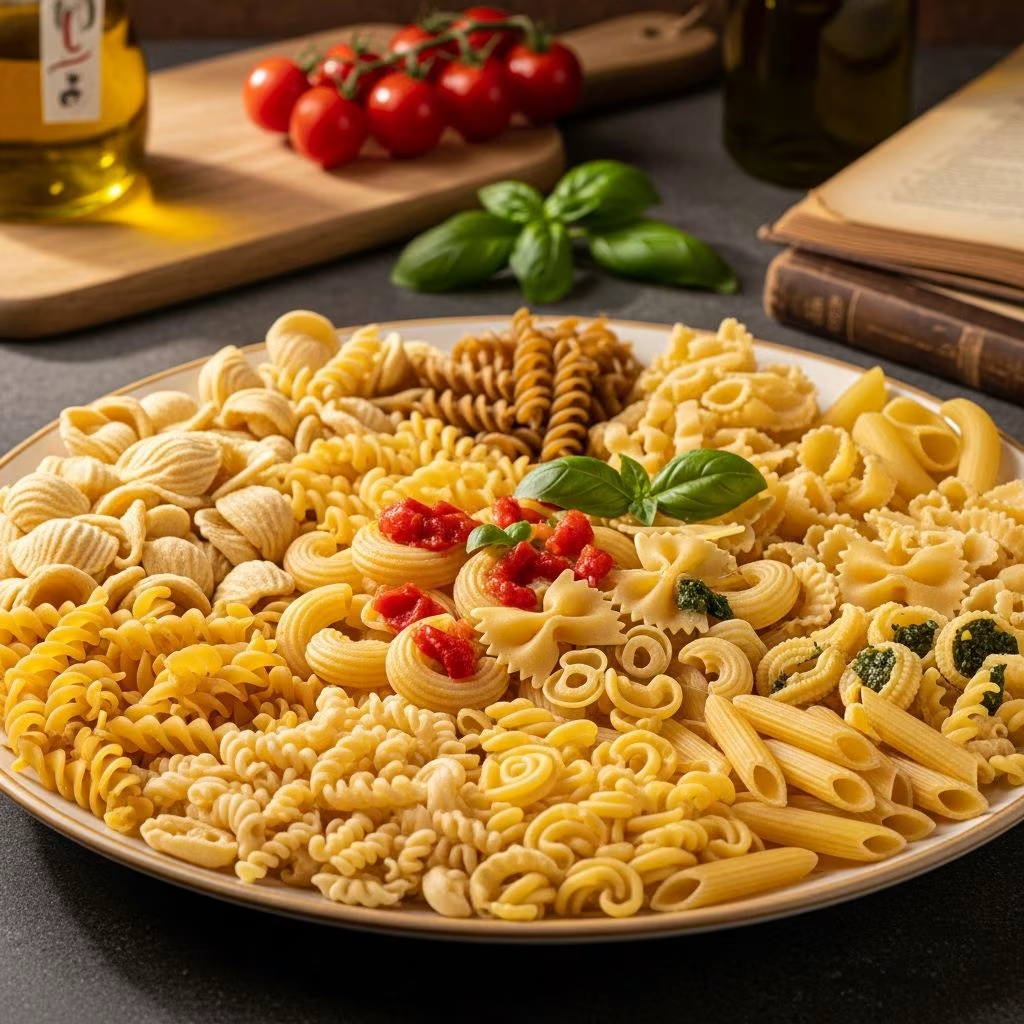
Italy’s pasta tradition represents far more than a collection of recipes—it embodies the geographical, cultural, and economic diversity of the Italian peninsula. With over 400 recognized pasta shapes, each region has contributed its own distinctive forms shaped by local ingredients, climate conditions, and historical circumstances. Understanding where specific pasta shapes originated reveals a compelling narrative about how necessity, innovation, and regional pride have shaped one of the world’s most beloved cuisines.
The Foundation: How Geography Shaped Pasta Development
The Italian landscape created natural divisions that led to remarkably different pasta traditions across the country. Mountains, coastlines, and valleys isolated communities and influenced which crops could be cultivated in each region. This geographical reality became the primary driver of pasta shape diversity, as communities developed pasta forms suited to their available resources and environmental conditions.
Regional agricultural patterns determined not just the shapes of pasta, but also their fundamental composition. Areas with abundant wheat production developed different pasta traditions than regions where other crops thrived. The availability of specific tools, the climate for drying, and trade routes all contributed to how pasta evolved in distinct ways across Italy.
Northern Italy: Egg-Based Traditions and Alpine Influences
Northern Italy developed a distinctive pasta tradition centered on egg-based doughs, particularly in the Emilia-Romagna region. This area’s rich agricultural output, especially in wheat and poultry farming, made egg pasta the natural choice for local food makers. Approximately 64% of pasta produced in Emilia-Romagna utilizes eggs as a primary ingredient, creating a distinctive texture and richness that characterizes these shapes.
Tagliatelle, the long, ribbon-like pasta with slightly crimped edges, emerged from this region’s culinary priorities. The egg-rich dough allowed for thinner, more delicate shapes that could support the region’s famous ragù sauces. The width of tagliatelle—approximately one centimeter—became standardized as the ideal dimension for capturing sauce while maintaining structural integrity during cooking.
In the Alpine regions, potatoes introduced from the Americas during the 16th century created opportunities for innovative pasta forms. Gnocchi, while technically distinct from dried pasta, represents Northern Italy’s adaptation to ingredient availability and climbing traditions. These small, pillowy dumplings became central to mountain cuisine where dried pasta storage presented challenges at high elevations.
Southern Italy and Sicily: Arab and Mediterranean Influences
Southern Italy, particularly Sicily, developed pasta traditions reflecting centuries of multicultural exchange. Greek, Arab, and Spanish influences combined to create distinctive shapes adapted to the region’s durum wheat cultivation and Mediterranean climate. This convergence of cultures produced pasta varieties with unique properties and preparation methods.
Macaroni represents a key example of Southern Italian pasta evolution. Ancient Greeks established the colony of Neapolis, present-day Naples, where they encountered local barley-based dishes called makaria. Over centuries, as durum wheat became the dominant grain and Arab pasta-making techniques spread through the region, this ancient name transformed into maccheroni, the pasta shape recognized worldwide today.
The warm, dry climate of Southern Italy proved ideal for the drying process essential to pasta production. Durum wheat, with its high gluten content and ability to withstand the intense sun during drying, became the foundational ingredient for Southern Italian pasta. This climatic advantage eventually made Southern Italy the center of Italian pasta production, particularly around Naples and other Mediterranean ports.
Regional Pasta Characteristics: A Comparative Overview
| Region | Primary Ingredient Base | Signature Pasta Shapes | Key Characteristic |
|---|---|---|---|
| Emilia-Romagna | Eggs and wheat flour | Tagliatelle, Tortellini, Lasagne | Rich, tender texture |
| Liguria | Wheat flour | Trofie, Trenette, Pansotti | Small, hand-twisted forms |
| Sicily | Durum wheat semolina | Macaroni, Arancini pasta | Durable, sauce-holding capacity |
| Puglia | Durum wheat semolina | Orecchiette, Cavatelli | Shallow bowls for capturing sauce |
| Tuscany | Wheat flour | Pappardelle, Picci | Wide ribbons for hearty sauces |
The Role of Trade and Cultural Exchange
Medieval and Renaissance Mediterranean trade networks profoundly influenced pasta shape development. Jewish communities settling in Puglia during the 12th century brought pasta-making traditions from Provence, introducing the distinctive ear-shaped orecchiette. The name itself evolved from the Jewish holiday pasta “oznei Aman” (ears of the priests), transformed into Italian as “orecchie dei preti” in some local towns.
Merchant ships traveling from the Bari harbor to distant ports carried orecchiette because the shape’s simplicity made it easy to produce and dry efficiently. This practical advantage turned a regional specialty into a widely distributed commodity, demonstrating how trade routes shaped which pasta shapes became established across broader areas.
Arab influence on Southern Italian pasta production extended beyond ingredient introduction. Arab traders and settlers shared sophisticated drying techniques developed as preservation methods for long journeys across deserts and seas. These drying methodologies became foundational to Italian pasta production, enabling the creation of shelf-stable products that could be transported commercially.
Mechanical Innovation and the Pasta Explosion
While early pasta shapes were formed by hand—a tedious and labor-intensive process—mechanical advancement transformed pasta production. Extrusion press experimentation began during the 1300s, but the Renaissance brought mechanical innovations that enabled rapid, consistent pasta production. The torchio, a pasta pressing machine invented in the 17th century, dramatically increased pasta accessibility by making production more efficient and affordable.
The Industrial Revolution accelerated this transformation exponentially. Steam-powered machinery in the 1800s made extruding noodles more efficient than ever before. Factory-based production allowed manufacturers to develop entirely new pasta shapes previously impossible to create by hand, including rigatoni, elbow macaroni, radiatori, and decorative shapes like wagon wheels and shells.
This mechanization democratized pasta consumption. What had been a relatively expensive item gradually became affordable for working-class families throughout Italy. Regional pasta variations, once confined to specific areas, began spreading across the country as factory production centralized in major cities.
Liguria’s Mountain Heritage and Twisted Forms
The rocky terrain of Liguria created unique conditions for pasta development. The region’s challenging topography limited certain agricultural practices while encouraging others. Trofie, the small twisted pasta form characteristic of Ligurian cooking, emerged from local necessity and the region’s Alpine geography.
These hand-twisted shapes aligned perfectly with Ligurian agricultural practices and ingredient availability. The shape’s compact form made it practical for mountain communities where storage space was limited. Trofie’s ability to hold Liguria’s famous pesto sauce—made from local basil, garlic, and pine nuts—made the shape ideal for the region’s distinctive culinary traditions.
Early Pasta History and the Marco Polo Myth
The popular narrative crediting Marco Polo with introducing pasta to Italy requires significant revision. Historical evidence demonstrates that pasta was already established and widespread throughout Italy by the time Marco Polo completed his famous 13th-century voyage to China. This enduring myth, perpetuated by early 20th-century advertising for a Canadian