

 Travel Essentials
 Travel Essentials

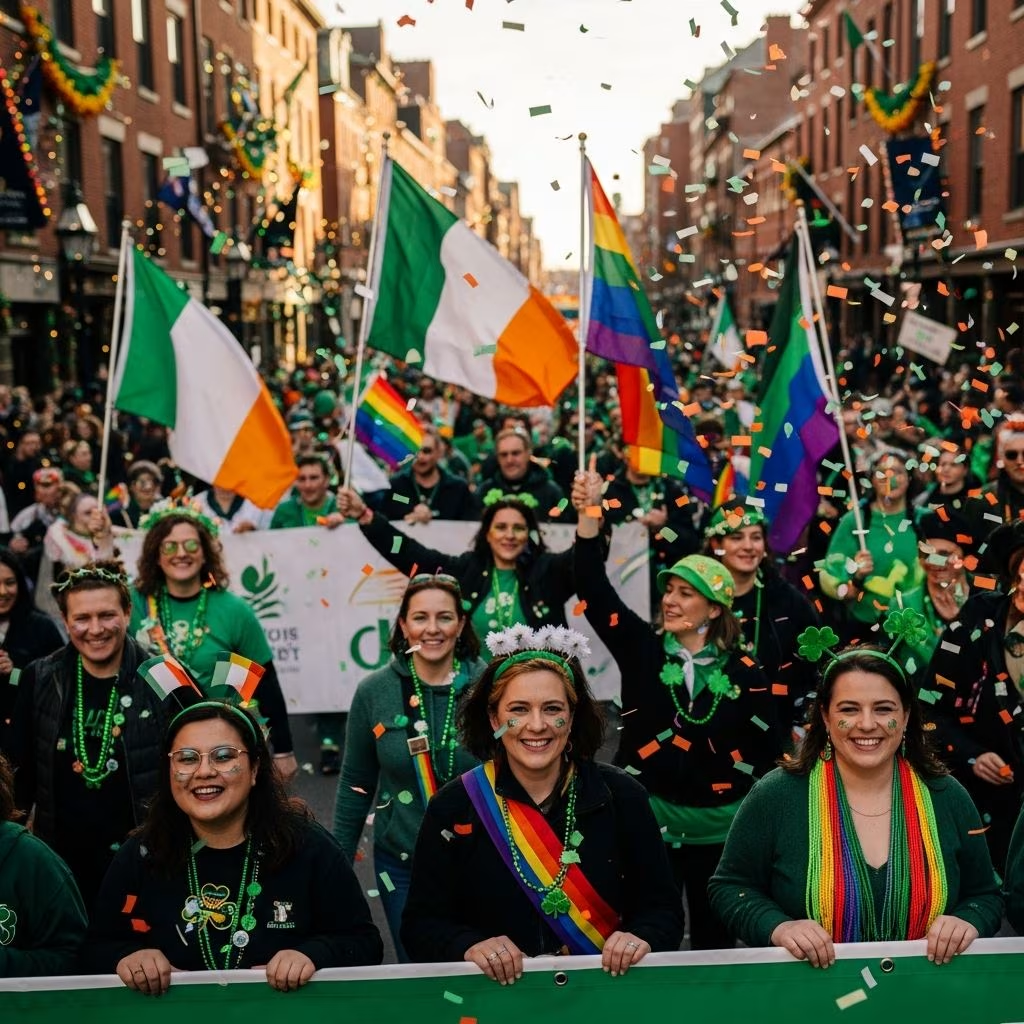
Explore the historic 2015 inclusion of gay rights activists in Boston's St. Patrick's Parade, ending a 20-year ban amid legal battles and shifting attitudes toward equality.
 Travel Essentials
This landmark event in 2015 symbolized a profound shift in American cultural traditions, where longstanding exclusions gave way to broader acceptance. For the first time in over two decades, LGBTQ+ organizations openly participated in one of the nation’s oldest and most cherished St. Patrick’s Day parades, held annually in South Boston.
Boston’s St. Patrick’s Day Parade traces its origins to the late 19th century, evolving into a massive spectacle that draws hundreds of thousands of spectators. Organized by the South Boston Allied War Veterans Council, the event has long celebrated Irish heritage, military service, and community pride. However, by the early 1990s, it became a flashpoint for debates over free speech, privacy rights, and discrimination.
The parade’s organizers maintained strict control over participant banners and messages, viewing the event as a private expression rather than a public accommodation. This stance clashed with growing calls for inclusivity as LGBTQ+ Irish Americans sought to honor their dual identities—Irish ancestry and sexual orientation—without concealment.
The controversy ignited in 1992 when the Irish-American Gay, Lesbian, and Bisexual Group of Boston (GLIB) applied to march. Despite offers to limit their group size and ensure orderly conduct, the Veterans Council denied them, prompting a lawsuit under Massachusetts’ public accommodation law prohibiting discrimination based on sexual orientation.
A local judge initially ordered GLIB’s inclusion, leading to a tense 1992 march marked by hostility from crowds. The U.S. Supreme Court intervened in 1995 with Hurley v. Irish-American GLIB, ruling 9-0 that parade organizers had First Amendment rights to control their message, effectively upholding the ban. No Boston mayor marched from 1995 until 2015, underscoring the divide.
| Key Legal Milestones | Date | Outcome |
|---|---|---|
| GLIB lawsuit filed | 1992 | Initial court order for inclusion |
| Supreme Court: Hurley v. GLIB | 1995 | Ban upheld as protected speech |
| OutVets and Boston Pride accepted | 2015 | Voluntary inclusion ends 20-year exclusion |
By the mid-2010s, societal attitudes had evolved amid national advancements like marriage equality. Parade leaders, facing boycotts, sponsor pressure, and mayoral non-participation, reconsidered. Boston Pride for the People and OutVets—a group of LGBTQ+ veterans—submitted applications that emphasized shared values of service and heritage.
Organizers approved them voluntarily, distinguishing this from court mandates. OutVets marched in coordinated blue jackets and white gloves, projecting discipline and patriotism. Boston Mayor Marty Walsh joined, the first since 1995, signaling official endorsement.
The 2015 parade unfolded without major incidents, contrasting earlier hostilities. Participants reported mixed receptions—cheers from supporters mingled with boos—but overall progress. Media coverage highlighted the veterans’ poised demeanor, helping normalize inclusion.
Critics argued it diluted the event’s focus on St. Patrick and Irish Catholicism, while proponents celebrated it as reconciliation. This moment reflected broader U.S. shifts, post-Obergefell v. Hodges.
Boston’s resolution influenced similar events nationwide. New York’s St. Patrick’s Parade, facing parallel disputes, integrated LGBTQ+ groups by 2014 after years of protests. These changes underscore how private organizers balance expression rights with anti-discrimination pressures.
In South Boston, a working-class enclave with conservative roots, the inclusion fostered dialogue. Post-2015, the parade has welcomed diverse participants, enhancing its appeal as a unifying festival.
“Marching as openly gay veterans felt like serving our country twice—once in uniform, once claiming our place in this tradition.” – OutVets member.
Such testimonials emphasize pride in dual identities. Organizers noted applications focused on Irish ties and service, avoiding overt political messaging.
| Aspect | Pre-2015 | Post-2015 |
|---|---|---|
| Mayoral Participation | Absent since 1995 | Walsh marches; ongoing |
| LGBTQ+ Groups | Banned openly | OutVets, Pride included |
| Public Tension | High (boos, threats) | Reduced; mixed cheers |
| Legal Status | Supreme Court ban | Voluntary policy shift |
A decade later, the 2015 inclusion stands as a model for inclusive traditions. Annual parades now feature LGBTQ+ contingents routinely, drawing larger, diverse crowds. This evolution mirrors America’s journey toward equity, where cultural events adapt without losing core identities.
Challenges persist—debates over banners continue—but momentum favors openness. For travelers, Boston’s parade offers a vibrant lens on progress, blending green-clad revelry with stories of resilience.
Organizers voluntarily accepted OutVets and Boston Pride after years of advocacy, sponsor pressure, and cultural shifts, bypassing prior legal bans.
No; the 1995 Hurley decision remains, affirming private speech rights. Inclusion was a policy choice, not a reversal.
OutVets noted pride and some boos but emphasized historic significance and respectful conduct.
Yes, inspiring changes in New York and beyond, prioritizing veteran and Irish-themed entries.
Applications are reviewed for alignment with themes; overt political groups may still face scrutiny.
This transformation enriches the parade, making it a beacon of unity in a divided world.
