
 Stays
StaysStays
How Much to Tip Room Service: A Simple Guide
Learn proper room service tipping etiquette, amounts, and best practices for hotels worldwide to ensure fair compensation for service staff.
 Stays
StaysRoom service represents one of the most convenient aspects of hotel accommodations, offering guests the flexibility to enjoy meals and beverages without leaving their space. However, determining appropriate compensation for this service often creates uncertainty among travelers. Whether you’re staying at a luxury resort or a modest business hotel, understanding the nuances of room service tipping ensures both you and the delivery staff are treated fairly.
The Foundation: Why Room Service Tipping Matters
Room service employees occupy a unique position within the hospitality hierarchy. Unlike servers in restaurants who work in visible dining areas with multiple guests, room service staff operate behind the scenes, individually delivering orders to multiple rooms throughout their shifts. These workers typically depend on gratuities as a substantial portion of their income, as their base hourly wages often remain quite modest.
Understanding the importance of proper tipping extends beyond simple politeness. Many hospitality workers rely on gratuities to supplement inadequate base wages, making each tip meaningful to their financial wellbeing. Recognizing this reality helps travelers approach the tipping decision with appropriate consideration.
Standard Gratuity Percentages Across Different Contexts
The most widely accepted guideline for room service tipping falls within a specific range that accounts for the service quality and local customs. In the United States, where tipping culture is deeply embedded in service industry practices, the industry standard for room service gratuities ranges from 15 to 20 percent of the total bill before taxes.
This percentage-based approach assumes several conditions hold true. First, the calculation should reflect the pre-tax total, not the final amount including applicable taxes. Second, this recommendation applies when no automatic service charge appears on the bill. Third, the quality of service delivered should reasonably meet or exceed standard expectations for the establishment.
For exceptional service that goes above and beyond standard delivery—such as a staff member who accommodates special requests, handles fragile items with particular care, or provides helpful information about menu items—increasing the tip to 20 percent or higher demonstrates appropriate appreciation.
When Service Charges Already Apply to Your Bill
Many hotels implement automatic service charges that are added directly to room service orders. These charges typically range from 15 to 18 percent depending on the establishment and jurisdiction. When such charges are already included, the decision of whether to provide an additional tip becomes more nuanced.
If a service charge already appears on your bill, providing an additional tip of 5 to 10 percent remains appropriate if the service exceeded expectations. However, if service proved satisfactory but unremarkable, the included service charge may be sufficient. Some travelers choose to provide no additional gratuity when a service charge is already applied, though this remains a personal decision based on service quality.
Before calculating your tip, carefully review your bill to determine whether a service charge has already been added. This simple verification prevents double-tipping or, conversely, inadvertently providing no gratuity when you intended to tip appropriately.
Variations Based on Hotel Classification and Location
The appropriate tip amount can vary somewhat depending on the type and location of your accommodation. Hotels fall into different categories that influence both pricing and customer expectations.
Budget and Mid-Range Hotels
At budget accommodations and mid-range business hotels, room service pricing tends toward the modest end of the spectrum. In these establishments, tipping 15 percent of the total bill remains a reasonable standard that appropriately compensates staff without creating an outsized burden on guests already paying lower room rates.
Upscale and Luxury Properties
Luxury hotels and high-end resort properties often charge premium prices for room service offerings. Interestingly, this increased pricing doesn’t necessarily require proportionally higher tip percentages. Maintaining the 15 to 20 percent range remains appropriate even at luxury establishments, as the higher base bill already reflects the premium service environment.
Geographic Considerations
Tipping practices and expectations vary significantly across international boundaries. The United States maintains perhaps the most tip-dependent culture globally, where gratuities constitute a meaningful portion of service worker income. In contrast, many European, Asian, and Australasian countries have different traditions regarding gratuities.
When traveling internationally, researching local customs becomes important. Some countries consider automatic gratuities standard practice and potentially insulting to add additional tips. Others view tips as entirely optional gestures. Taking time to understand these cultural differences demonstrates respect for local practices while ensuring you compensate staff appropriately according to their expectations and circumstances.
Specific Scenarios and Adjusted Tipping Guidelines
Breakfast Service Delivery
Early morning breakfast deliveries, while convenient for guests, often occur during challenging shifts for staff. Tipping appropriately for breakfast room service—maintaining the standard 15 to 20 percent—acknowledges the inconvenience of early shifts and ensures fair compensation.
Large or Complex Orders
Orders requiring multiple trips, special setup arrangements, or complicated delivery logistics warrant consideration for slightly increased gratuities. If a room service staff member must arrange numerous items, manage special dietary accommodations, or handle equipment beyond standard meal delivery, a tip in the higher end of the range or slightly exceeding 20 percent demonstrates appropriate recognition.
Special Requests and Accommodations
When you request modifications to standard service—such as specific timing accommodations, dietary restrictions requiring special preparation, or unusual delivery circumstances—consider tipping generously. Room service staff who accommodate these requests are going beyond routine service expectations.
Issues or Problems with Orders
When problems occur with room service orders, such as items arriving cold or incorrect items being delivered, your tipping approach should reflect the staff member’s response rather than penalizing them for kitchen or management errors. If the staff member handles the situation professionally and attempts to resolve the issue promptly, maintain appropriate tipping standards. Reserve reduced tips only for situations where the staff member demonstrates genuinely poor service or unprofessional behavior.
Practical Methods for Providing Tips
Cash Tips at Point of Delivery
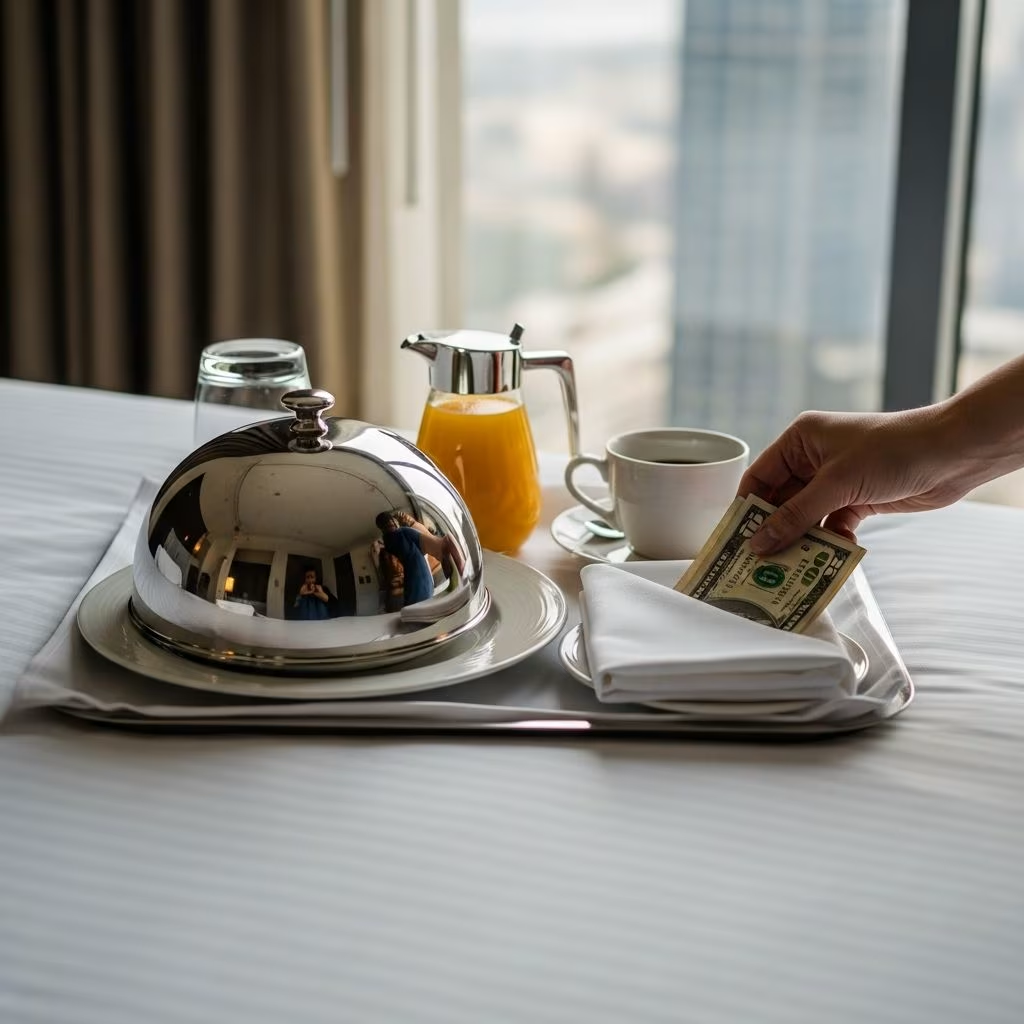
Providing cash directly to the room service staff member upon delivery remains the most straightforward and appreciated tipping method. This approach ensures the tip goes directly to the person who provided the service, avoiding any potential issues with restaurant management retaining portions of credit card-based gratuities.
Cash tips also provide immediate gratification and recognition for the service delivered. The direct exchange reinforces the connection between service quality and compensation, which many hospitality workers appreciate.
Credit Card Authorization
When paying room service charges via credit card, you typically have the option to add a tip to your authorization. While convenient, this method carries some uncertainty about whether the tip reaches the service employee or becomes subject to management allocation policies.
If you choose to tip via credit card, confirm the amount clearly and ensure the tip is properly recorded on your receipt. However, many service industry workers prefer cash tips that they receive directly without any institutional intermediary.
Mobile Payment and Digital Tipping Solutions
Emerging technologies have introduced digital tipping platforms that allow guests to tip service staff through mobile applications and QR codes. These systems provide contactless tipping options—increasingly valued since the pandemic—while still delivering tips directly to employees.
Hotels adopting these technologies typically make the process straightforward, displaying QR codes on receipts or providing clear instructions. Digital tipping offers convenience while maintaining direct compensation to the worker.
Common Questions About Room Service Tipping
Is Tipping Room Service Mandatory?
Tipping remains a voluntary gesture of appreciation rather than an absolute obligation. However, this voluntary nature shouldn’t be interpreted as justifying complete non-tipping for standard service. In regions with tip-dependent wage structures, declining to tip carries implicit judgment about service quality that may not be warranted.
What If I’m Unsatisfied with the Service?
Genuinely poor service—such as excessively delayed delivery, rude behavior, or mishandled orders—justifies reducing your tip below standard percentages or eliminating it entirely. However, distinguish between poor service and circumstances beyond the staff member’s control, such as kitchen delays or management failures.
Should I Tip More for Premium Orders or Expensive Meals?
The percentage-based approach to tipping already accounts for order value. Since you’re calculating 15 to 20 percent of the total bill, more expensive orders automatically result in higher tips without requiring adjustment to your percentage approach.
Is Tipping Required When a Service Charge Is Included?
Service charges included on the bill typically satisfy standard tipping obligations. However, exceptional service warrants additional recognition through supplementary tipping at your discretion.
Building Positive Relationships Through Appropriate Compensation
Proper tipping extends beyond financial transactions—it communicates respect and recognition for honest work. Room service staff members who receive appropriate compensation often demonstrate enhanced service quality for returning guests, creating positive feedback loops where good service receives appropriate recognition and reward.
When traveling frequently or staying extended periods at the same property, consistent appropriate tipping builds relationships with service staff who may remember you and provide enhanced experiences during future visits.
International Tipping Perspectives and Adaptations
Travelers moving between countries must adapt their tipping approaches to align with local practices and expectations. Research before traveling provides insight into cultural norms and prevents inadvertently offending staff or creating awkward situations.
In some countries, service staff receive living wages through employer compensation rather than depending primarily on tips. In these contexts, tipping may be appreciated but not expected. Other cultures view tipping as insulting, suggesting the establishment underpays workers. Understanding these distinctions ensures respectful and culturally appropriate conduct.
Conclusion: Thoughtful Gratuity as Hospitality Courtesy
Room service tipping ultimately reflects individual values regarding fair compensation and respect for service work. By understanding standard guidelines, considering service quality, and recognizing the dependence of many hospitality workers on gratuities, travelers can approach tipping decisions with confidence and appropriateness.
The 15 to 20 percent standard for room service in tip-dependent economies provides a reasonable framework that fairly compensates workers while remaining reasonable for guests. Adapting this baseline for special circumstances, geographic locations, and service quality ensures your gratuities reflect both generosity and propriety.
References
- Tipping in Hotels: The Ultimate Guide — Shiny. https://www.stayshiny.co/blog/ultimate-guide-hotel-tipping-apps-etiquette
- Tipping At Hotels: 5 Must-Knows — AAA Club Alliance. https://cluballiance.aaa.com/the-extra-mile/advice/travel/how-much-to-tip-in-hotels
- Tipping Guide — FairHotel. https://www.fairhotel.org/plan-events/tipping-guide
- The Complexities Of Tipping For Hotel Room Service — One Mile At A Time. https://onemileatatime.com/guides/tipping-hotel-room-service/
On This Page
The Foundation: Why Room Service Tipping Matters Standard Gratuity Percentages Across Different Contexts When Service Charges Already Apply to Your Bill Variations Based on Hotel Classification and Location Specific Scenarios and Adjusted Tipping Guidelines Practical Methods for Providing Tips Common Questions About Room Service Tipping Building Positive Relationships Through Appropriate Compensation International Tipping Perspectives and Adaptations Conclusion: Thoughtful Gratuity as Hospitality Courtesy← Previous
Safe Road Trip Checklist: Hygiene, Prep, and Emergency Essentials
Next →
The World’s Most Luxurious Train Journeys
Related Reading