

 Travel Essentials
 Travel Essentials

Comprehensive guide to preventing pickpocketing and theft while traveling, covering awareness techniques, secure storage methods, and practical defense strategies.
 Travel Essentials
Traveling abroad opens doors to extraordinary experiences, cultural discoveries, and unforgettable memories. However, one reality that confronts many international travelers is the threat of theft, particularly in busy urban centers and tourist destinations. Petty theft and pickpocketing remain persistent challenges across popular travel routes, especially in Europe where crowded public transportation and dense tourist areas create ideal conditions for opportunistic criminals. Understanding how to effectively safeguard your belongings transforms travel from a nerve-wracking experience into one where you can genuinely enjoy your surroundings with confidence and peace of mind.
Theft targeting tourists represents a significant but manageable challenge. Statistical evidence indicates that approximately 80 to 90 percent of pickpocketing incidents occur in specific, predictable environments—primarily on buses, subway systems, trains, and crowded public markets. Rather than viewing this as an insurmountable obstacle, recognizing these high-risk locations allows travelers to implement targeted protective measures and maintain heightened awareness during vulnerable moments.
The concerning aspect of pickpocketing is not the violence associated with it—Europe generally maintains low violent crime rates—but rather the sophisticated and coordinated methods that theft rings employ. Professional pickpockets operate with remarkable skill and efficiency, often working in organized teams that combine distraction techniques with sleight of hand to relieve unsuspecting travelers of their possessions within seconds.
Before implementing defensive strategies, it’s valuable to understand how criminals think and operate. Thieves specifically target tourists not out of personal animosity but because travelers often represent an attractive opportunity. Visitors typically carry higher-value items—passports, credit cards, phones, cameras—and frequently display behavioral patterns that indicate vulnerability, such as frequent checking of money locations, obvious confusion about navigation, or distracted attention devoted to tourist attractions rather than surroundings.
One critical insight is that pickpockets rarely match common stereotypes. They intentionally work to avoid fitting the profile that victims expect. Many present themselves as completely ordinary individuals—well-dressed professionals in suits, people wearing uniforms, or even tourists themselves complete with guidebooks and cameras. Some theft operations employ children or elderly individuals to exploit victims’ natural hesitation to view such groups as threatening. Others pose as helpful locals or official personnel, gaining trust through apparent legitimacy before executing their schemes.
The most powerful defense against pickpocketing isn’t a physical barrier but rather a mental one. Maintaining constant awareness of your immediate environment serves as your primary line of defense. This doesn’t mean viewing everyone with suspicion or experiencing constant anxiety, but rather practicing deliberate observation of your surroundings and the people around you.
Situational awareness encompasses several practical elements:
When you notice someone watching you intently, making direct eye contact with them can be remarkably effective. This simple action communicates that you’ve recognized their attention, removing the element of surprise that many thieves rely upon. A composed, confident demeanor also deters many criminals who prefer victims displaying signs of distraction or uncertainty.
Among the most sophisticated pickpocketing tactics are coordinated distraction schemes. Organized theft teams create deliberate disruptions designed to shift your attention away from your belongings at the critical moment when theft occurs. These schemes take numerous creative forms and are far more common than many travelers realize.
Common distraction tactics include:
The key to countering these schemes is recognition. When you observe any disruption or commotion in crowds, particularly on public transportation or in busy markets, treat it as an alert signal. Rather than rushing to help or getting drawn into the situation, step back, guard your belongings firmly, and only move to assist once you’ve assessed the situation completely and secured your valuables. If you witness someone appearing to fall on an escalator, for example, maintain your distance, protect your possessions, and only approach to help after fully evaluating safety and assessing potential threats.
How you organize and carry your money, documents, and valuables fundamentally affects your security. Rather than concentrating all valuable items in one location, distribute them strategically across multiple secure locations. This approach ensures that even if one storage method is compromised, you retain access to essential items and have backup resources.
A money belt represents one of the most effective security tools available to travelers. This nylon pouch fastens around your waist underneath your clothing, making it virtually invisible and extremely difficult for thieves to access. Store your most critical valuables here—passport, primary credit card, emergency cash, and important documents. The physical separation between your money belt and public view dramatically reduces theft risk. The slight discomfort of wearing a concealed pouch underneath clothing is negligible compared to the security benefits provided.
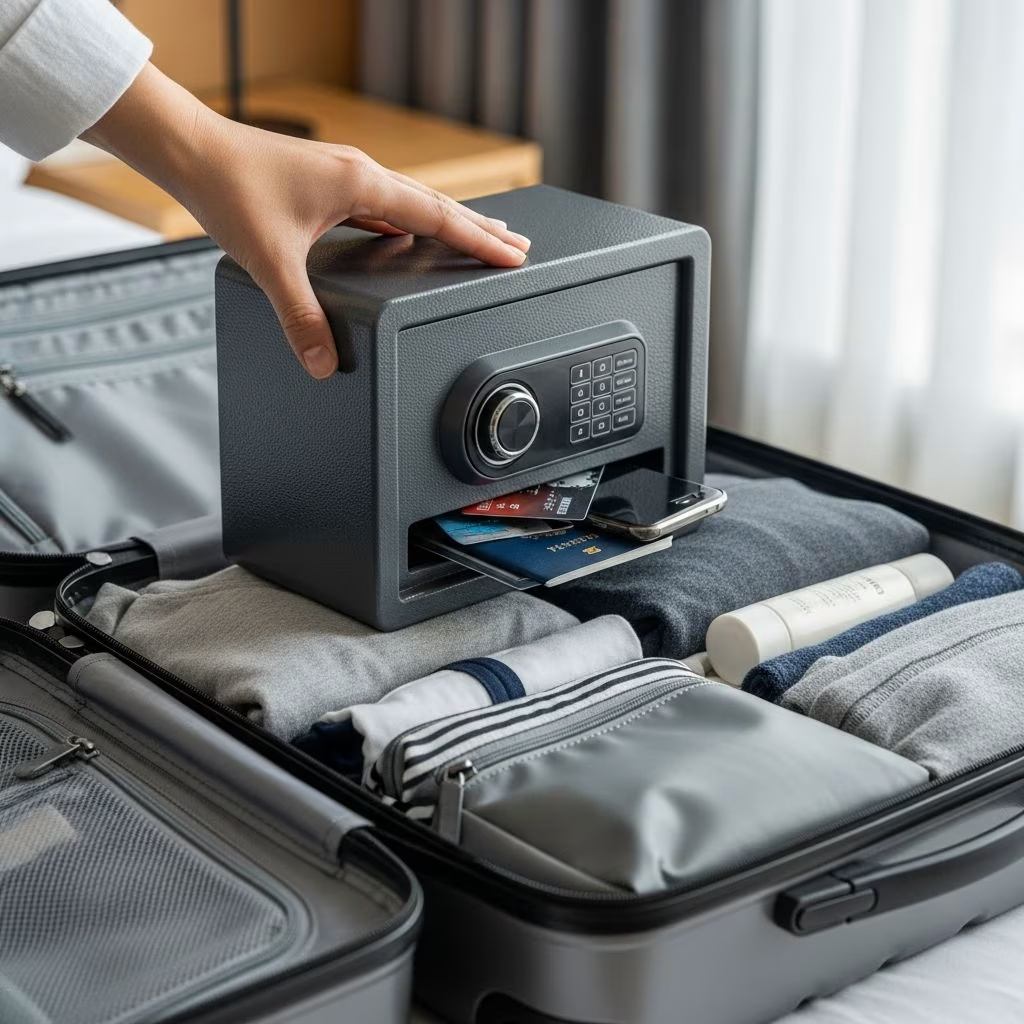
When you’re out exploring, leave non-essential valuables securely in your hotel room rather than carrying everything on your person. This includes items you won’t need during daily activities. Many travelers worry about hotel room security, but the reality is that most hotel staff are trustworthy, and the risk of theft from a room is substantially lower than the risk from street-level pickpockets. When storing items in your room, use strategic placement rather than relying solely on hotel safes—place valuable items in drawers, closets, or other locations where they remain out of sight. Never leave expensive electronics, cameras, or tablets visible on surfaces where cleaning staff or anyone entering the room might see them.
For items you carry during daily activities, employ a day pack or crossbody bag with deliberate organization. Never place your day pack on the back of a chair unattended or unrestrained. Instead, secure it physically—loop the strap around your arm, your leg, or the chair leg itself. This seemingly minor action creates just enough difficulty to redirect a thief’s attention toward easier targets. The goal is making yourself a harder target than surrounding options.
Public transit systems—buses, trains, subways, and trams—represent the single highest-risk environment for pickpockets. The combination of crowded conditions, constant passenger movement, multiple exit points, and rapid transitions creates ideal conditions for theft. Train and bus stops, where passengers board and exit quickly, present particular vulnerability windows. Thieves can move on or off vehicles within seconds, making escape straightforward.
Protective measures for public transportation include:
When possible, consider limiting your use of crowded buses and subways, particularly routes that primarily serve tourists. While public transportation is often essential for getting around cities, being selective about which routes and times you use reduces your exposure to peak theft windows.
Busy markets, famous landmarks, and popular tourist attractions present another significant theft risk due to dense crowds and constant movement. While these locations are often essential components of travel experiences, navigating them safely requires deliberate strategies.
In these environments, practice these protective measures:
One particularly insidious tactic involves criminals offering seemingly helpful assistance. Someone may offer to help you use an ATM, suggesting they “know the system” or want to ensure you’re doing it safely. Others might offer guidance on where to store your valuables or claim to be official security personnel. These interactions are red flags. Legitimate assistance rarely involves strangers offering help with financial transactions or security matters.
When approached by someone offering help with ATM usage, ticket purchases, or valuables storage, the appropriate response is to politely but firmly decline. Step back from the interaction, maintain eye contact to communicate that you’re aware and alert, and wait for the person to leave. If you need ATM access, use machines located inside banks during business hours rather than street-level ATMs. Similarly, never allow anyone to “help” you at ticket machines or navigate transportation systems—these are situations where criminals frequently operate.
Beyond physical precautions, certain behavioral patterns make you significantly less attractive to thieves:
Different valuables require different protection strategies:
Passports and Critical Documents: These should remain in your money belt or secured in your hotel room at all times. Carrying your passport while sightseeing introduces unnecessary risk. Keep a photocopy of critical documents in a separate location from originals.
Credit Cards and Payment Methods: Carry only the cards you’ll actively use, leaving others secured in your hotel. Notify your bank of your travel dates so unusual foreign transactions don’t trigger fraud alerts.
Mobile Phones: Keep phones in front pockets or secure bags rather than back pockets. Modern phones are particularly attractive theft targets due to their high value.
Cameras and Electronics: Store these in hotel rooms when not actively using them. Never leave cameras unattended on tables or chairs.
Despite best efforts, theft occasionally happens. If you’re pickpocketed or robbed, take these steps immediately:
While pickpocketing and petty theft are real concerns, Europe remains a generally safe destination for travelers who take reasonable precautions. Implementing awareness strategies and protective measures reduces risk substantially. Millions of travelers navigate European cities safely annually by following basic security guidelines.
Initial adjustment may feel slightly different, but most travelers adapt quickly. The minor discomfort is negligible compared to the security benefits. Money belts worn underneath clothing are barely noticeable after the first hour of use.
Traveling with companions does provide some advantages, as thieves prefer targeting individuals who appear isolated. However, solo travel isn’t inherently risky—maintaining sharp awareness and implementing protection strategies works equally well whether traveling alone or with others.
Hotel safes work effectively for securing valuables, though some travelers prefer alternative storage methods. Regardless of your storage choice, never leave valuable items visible on room surfaces.
The most effective security approach combines multiple layers of protection rather than relying on any single strategy. Before departure, evaluate your travel itinerary and identify high-risk locations. Research public transportation systems and peak times. Arrange your luggage and valuables strategically. Familiarize yourself with ATM locations inside banks. Most importantly, develop a mindset that balances enjoyment with attentiveness—you can fully experience your destination while maintaining reasonable vigilance about your safety and possessions.
Traveling abroad shouldn’t mean sacrificing peace of mind or becoming hypervigilant about threats. By implementing systematic protection strategies, maintaining situational awareness, and understanding common theft tactics, you significantly reduce risk while preserving your ability to enjoy your journey. The combination of preparation, strategic thinking, and focused attention creates an environment where you can explore confidently, knowing you’ve taken reasonable steps to protect your valuables and your travel experience.
