

Food & Culture Stays Travel Essentials Travel Guides Trip Ideas
Categories
From the Blog
Remy’s Ratatouille Adventure at EPCOT: Ride Review, Tips & 2D Update
Travel Essentials

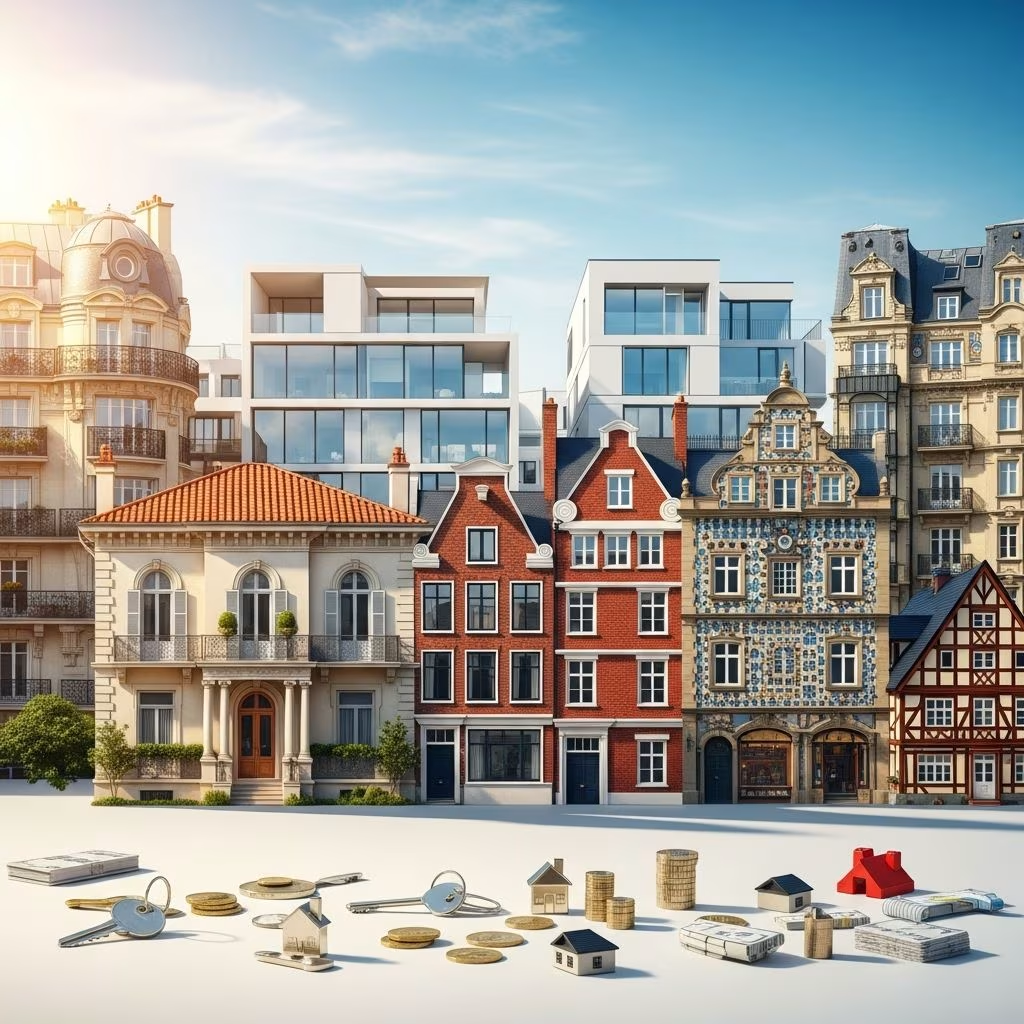
How to Buy Property in Europe: 2026 Guide for Foreign Buyers

A practical 2026 guide to buying property in Europe, covering budgets, legal steps, residency rules, and the best countries for foreign buyers.
Travel Essentials

Acquiring property in Europe offers opportunities for investment, residency, and lifestyle enhancement, but requires careful planning due to diverse national regulations. This guide outlines key phases, popular destinations, and practical advice for international buyers in 2026.

Success begins with thorough preparation. Start by establishing a realistic budget that accounts for purchase price, taxes, legal fees, and ongoing expenses like maintenance and utilities. Secure pre-approval for financing if needed, as European banks often demand proof of funds early. Consult independent legal and tax advisors familiar with your target country to understand liabilities, including inheritance taxes or capital gains.

Non-EU citizens should verify visa and residency rules. Programs like Golden Visas in several nations link property investment to residence permits, providing pathways to long-term stays or citizenship. Obtain necessary identification numbers, such as Spain’s NIE, Portugal’s NIF, or Greece’s AFM, which facilitate transactions.

  • Budget breakdown: Allocate 8-15% of property value for closing costs.
  • Financing tip: Local mortgages for foreigners cap at 50-70% loan-to-value.
  • Residency check: Investments from €250,000 can qualify for permits in Greece and Portugal.

Selecting Prime Locations for Investment

Europe’s diverse markets cater to various budgets and goals. Coastal retreats, urban hubs, and rural gems each present unique advantages. Prioritize areas with strong rental yields (3-7% annually) and growth potential.

CountryKey AttractionsAvg. Price (2-Bed Apt)Residency Perk
PortugalStable market, no foreign restrictions, quick process€250,000-€400,000Golden Visa from €500,000
GreeceAffordable islands, free foreign ownership€150,000-€300,000Residency from €250,000
SpainPopular coasts, straightforward for foreigners€200,000-€350,000No residency tie, NIE required
BulgariaLow costs, easy for apartments€80,000-€120,000Visa support from €300,000
MaltaUrban bargains, permit needed€143,000+Residency from €300,000

Portugal stands out for its buyer protections and developed market, closing deals in 2-3 months. Greece appeals for value, while Bulgaria offers entry-level prices under €50,000 for houses in smaller towns.

The journey typically spans five phases, varying slightly by country but sharing core elements.

  1. Research and Shortlisting: Use online portals and local agents to identify options. Visit in person to assess condition and neighborhood.
  2. Formal Offer: Submit a non-binding offer, followed by a preliminary contract upon acceptance. Deposits range from 5-10%.
  3. Due Diligence: Hire a notary or solicitor for title searches, structural surveys, and permit verification. This mitigates risks like liens or zoning issues.
  4. Finalization: Sign the deed before a notary, transfer funds, and register ownership. Expect 1-3 months total.
  5. Post-Purchase: Activate utilities, secure insurance, and consider management for rentals.

In France, the Compromis de Vente includes a 10-day buyer cooling-off period. Hungary requires non-EU permits (30-45 days), while Cyprus approvals are routine.

Financial Considerations and Hidden Costs

Beyond the asking price, anticipate transfer taxes (2-10%), notary fees (1-2%), and agent commissions (3-5%). Foreign buyers may face extra stamps, like the UK’s Stamp Duty over £250,000.

  • Mortgage options: EU banks offer competitive rates but scrutinize non-resident income.
  • Currency transfer: Use services to minimize forex fees on large sums.
  • Ongoing taxes: Rental income at 10% in Bulgaria; property taxes remain low continent-wide.

Americans must report overseas assets via FBAR and consider US-EU double taxation treaties.

EU law generally permits freehold purchases by non-residents, but exceptions apply: Denmark and Austria need approvals; Bulgaria non-EU buyers form companies for land. Always engage bilingual lawyers to navigate contracts.

Key protections include binding preliminary agreements and notary oversight, ensuring clear titles. In Italy, the codice fiscale is obtained swiftly via notary.

Investment Potential and Rental Strategies

Properties yield 3-7% via short-term rentals in tourist spots like Valencia or Malta’s Xlendi. Long-term lets suit stable cities. Factor vacancy rates and regulations—some areas cap Airbnb nights.

Common Pitfalls to Avoid

  • Ignoring local customs, like verbal offers in some markets.
  • Skipping inspections, risking hidden defects.
  • Overlooking utilities or community fees in apartments.
  • Forgetting exit strategies: resale taxes vary (e.g., 19% in Spain).

Frequently Asked Questions

Can non-EU citizens buy property anywhere in Europe?

Yes, in most countries without restrictions, though some require permits or tax IDs.

What is the easiest country for foreigners?

Portugal and Spain offer streamlined processes with no ownership barriers.

How long does a purchase take?

Typically 1-3 months, faster in Bulgaria (6-8 weeks).

Are Golden Visas still available in 2026?

Yes, in Greece (€250k+), Malta (€300k+), though thresholds evolve.

What documents do I need?

Passport, tax ID, proof of funds, and lawyer/notary assistance.

Final Steps for Seamless Ownership

After closing, register for local services and monitor tax obligations. For absentees, hire managers to handle upkeep and tenants. Europe’s market rewards informed buyers with appreciating assets and lifestyle perks.

References

  1. How to Buy Property in Europe – A Practical Guide for 2026 — Residaro. 2026. https://residaro.com/blog/how-to-buy-property-in-europe
  2. Buying Property in Europe as an American: Best Countries — Global Citizen Solutions. 2025. https://www.globalcitizensolutions.com/best-place-to-buy-property-in-europe/
  3. Buying property in Europe: What overseas buyers need to know — Currencies Direct. 2025. https://www.currenciesdirect.com/en-gb/buy-property-abroad/buying-property-in-europe-overseas-buyers-guide
  4. Easiest Country To Buy A House In Europe – Buyer’s Guide — Bitizenship. 2025. https://bitizenship.com/blog/easiest-country-to-buy-a-house-in-europe
  5. Buying property in Europe as an American: Full guide — Wise. 2025. https://wise.com/us/blog/buying-property-in-europe
  6. Your guide to buying property in France — REMAX Europe. 2025. https://remax.eu/newsroom-post/your-guide-to-buying-property-in-france/
  7. Buying a house – Your Europe — European Union. 2025. https://europa.eu/youreurope/citizens/residence/documents-formalities/buying-house/index_en.htm
SN
Sneha Tete
Sneha is a relationships and lifestyle…

Sneha is a relationships and lifestyle writer with a strong foundation in applied linguistics and certified training in relationship coaching. She brings over five years of writing experience to CultureTreker,  crafting thoughtful, research-driven content that empowers readers to build healthier relationships, boost emotional well-being, and embrace holistic living.Her writing and insights reflect the belief that beauty, happiness, and wellness begin from within, through the harmonious balance of the mind, body, and heart. With a background in instructional design and research writing, Sneha transforms complex topics into practical insights that are easy to understand and apply.Sneha has also self-published a novella on adolescent mental health, highlighting her ability to navigate emotionally layered topics with nuance and empathy. When she's not writing, you'll find her exploring storytelling through photography, diving into K-dramas, or enjoying quiet moments with her family and friends.

← Previous
Machu Picchu: History, Meaning, and Visitor Guide
‹›
