

 Travel Essentials
 Travel Essentials

Turn travel downtime into growth with practical ways to learn skills, explore locally, save money, and stay inspired for future adventures.
 Travel Essentials
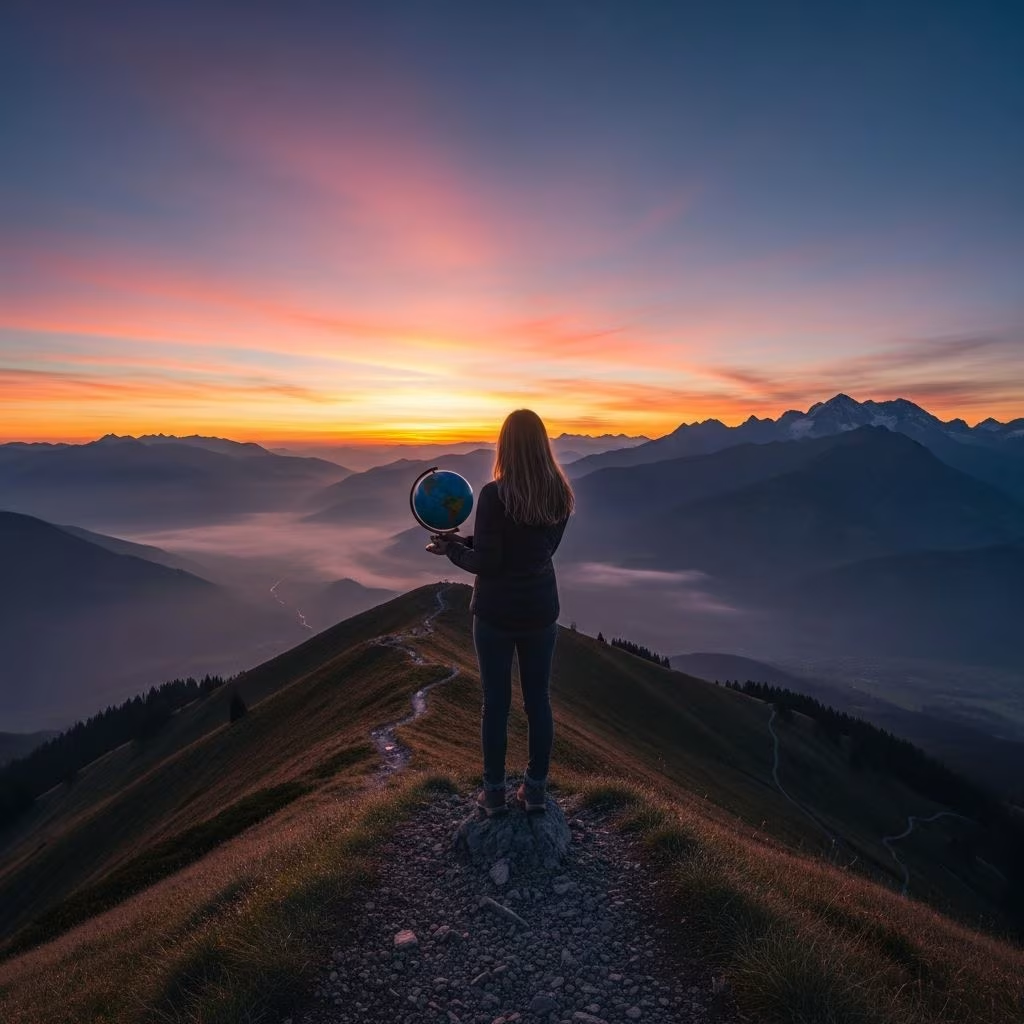
The inability to travel can feel like losing a fundamental part of your identity, especially for those who view exploration as essential to their well-being. Whether due to global circumstances, financial constraints, health considerations, or personal obligations, extended periods without travel can trigger feelings of disappointment and restlessness. However, this temporary pause presents an unexpected opportunity to reframe your relationship with adventure, deepen your skills, and ultimately return to travel as a more informed and capable explorer.
The psychological foundation for coping with travel limitations begins with how you conceptualize the situation. Rather than viewing this period as a permanent loss or definitive ending to your travels, consider framing it as a temporary season in your life. This subtle shift in language and thinking patterns can significantly impact your emotional resilience.
Catastrophic thinking—believing that because you cannot travel now means you will never travel again—creates unnecessary suffering. Research in cognitive behavioral psychology demonstrates that challenging these absolute thought patterns and replacing them with more realistic, flexible perspectives enhances psychological well-being. Instead of thinking “I’ll never see the world,” reframe it as “I’m not traveling right now, but I will in the future.” This acknowledgment of impermanence empowers you to make intentional choices during the present moment rather than succumbing to despair.
Accepting the current reality without judgment is equally important. Resistance to what is happening now only amplifies frustration. By acknowledging the temporary nature of your circumstances, you create mental space to pursue meaningful activities that align with your values and interests.
One of the most constructive uses of travel downtime is developing skills that will enhance your future experiences. This approach transforms restriction into preparation, giving your current period a sense of purpose and direction.
Language acquisition stands as a particularly valuable pursuit. Learning even basic conversational phrases in the language of your target destinations creates authentic connections with local communities that typical tourists miss. Online platforms offering interactive lessons allow you to progress at your own pace while building confidence for real-world application. Beyond communication, language learning engages cognitive processes that research suggests may enhance memory formation and creative thinking.
Activity-specific certifications expand your travel possibilities significantly. Obtaining scuba diving certification, rock climbing proficiency, or kitesurfing credentials opens access to experiences that require prior training. When you eventually travel, you’ll be able to participate in advanced activities rather than spending vacation time completing basic training.
Documentation preparations deserve attention as well. Renewing your passport before expiration, updating your visa eligibility status, or applying for programs that expedite airport security screening eliminates logistical obstacles when travel becomes possible again. These administrative tasks may seem mundane, but they directly facilitate seamless travel execution.
Your personal travel history represents a treasure trove of experiences waiting to be properly organized and appreciated. The average traveler accumulates thousands of digital photos scattered across devices and cloud services, many never reviewed after the trip concludes.
Dedicating time to systematically review, organize, and curate your travel photo collection serves multiple purposes. This process, sometimes referred to as reminiscence therapy in psychological literature, engages memory recall and generates positive emotions associated with past experiences. Organizing photos chronologically, by destination, or by travel companion creates a structured archive you can easily access and share.
Beyond personal benefit, sharing curated travel memories with friends, family, and fellow travelers strengthens social bonds. The process of selecting and presenting your images encourages reflection on what made certain moments meaningful. You might discover patterns in what captivates you—specific architectural styles, culinary traditions, or landscape types—that inform future travel planning.
Creating physical mementos from digital memories adds a tangible dimension to this nostalgic review. Printing and framing favorite photos, creating photo books, or designing travel-themed calendars produces home décor that simultaneously reminds you of accomplishments and inspires future aspirations.
Travel often serves as a catalyst for self-discovery and identity exploration. When traditional travel is unavailable, creative pursuits can fulfill similar psychological functions by introducing novelty, challenge, and self-expression into your routine.
Consider reviving abandoned hobbies or initiating entirely new creative practices. Musical instruments, visual arts, creative writing, photography, or crafting activities all provide outlets for self-expression and cognitive engagement. These pursuits don’t require geographic displacement to offer the psychological benefits you seek from travel—novelty, growth, mastery, and achievement.
The key distinction between random distraction and meaningful reinvention lies in intentional selection. Choose activities that genuinely interest you rather than those you feel obligated to pursue. This approach ensures sustained engagement and genuine satisfaction rather than temporary escape that ultimately feels hollow.
Virtual Exploration Technologies
Modern digital platforms enable immersive experiences of destinations worldwide without leaving your home. High-definition virtual museum tours allow you to examine artifacts in major institutions with zoom capabilities that surpass in-person viewing limitations. Virtual reality experiences transport you to geographical locations, cultural events, and historical moments with surprising sensory authenticity.
Culinary Travel at Home
International cuisine preparation becomes both hobby and cultural education. Selecting recipes from target destinations, sourcing authentic ingredients, and preparing meals engages your senses while teaching you about regional food traditions. This approach transforms your kitchen into an experiential classroom and your dining experience into a mini cultural immersion.
Local Area Exploration
Many people overlook travel opportunities within their immediate geographic vicinity. Treating your local region as a tourist destination—visiting historical sites, natural attractions, and cultural venues you’ve overlooked—provides adventure benefits on a reduced budget. Day trips to nearby cities or nature areas offer novelty and exploration without requiring extensive time or financial investment.
Financial Preparation
Periods of travel restriction provide ideal timing for building your travel fund. Redirecting entertainment, dining, and discretionary spending toward travel savings creates substantial resources for future adventures. This financial discipline ensures that when travel becomes possible, you’re not constrained by budget limitations that compromise your experience quality.
Travel restriction doesn’t require social isolation. Online communities of travelers, travel enthusiasts, and adventure seekers provide connection, inspiration, and practical knowledge sharing. Engaging with these digital communities offers several benefits: learning from others’ experiences, gaining destination recommendations, refining travel planning skills, and maintaining your identity as a traveler despite current limitations.
Participating in virtual travel webinars, joining online discussion forums, or contributing travel content yourself keeps your engagement with travel active and social. These connections often endure beyond the restriction period, creating lasting friendships and travel companions for future journeys.
Your living space profoundly influences your psychological state and daily well-being. Making intentional improvements to your home environment demonstrates self-investment and creates a more enjoyable immediate experience while you cannot travel.
Incorporating travel-inspired décor—artwork from destinations you’ve visited or wish to visit, textiles reflecting cultural aesthetics, maps, or travel photography—creates daily environmental reminders of your adventurous identity. Beyond aesthetic improvement, these elements serve as conversation starters with guests and personal touchstones that reinforce your travel aspirations.
Practical home improvements that specifically facilitate future travel deserve consideration as well. Reducing landscaping maintenance requirements through ground cover installation, implementing efficient home systems that operate with minimal oversight, or organizing your living space to facilitate faster packing all streamline your travel preparation process.
Rather than viewing travel planning as frustrating when you cannot immediately execute it, embrace planning as an enjoyable activity in itself. Research represents a form of travel—mental exploration of destinations, possibilities, and experiences.
Creating detailed travel bucket lists, researching lesser-known destinations, learning about visa requirements, understanding local customs, and identifying unique experiences worth prioritizing all constitute productive travel engagement. This thorough preparation ensures that when travel becomes possible, you maximize your time through informed decision-making rather than improvisation limited by incomplete knowledge.
Establishing a dedicated planning practice—perhaps monthly or seasonal—creates anticipatory structure that provides ongoing motivation and direction.
Language acquisition to conversational proficiency typically requires 3-6 months of consistent study. Adventure certifications like scuba diving require 2-4 days of intensive training. The timeline depends on your starting point, available study time, and specific skill being developed. The key is consistent practice rather than marathon sessions.
Travel doesn’t require substantial finances if approached strategically. Small, consistent savings combined with local exploration provide fulfillment. Consider setting aside even modest amounts—redirecting small daily expenses creates meaningful accumulation over months. Focus on activities that cost nothing: virtual tours, language learning with free apps, reading travel content.
Virtual experiences offer different benefits than physical travel but can satisfy specific aspects of wanderlust—curiosity about destinations, learning about cultures, and visual exploration. However, they cannot replicate sensory experiences like climate, food aromas, or physical movement through landscapes. Optimal satisfaction combines virtual exploration with practical preparation and local adventure.
Combining multiple activities prevents monotony and maintains engagement. Rotating between skill development, creative pursuits, social connection, and planning prevents any single activity from becoming burdensome. Setting specific goals—completing a language level, finishing a skill certification, organizing photos—provides measurable progress and accomplishment.
Travel restrictions, while challenging, need not represent a complete cessation of growth, adventure, or fulfillment. By intentionally engaging with skill development, personal creativity, community connection, and careful planning, you transform this period into preparation for richer future travel experiences. The mindset shift from passive waiting to active engagement determines whether travel restrictions become sources of despair or opportunities for unexpected growth. When you eventually resume travel, you’ll do so as a more skilled, knowledgeable, and prepared explorer—capable of deeper engagement and more meaningful experiences than your pre-restriction self would have achieved. This perspective reframes temporary limitation as an unexpected investment in your future adventures.
