

 Travel Essentials
 Travel Essentials

Learn insider strategies to immerse yourself in Tel Aviv's vibrant culture, from late-night dining traditions to neighborhood exploration and authentic culinary experiences.
 Travel Essentials
Tel Aviv represents one of the world’s most dynamic urban centers, characterized by its fusion of modernity, cultural diversity, and unbridled energy. Rather than approaching the city as a conventional tourist destination, understanding how residents navigate and appreciate their environment reveals a deeper dimension of what makes Tel Aviv genuinely extraordinary. The distinction between observing a city and truly inhabiting its character lies in adopting the perspectives, rhythms, and practices that locals have cultivated over decades.
The journey toward authentic Tel Aviv engagement begins with recognizing that the city operates on principles quite different from many other urban environments. The pace is rapid, the social dynamics are informal, and there exists an underlying philosophy that emphasizes spontaneity, community connection, and living life to its fullest. For visitors seeking to transition from passive observation to active participation, this requires deliberate shifts in how you approach time, space, food, and human interaction.
One of the most striking differences between Tel Aviv locals and typical tourists involves their relationship with time, particularly regarding meal schedules and evening activities. The conventional notion of an “early dinner” simply does not exist within Tel Aviv’s social infrastructure. Residents typically reserve dining tables well into the evening, with dinner reservations becoming increasingly common as the night progresses.
This temporal shift reflects a broader lifestyle philosophy where Tel Avivians intentionally structure their days and nights around extended social engagement. Rather than viewing an evening as something to conclude by a certain hour, locals treat nighttime as the primary period for social activity, cultural engagement, and leisure pursuits. The practical implication for those seeking authentic experiences involves adapting your schedule to align with when actual activity occurs.
Nightlife establishments that attract local clientele operate according to rhythms that perplex traditional travelers. Venues frequently remain empty until two in the morning, with their peak hours occurring between three and five. Some establishments do not even unlock their doors until midnight. This delayed schedule is not aberrant but rather represents the normalized pattern of Tel Aviv’s entertainment landscape. For those willing to embrace this temporal inversion, the rewards include access to environments where locals genuinely gather, rather than spaces designed primarily for tourist consumption.
Embedded within Tel Aviv’s social fabric exists a profound coffee ritual that transcends mere caffeine consumption. The city’s numerous coffee establishments serve as informal community centers where residents establish consistent habits, develop relationships with baristas, and engage in the ritualistic practice of people-watching. Nearly every city block features at least one café, and these spaces maintain constant occupancy throughout all operating hours.
Becoming a “regular” at a local coffee shop represents more than a simple consumer relationship; it constitutes membership within a micro-community. The practice of arriving consistently, ordering your preferred beverage, and occupying a seat for extended periods creates invisible social bonds that locals recognize and value. Unlike tourism-oriented establishments designed for rapid turnover, neighborhood coffee shops expect patrons to linger indefinitely with minimal pressure to purchase additional items.
This ritual provides practical benefits beyond social integration. Regular patrons gain access to local knowledge networks where recommendations about new restaurants, cultural events, and neighborhood developments circulate informally. Additionally, these spaces offer optimal vantage points for observing the neighborhood’s rhythms, watching residents conduct their daily lives, and absorbing the ambient culture without requiring formal activities or organized tours.
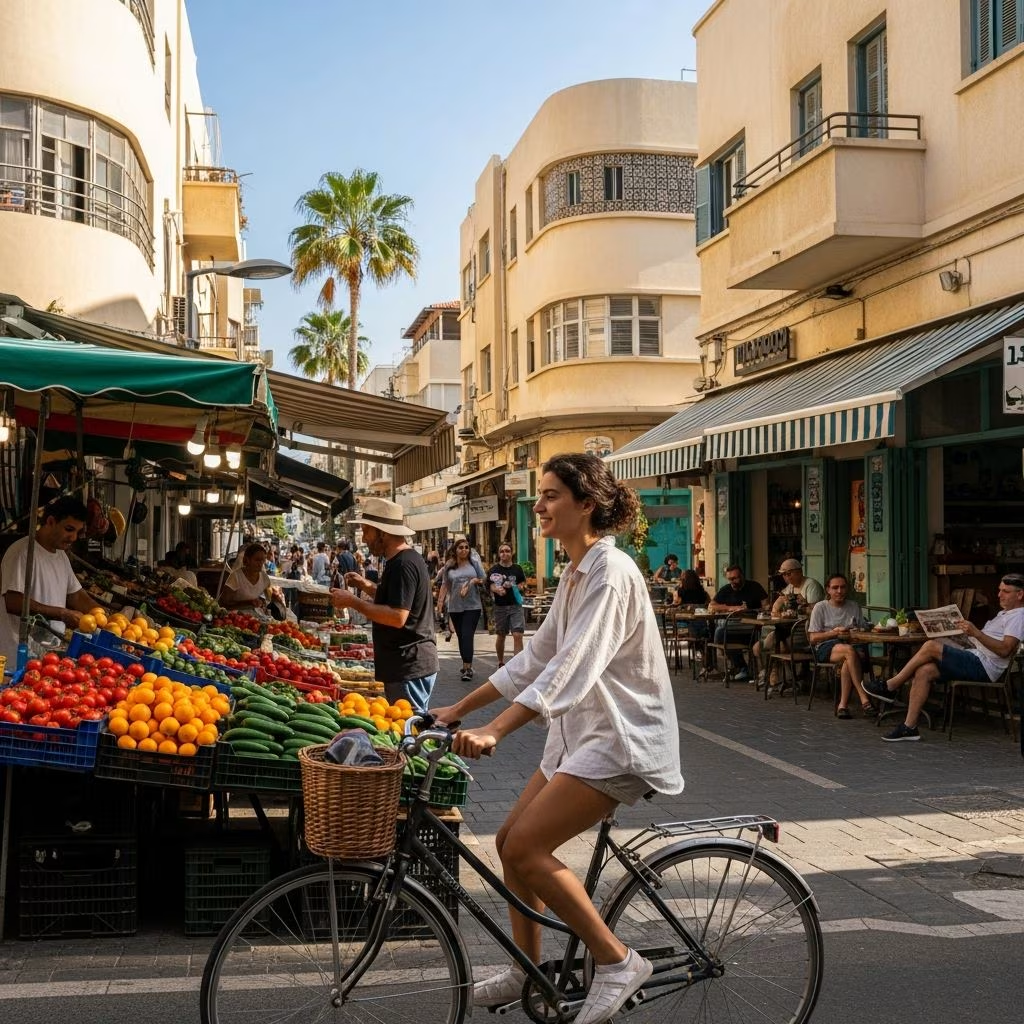
The physical and cultural heart of local Tel Aviv commerce centers on the shuk—the traditional marketplace that functions as repository of authentic food culture, social interaction, and neighborhood identity. Unlike modern supermarkets that emphasize efficiency and standardization, markets preserve methods of commerce that have persisted for generations across the Mediterranean and Middle Eastern regions.
Within these spaces, locals source produce selected for quality rather than appearance, acquire freshly-baked bread while it remains warm, obtain compressed juices prepared minutes before purchase, and procure herbs and spices in quantities that reflect actual culinary needs. Each market maintains distinct characteristics reflecting its particular neighborhood’s demographic composition and historical development.
For visitors, market exploration offers multisensory immersion into authentic food culture. The sensory experience—combining visual abundance, aromatic intensity, and acoustic energy—cannot be replicated through conventional retail environments. More significantly, markets represent spaces where social interaction flows naturally between vendors and customers, where haggling and banter constitute expected communication patterns, and where the transaction itself becomes secondary to human engagement.
Tel Aviv’s identity crystallizes not at famous landmarks but within residential neighborhoods where actual community life unfolds. Several areas have earned distinction for their capacity to provide authentic engagement with local culture.
Neve Tzedek stands as Tel Aviv’s original Jewish neighborhood, established beyond Jaffa’s historical walls. The area features narrow streets lined with modest residential structures, charming cafés, boutique patisseries, and independent designer shops. The neighborhood has attracted substantial French expatriate communities, creating a distinct cultural character that blends Mediterranean aesthetics with European sensibilities.
Kerem HaTeimanim, known as the Yemenite Quarter, presents perhaps the most visceral neighborhood experience. The area’s character derives from Yemenite Jewish heritage, evident in both architectural design and culinary traditions. Narrow streets, unassuming eateries serving Yemenite cuisine, and lively informal bars create an environment that feels somewhat disconnected from contemporary Tel Aviv’s modernist orientation. The neighborhood’s charm emerges precisely from its apparent disrepair and lack of commercial polish.
Florentin occupies a unique position as Tel Aviv’s grittiest neighborhood, characterized by striking street art, underground music venues, and alternative cultural establishments. The area attracts younger residents and creative professionals who value authenticity over comfort. Political undertones, religious diversity, and artistic expression coexist within this neighborhood’s boundaries, creating an environment that feels genuinely lived-in rather than designed for external consumption.
Food represents the most direct pathway toward understanding local culture. Tel Aviv’s culinary landscape extends far beyond tourist-oriented establishments, encompassing small family-run restaurants, casual food stalls, and neighborhood institutions that serve primarily local clientele.
Authentic engagement with Tel Aviv’s food culture involves seeking establishments that locals frequent for daily meals rather than special occasions. These venues typically lack elaborate ambiance, marketing materials, or English-language menus. The clientele consists almost exclusively of residents conducting ordinary activities—grabbing lunch during work breaks, evening meals with family or friends, or casual social gatherings.
Understanding local food ordering conventions enhances the experience significantly. Rather than requesting individual dishes as separate courses, locals typically order multiple items for shared consumption. This communal eating approach reflects broader cultural values emphasizing group participation over individual consumption. The implicit understanding that food constitutes a vehicle for social bonding rather than merely nutritional necessity shapes how locals approach restaurant visits.
A distinctive aspect of Tel Aviv’s character involves accepting service patterns that diverge significantly from tourist-industry standards. Locals navigate with equanimity what would frustrate many international visitors: indifferent service, unpredictable delays, inconsistent schedules, and seemingly arbitrary operational decisions.
Rather than viewing this as deficiency, locals have normalized service unpredictability as inherent to the city’s operational logic. Waiter attention arrives irregularly, water service remains optional rather than automatic, and table turnover occurs without warning. Food arrives according to kitchen capacity rather than ordering sequence.
Adopting this perspective represents important psychological work for achieving authentic integration. Accepting that your carefully planned evening will inevitably encounter complications, that schedules exist more as suggestions than mandates, and that personal control over outcomes remains limited allows you to release anxiety and actually enjoy the experience. This acceptance reflects a deeper cultural philosophy that emphasizes resilience, flexibility, and finding humor in life’s inevitable disruptions.
Tel Aviv’s reputation for exceptional nightlife derives from the city’s genuine commitment to after-hours social engagement rather than commercialized entertainment packaging. The distinction proves significant: tourists generally seek choreographed experiences, while locals seek authentic environments where community members gather spontaneously.
Authentic nightlife engagement involves discovering venues where primary patrons are residents rather than international visitors. These establishments frequently feature music selections reflecting local taste preferences—often including Arabesque and regional styles alongside international genres. Conversation, interaction with other patrons, and gradual rather than rapid mood escalation characterize these spaces.
The commitment to remaining awake and engaged until sunrise represents more than physical endurance; it reflects a particular life orientation that privileges experiences and social connection over conventional comfort and rest. This philosophy permeates Tel Aviv culture sufficiently that operating on limited sleep appears normalized even for residents maintaining daytime employment.
Understanding how residents navigate the city’s physical geography provides both practical utility and cultural insight. Public transportation remains the primary movement mechanism for daily activities, with buses serving as informal social spaces where conversations naturally develop and neighborhood dynamics become visible.
Using public transit exposes you to authentic urban rhythms impossible to experience from private vehicles or taxi services. Peak hours reveal socioeconomic diversity, overhearing Hebrew conversations provides cultural immersion, and unexpected delays teach acceptance of temporal uncertainty. Rather than viewing transportation as mere logistics problem, locals treat transit as integral to urban experience.
Dinner typically begins between 8 and 10 PM, with later times preferred, especially on weekends. Reservations become necessary for popular restaurants, and many establishments fill tables continuously throughout the evening hours.
Authentic local dining runs the full spectrum from very economical casual establishments to moderately priced neighborhood restaurants. Costs remain significantly lower than tourist-oriented venues, particularly when eating where locals congregate for daily meals.
Neve Tzedek, Kerem HaTeimanim, and Florentin each offer distinct authentic character. Selection depends on whether you prefer charming pedestrian environments, traditional cuisine, or artistic alternative culture.
Basic Hebrew familiarity enhances interaction, though English remains widely understood in commercial settings. Learning common phrases and food names demonstrates cultural respect and facilitates deeper engagement.
Authentic venues remain quiet until midnight or later, reach optimal capacity between 2 and 4 AM, and continue operating into early morning hours. Early evening visits yield disappointing emptiness.
