

 Travel Essentials
 Travel Essentials

Learn authentic ways to explore Venice beyond typical tourist attractions, including where locals eat, how to navigate neighborhoods, and tips for respectful cultural immersion.
 Travel Essentials
Venice stands as one of the world’s most visited destinations, yet beneath the layers of tourism lies a vibrant community shaped by centuries-old traditions and distinctive daily rhythms. The challenge for thoughtful travelers involves peeling back the manufactured tourist experience to uncover the authentic cultural fabric that locals navigate every single day. This requires a fundamental shift in perspective—moving from treating Venice as an open-air museum to recognizing it as a living, functioning city where thousands of people maintain homes, operate businesses, and preserve traditions.
Understanding how to genuinely engage with Venice requires respect for the delicate balance between welcoming visitors and protecting the community’s quality of life. The resident population has declined dramatically over recent decades, with many Venetians relocating due to overtourism, flooding, and the challenges of maintaining residency in an increasingly commercialized environment. By adopting local practices and supporting authentic establishments, visitors contribute positively to the sustainability of Venice’s future.
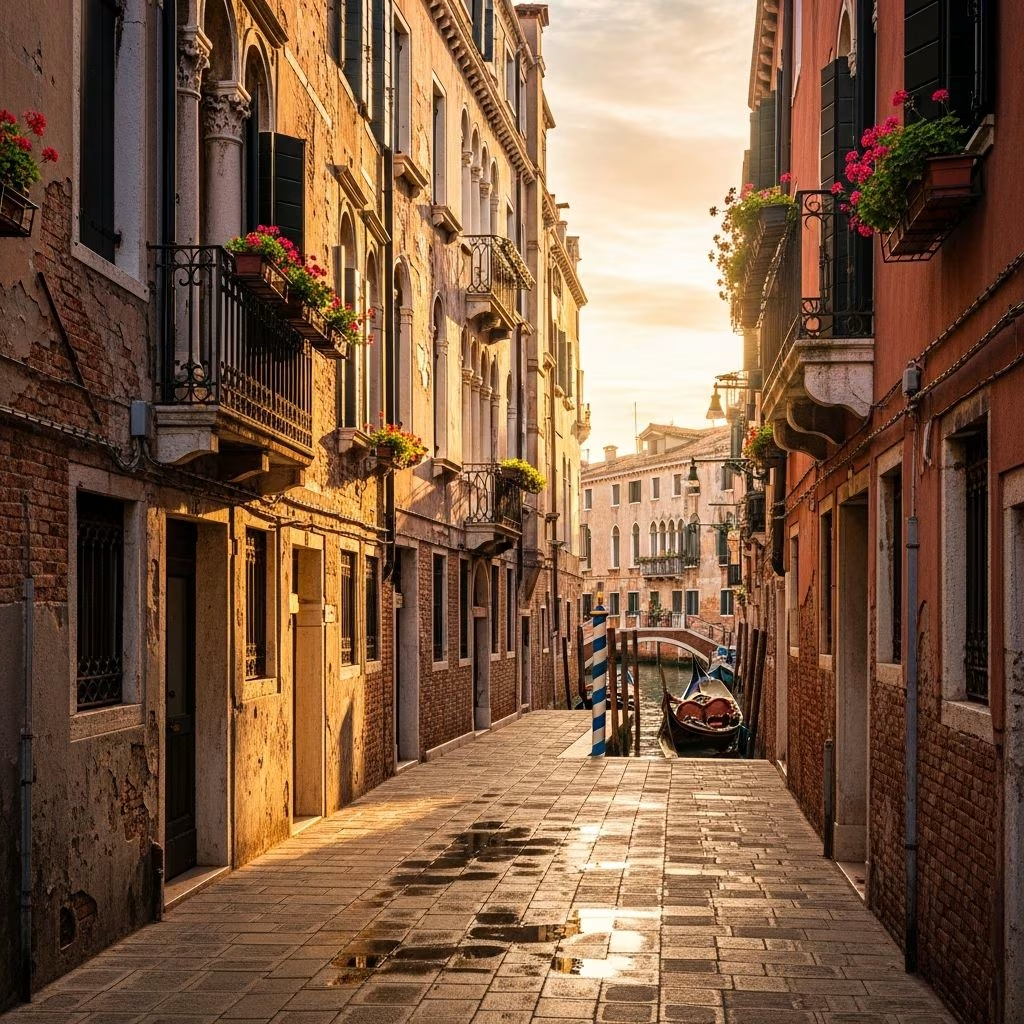
The way one moves through Venice fundamentally shapes the experience. Rather than consulting detailed itineraries and rushing between famous monuments, locals move through the city with intention and patience. The sprawling network of narrow streets—called calli—and small squares known as campi creates a naturally segmented city where different neighborhoods maintain distinct personalities and purposes.
Walking forms the cornerstone of Venetian life, and visitors should embrace this mode of transportation completely. The beauty of navigating on foot lies not merely in reaching destinations but in the journey itself. Allowing yourself to become temporarily disoriented often leads to the most rewarding discoveries: a quiet courtyard where children play, a neighborhood bar where workers grab morning espresso, or a tucked-away bridge offering an unexpected perspective of the lagoon.
Locals deliberately choose to stay to the right as they navigate crowded passages, a small gesture of consideration that maintains the flow of pedestrian traffic. This seemingly minor behavior reflects deeper Venetian values about community responsibility and shared public space. Visitors who adopt this practice demonstrate respect for the city’s functional reality rather than treating it as a backdrop for personal entertainment.
While Piazza San Marco undeniably deserves a visit for its historical and architectural significance, it represents only one dimension of Venetian social life. The real heartbeat of the community pulses through smaller squares scattered throughout the city. Campo Santa Margherita, Campo San Giacomo dell’Orio, and Campo dei Gesuiti serve as genuine gathering places where students, families, and lifelong residents naturally congregate.
These spaces function as outdoor living rooms, where residents conduct their actual social interactions. Sitting quietly on a bench and observing the rhythm of daily life—children playing, neighbors chatting, vendors arranging goods—provides genuine insight into Venetian culture. Unlike the carefully curated experience of tourist-heavy piazzas, these authentic gathering spaces reflect how the community actually uses and values public space.
Venetian cuisine represents one of the most direct expressions of the region’s geography, history, and values. The city’s position in the Adriatic has shaped a food culture deeply rooted in seafood, seasonal ingredients, and generations of culinary knowledge. Understanding how locals approach eating reveals fundamental aspects of their relationship with community and tradition.
The Rialto Market has functioned as Venice’s primary marketplace for over five centuries, serving as far more than a simple commercial transaction space. Each morning, residents arrive to purchase fish, fruits, and vegetables directly from vendors they’ve known for years. The market embodies the intersection of commerce, social connection, and cultural continuity. Shopping here offers visitors a chance to observe authentic Venetian behavior while accessing the same high-quality, locally-sourced ingredients that residents use in their daily cooking.
Purchasing ingredients from the market and preparing a meal provides both practical economy and cultural engagement that restaurant dining cannot replicate. Learning to select fresh fish or seasonal vegetables while conversing with vendors offers insights into local values and preferences that guide Venetian foodways.
Rather than seeking restaurants with multilingual menus and tourist pricing, locals patronize osterie and bacari—traditional establishments that serve straightforward, high-quality food at reasonable prices. These venues maintain continuity with Venetian culinary traditions while remaining accessible to neighborhood residents rather than international visitors. The experience differs fundamentally from tourist-oriented establishments in both atmosphere and authenticity.
A typical Venetian dining ritual involves enjoying an ombra—a small glass of wine—paired with cicchetti, which function as local tapas offering concentrated flavors in modest portions. This practice reflects the Venetian preference for quality over quantity and social interaction over rushed consumption. Standing at a bar counter while enjoying these items represents the most authentic dining experience available in the city.
Timing matters considerably in the dining experience. Locals eat lunch during traditional hours, roughly between noon and two o’clock, and dinner typically begins around eight or nine in the evening. Avoiding peak tourist hours contributes both to a more genuine experience and to reducing strain on the city’s already-taxed infrastructure and services.
How locals spend their leisure time reveals different values and priorities than typical tourist itineraries suggest. Rather than rushing from one monument to another, residents might spend an evening attending a gallery exhibition, enjoying drinks with friends at a favorite bar, or taking a leisurely walk through neighborhoods most tourists never visit.
Venice hosts numerous gallery spaces and performance venues that cater primarily to residents rather than tourists. These establishments feature artist talks, film screenings, theatrical performances, and contemporary exhibitions that reflect current creative thinking rather than historical monuments. Regular attendance at such venues connects visitors with the contemporary cultural life that Venetians actively participate in, rather than exclusively focusing on historical preservation.
Discovering favorite bars and restaurants through repeated visits mimics the local experience more authentically than consulting guidebooks. Regulars develop relationships with proprietors, remember favorite dishes, and anticipate seasonal specialties. This practice of cultivating personal preferences and establishing connection with specific establishments represents a fundamentally different approach to experiencing a city than tourist-style sampling across numerous venues.
Visiting famous sites at non-traditional times offers entirely different experiences. A midnight walk through Piazza San Marco reveals the space in its true architectural majesty, absent the overwhelming crowds that define daytime visits. The quiet reflection such moments enable connects visitors to the historical grandeur of Venice without the sensory overload of peak hours.
Similarly, arriving at beloved establishments early in the morning—such as historic cafes that have served patrons for centuries—places visitors alongside locals conducting their ordinary routines. Standing at a bar counter with neighborhood residents while consuming espresso creates genuine cultural contact unlikely to occur in more formal or touristy settings.
For visitors genuinely interested in experiencing Venice authentically, developing strategies to navigate around the worst concentrations of tourism becomes essential. Several practical approaches serve both personal enrichment and community benefit.
Supporting local businesses and artisans directly contributes to the economic survival of Venice’s traditional economy. Purchasing handcrafted souvenirs from actual artisans rather than mass-produced items from street vendors ensures that money spent actually supports the community. Choosing locally-owned accommodations over international hotel chains similarly channels economic benefit toward residents.
Dining in restaurants operated by families with multi-generational histories in Venice rather than international chains creates different economic impacts. The proprietor relationships that develop through repeated visits to family-run establishments represent exactly the kind of genuine human connection that transforms travel from consumption to cultural exchange.
Bacari represent traditional Venetian establishments that serve local clientele with straightforward food, reasonable pricing, and authentic atmosphere. Unlike tourist-oriented venues, these bars maintain connection to neighborhood communities and preserve traditional preparation methods.
Lunch occurs between noon and two o’clock, while dinner begins around eight or nine in the evening. Eating during these traditional hours places visitors alongside actual residents rather than tourist crowds.
Eating during off-peak hours, visiting attractions at non-traditional times, supporting local businesses, and respecting the city as a functioning community rather than an amusement park all contribute to sustainable tourism.
Islands in the surrounding lagoon offer peaceful environments, fewer tourists, opportunities for physical activity like cycling, and contact with communities existing outside the tourist economy.
Adopting a local approach to Venice requires ongoing mindfulness and willingness to abandon preset expectations. Rather than viewing “local experience” as a checklist to complete, consider it an evolving engagement with a complex community navigating significant challenges.
The most profound way to experience Venice like a resident involves recognizing the city first and foremost as a home to real people managing ordinary daily life amid extraordinary circumstances. This fundamental reorientation—from tourist seeking attractions to observer respecting a functioning community—transforms every interaction, meal, and moment of exploration into something more meaningful and mutually beneficial.
