

 Travel Essentials
 Travel Essentials

Explore Norway like a local with scenic trains, sustainable travel, authentic cuisine, and outdoor adventures beyond the tourist trail.
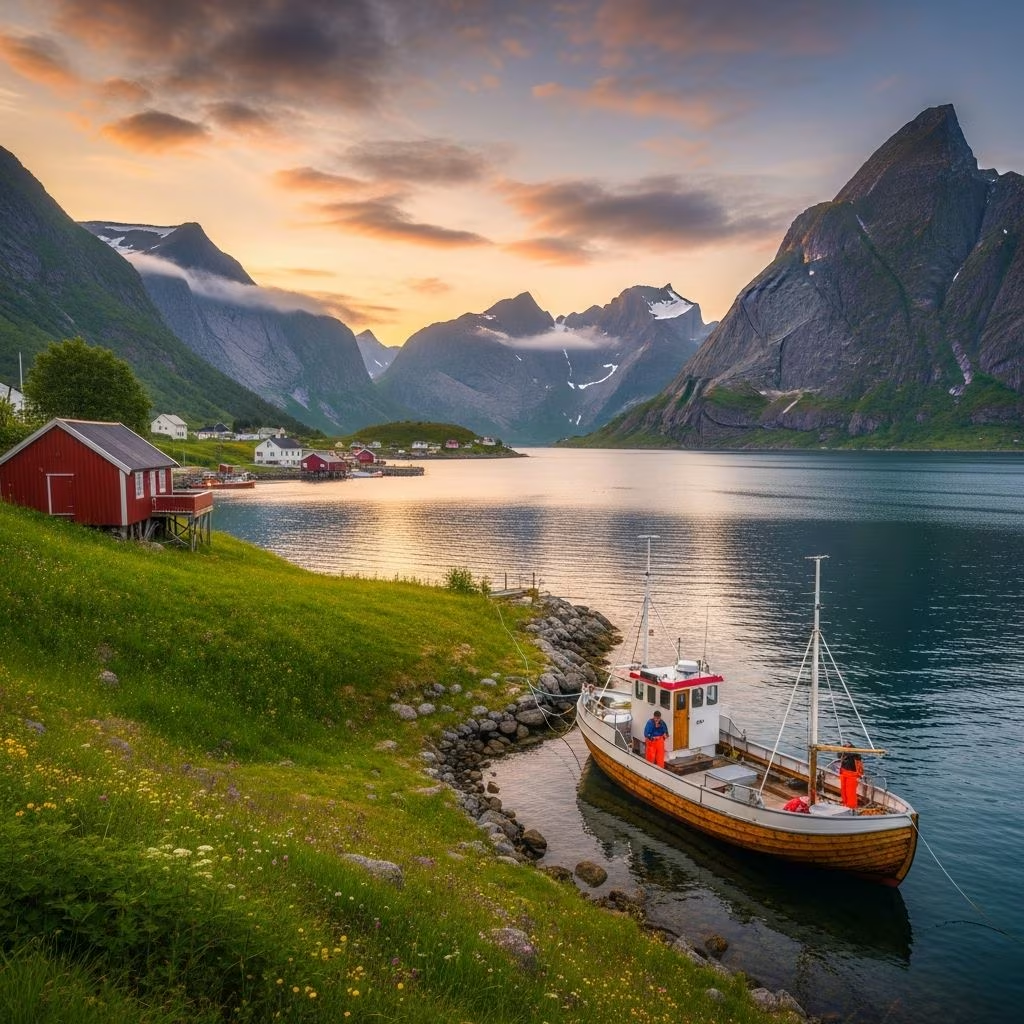 Travel Essentials
Norway represents one of Europe’s most captivating destinations, yet many visitors experience it through conventional tourism channels that often obscure the authentic character of Scandinavian life. To truly understand and appreciate this Nordic nation, travelers benefit from adopting the approaches and mindsets that Norwegians themselves employ when navigating their own country. This perspective shift transforms a visit from a checklist of attractions into a genuine cultural immersion that reveals the deeper essence of Norwegian society, values, and natural heritage.
Norwegian identity fundamentally intertwines with the landscape. The concept of friluftsliv—which translates roughly to “outdoor living”—represents more than a recreational activity; it constitutes a core philosophical principle that shapes how locals interact with their environment year-round. Rather than viewing nature as a destination to visit during vacation, Norwegians integrate outdoor pursuits seamlessly into daily existence, regardless of season or weather conditions.
This cultural orientation manifests in practical ways that visitors can replicate. Norwegians regularly engage in hiking, cycling, cross-country skiing, rock climbing, and kayaking not as special occasions but as ordinary weekend activities. They possess sophisticated knowledge of local trails, seasonal variations, and environmental conditions that enhance their experiences. By adopting this mentality—treating outdoor engagement as a lifestyle component rather than a touristic checkbox—visitors gain deeper appreciation for Norway’s landscapes and develop authentic connections to the places they explore.
Norwegians prioritize environmentally conscious travel methods, reflecting the country’s commitment to sustainability and its abundant renewable energy resources. The national transportation infrastructure supports this preference through extensive, well-maintained networks that make car ownership optional for those who plan strategically.
Train journeys represent the preferred Norwegian travel method for both practical and experiential reasons. The Bergen Railway, Rauma Railway, Nordland Railway, and Ofoten Line rank among the world’s most scenic rail routes, offering travelers panoramic views of fjords, mountains, and valleys from comfortable observation cars. These routes connect major cities while allowing passengers to witness Norway’s geography unfold gradually, facilitating deeper landscape appreciation than faster alternatives permit. The railway experience also provides opportunities for social interaction with fellow travelers and exposure to Norwegian travel culture.
Local residents utilize train networks for commuting, weekend excursions, and longer regional journeys. This mode of transportation allows travelers to observe Norwegian daily life, from work routines to leisure activities, providing anthropological insights unavailable through rushed car-based travel.
Comprehensive bus networks penetrate regions where rail service doesn’t reach, connecting mountain valleys, coastal communities, and remote areas. Express ferries and local boat services constitute essential transportation in Norway’s fjord regions, where water routes often provide the most direct connections between settlements. Island hopping via ferries from ports in Bergen, Ålesund, Kristiansund, Trondheim, and Bodø allows visitors to experience Norwegian coastal life while utilizing the same transportation methods locals employ for routine travel.
Ferries offer unique perspectives on Norway’s maritime landscape and provide opportunities to observe fishing communities, maritime traditions, and coastal ecosystems functioning naturally rather than as tourist attractions.
Norway’s extensive cycling networks accommodate both recreational cyclists and practical commuters. Urban areas feature dedicated cycling lanes, while rural regions offer scenic routes through farmland, forests, and mountainous terrain. Norwegians utilize bicycles for transportation, exercise, and leisure exploration. Electric bikes have gained popularity, expanding accessibility for travelers of varying fitness levels or those covering longer distances.
While Oslo and Bergen attract international attention, Norwegian urban culture extends far beyond these metropolitan centers. Smaller cities and towns embody distinctly Norwegian characteristics that major tourist hubs have partially commercialized.
Norway’s capital offers cultural treasures including the Viking Ship Museum, Opera House, Vigeland Sculpture Park, Akershus Fortress, and Munch Museum. Beyond these established attractions, Oslo’s character emerges through neighborhoods where locals actually live and socialize. The Norsk Folkmuseum provides context for Norwegian cultural history through extensive open-air exhibits featuring reconstructed buildings, traditional shops, historic stave churches, and agricultural areas that illustrate centuries-past lifestyle practices.
Oslo residents frequently escape urban environments by utilizing the capital’s surrounding natural areas. Approximately two-thirds of Oslo comprises woods and water, creating accessible green spaces where locals engage in hiking, cross-country skiing, and water-based recreation. Visitors adopting this practice discover Oslo’s rhythm extends beyond city centers into integrated natural environments.
Cities like Stavanger, Trondheim, and Kristiansand offer authentic urban experiences with less international tourist saturation. These communities maintain stronger connections to traditional Norwegian commerce, harbor industries, and regional cultural practices. Waterfront promenades, local restaurants featuring regional cuisine, harbor-based activities, and museums dedicated to local history provide genuine cultural engagement.
Norwegian cuisine reflects geographic and climatic realities, featuring locally sourced ingredients, traditional preservation methods, and seasonal variation. Rather than seeking Michelin-starred establishments, visitors discover authentic flavors through markets, cafés frequented by locals, and restaurants emphasizing regional specialties.
Harbors in major cities contain fish markets where daily catches are sold fresh, and visitors can observe commercial fishing culture firsthand. Local restaurants prepare traditional dishes like fish stews, game meats, and preserved vegetables according to generations-old methods. Engaging with Norwegian food culture provides insights into historical subsistence practices, regional identity, and contemporary agricultural systems.
Norwegian life fluctuates dramatically with seasonal changes, creating distinctly different experiences throughout the year. Locals adjust their activities, clothing, routines, and social practices according to daylight availability, weather patterns, and seasonal opportunities.
Summer seasons (June through August) feature extended daylight and optimal conditions for hiking, water-based activities, and traveling through mountain regions. Winter (November through February) brings opportunities for cross-country skiing, snowmobiling, and northern lights viewing in Arctic regions. Spring and autumn offer moderate conditions, smaller crowds, and distinctive atmospheric qualities.
Rather than visiting during peak tourism periods, travelers adopting local perspectives visit during shoulder seasons when Norwegians themselves travel regionally, experiencing destinations as Norwegian vacation destinations rather than international tourist attractions.
Genuine cultural exchange occurs through direct interaction with residents rather than through curated tourist experiences. Norwegians typically welcome respectful visitors who demonstrate interest in authentic cultural practices, environmental conservation, and regional history.
Hiring local guides for outdoor activities, hiking expeditions, and cultural tours supports regional economies while providing expertise and insights unavailable through self-directed exploration. Local guides possess sophisticated knowledge of trail conditions, environmental features, seasonal variations, and cultural history. By selecting guides operating within their home regions, visitors support economic sustainability in communities outside major metropolitan centers.
Norwegian society demonstrates strong commitment to environmental sustainability through both infrastructure development and cultural values. Visitors adopting this perspective make transportation choices and activity selections aligned with conservation principles.
Approximately 25,000 charging stations and over 6,000 fast chargers throughout Norway support electric vehicle use. Hotels frequently provide charging accommodations. For visitors renting vehicles, electric options enable road trips with minimal environmental impact. Electric bikes offer alternative transportation for exploring cities and regions without motorized emissions.
When selecting fjord exploration methods, electric and hybrid vessels represent environmentally conscious alternatives to traditional fossil fuel-powered boats. Similarly, kayaking and electric boat options in areas like Telemark Canal and UNESCO-listed Geirangerfjord combine exploration with minimal environmental footprint.
Norway’s landscape facilitates independent outdoor pursuits that Norwegians conduct regularly. Rather than booking curated adventure packages, visitors can rent equipment and conduct hiking, cycling, climbing, and kayaking independently, following routes that locals frequent.
Popular hiking destinations like Pulpit Rock attract international visitors but also feature trails frequented by Norwegian hikers. Visiting during non-peak hours, utilizing lesser-known trailheads, and consulting local knowledge sources enables visitors to experience similar activities under conditions more closely resembling Norwegian practice.
Self-directed exploration requiring consultation with locals—asking residents for trail recommendations, weather assessment, and equipment guidance—facilitates authentic cultural interaction while enhancing activity quality through local expertise.
| Travel Method | Best For | Local Usage | Environmental Impact |
|---|---|---|---|
| Train Networks | Scenic routes, regional connections | Commuting, leisure travel | Minimal (renewable energy powered) |
| Cycling | Urban exploration, medium distances | Daily transportation, recreation | Zero emissions |
| Electric Vehicles | Regional road trips, flexible scheduling | Growing adoption for practical travel | Minimal with renewable grid |
| Ferries/Boats | Coastal exploration, island access | Essential transportation in fjord regions | Variable (improving with electric options) |
| Hiking/Walking | Close nature engagement, local areas | Regular recreational activity | Zero emissions |
Shoulder seasons (May-June and September-October) align most closely with Norwegian travel patterns, offering moderate weather, manageable crowds, and seasonal activities that locals themselves prioritize during these periods.
Hiring local guides, patronizing independent restaurants and shops in smaller towns, purchasing regional products, and avoiding large international tour operators direct spending toward community members and regional businesses.
No. Comprehensive public transportation networks enable car-free travel throughout most of Norway. Many locals in urban areas don’t own vehicles, relying instead on trains, buses, ferries, and bicycles.
Summer: hiking, kayaking, cycling, rock climbing; Winter: cross-country skiing, snowmobiling, ice fishing; Spring/Autumn: moderate hiking, cycling, wildlife observation.
Environmental values permeate Norwegian society through both infrastructure investment and cultural attitudes. Visitors should align their travel choices with conservation principles to demonstrate respect for local values.
