

 Travel Essentials
 Travel Essentials

Learn how to navigate the Azores archipelago car-free with detailed public transport options, ferry schedules, bus routes, and tips for eco-friendly island hopping.
 Travel Essentials
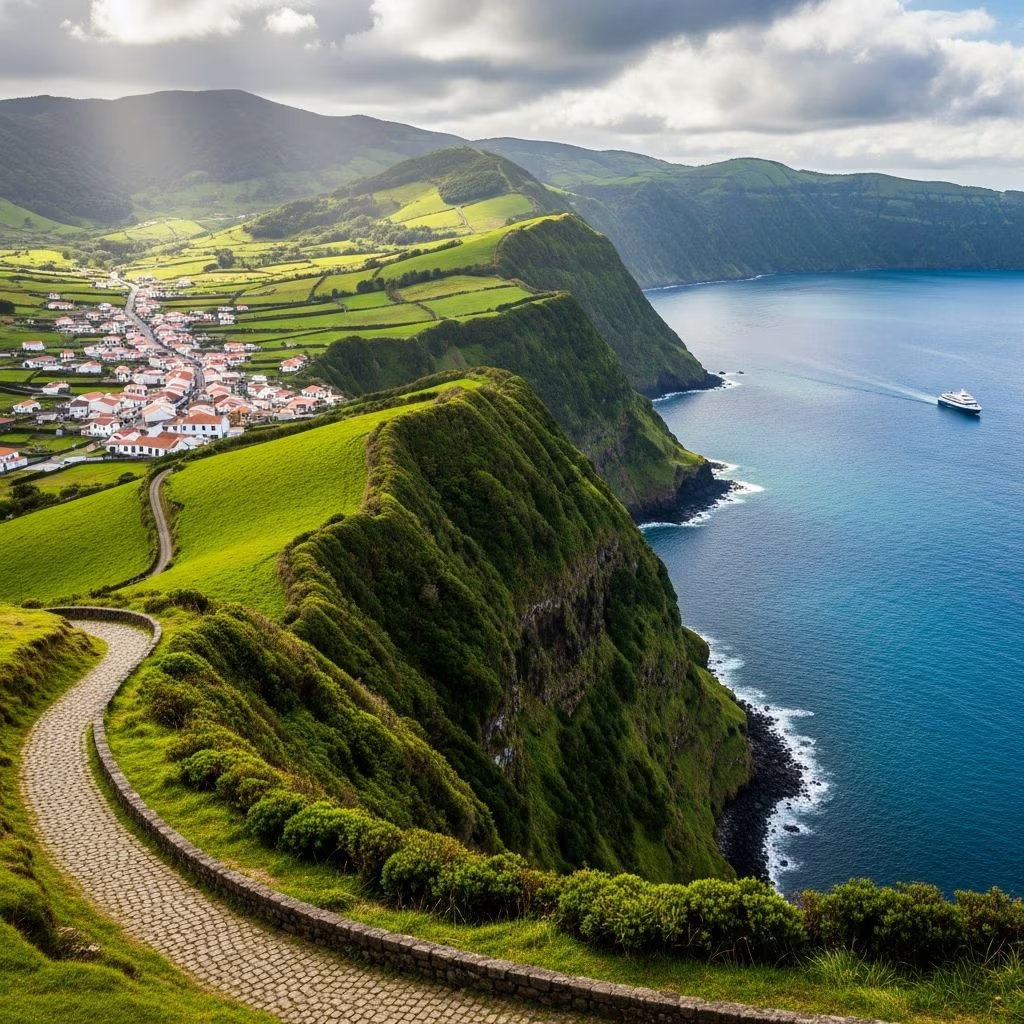
Portugal’s Azores islands offer breathtaking volcanic landscapes, lush forests, and ocean vistas, all accessible without the hassle or expense of a rental car. With rising rental costs, limited availability, and a push toward sustainable tourism, public transport, ferries, taxis, and guided tours provide viable alternatives for immersive exploration.
Rental prices have skyrocketed in peak seasons due to high demand, while ferry capacity for vehicles remains restricted. Environmental concerns also favor car-free options, reducing emissions on these pristine islands. Public buses connect key towns, seasonal ferries link island groups, and taxis or tours fill gaps for remote spots. Inter-island flights via SATA/Azores Airlines allow efficient hopping without backtracking.
No direct ferry exists from mainland Portugal, so flights are essential. Opt for direct routes from Lisbon or Porto to hubs like Ponta Delgada (São Miguel), Terceira, or Santa Maria. Europeans can minimize flights by traveling overland to Portugal first. Multi-city tickets enable arrival on one island and departure from another, cutting internal flights when ferries suffice.
| Airport Hub | Direct Flights From | Key Connections |
|---|---|---|
| Ponta Delgada (São Miguel) | Lisbon, Porto | All major islands |
| Terceira | Lisbon, Porto | Central group |
| Santa Maria | Lisbon | Southern access |
Atlânticoline operates the sole ferry service with two year-round routes and four seasonal ones, frequencies dropping in winter. Central group islands (Terceira, Graciosa, São Jorge, Pico, Faial) connect via summer ferries from June to September. Ports are walkable or bus-accessible from towns; Pico and São Jorge have dual ports for optimized routes.
Year-round: Pico-Faial (frequent, ideal for short hops). Seasonal: Terceira-Graciosa-São Jorge-Pico-Faial. Book early as spots fill fast; no vehicle transport on most routes suits car-free plans perfectly.
Each island runs its own buses, with online timetables for most (São Jorge lacks a site; Corvo has none). Services suit commuters but require timing for tourists. Base in main towns for best access.
Largest island with three operators: Cristiano Limitada, Auto Viação Micaelense, Varela. Buses link Ponta Delgada to Furnas, Sete Cidades, and Ribeira Grande. Schedules online; frequent in summer.
Terceira’s buses from Angra do Heroísmo or Lajes cover coasts and trails. Graciosa offers solid routes. Use summer ferries to chain visits without flights.
Year-round Pico-Faial ferry (multiple daily) pairs with buses to trailheads. São Jorge buses sparse—taxi supplements needed.
Santa Maria has decent buses; Flores limited but walkable in parts. Taxis essential for interiors.
| Island | Bus Quality | Best Base | Operator Site |
|---|---|---|---|
| São Miguel | High | Ponta Delgada | Multiple online |
| Terceira | Good | Angra do Heroísmo | Online |
| Graciosa | Good | Santa Cruz | Online |
| Pico/Faial | Moderate | Horta/Madalena | Online |
| Santa Maria | Moderate | Vila do Porto | Online |
Taxis meter-run but pre-book fixed rates for half-days via Azores Tourism lists. No Uber/Bolt; stands in towns. Use for trail starts or remote sites—cheaper than full-day rentals in summer. Day tours (hiking, whale-watching) cover hard-to-reach areas like Furnas thermal pools or calderas.
Start with 10-14 days for 3-5 islands. Prioritize central group for ferry ease, add São Miguel via flight. Step-by-step:
Sample 12-Day Route: Fly Lisbon-Ponta Delgada (São Miguel buses 4 days), flight to Terceira (buses/ferry to Graciosa/Pico/Faial 7 days), depart Horta.
Focus on walkable towns, coastal paths, and bus-accessible trails.
It’s commuter-focused but sufficient with planning. São Miguel and Terceira shine; smaller islands need supplements.
Year-round Pico-Faial yes; central summer routes 1-3x weekly. Combine with flights.
Ports/towns are pedestrian-friendly; some trails require 1-2km walks from stops.
June-September for ferries; shoulder seasons quieter buses.
Bus/ferry ~€10-30/day; taxis/tours €50-100 targeted vs. €80+ rental daily.
Choose eco-lodges near hubs, support local operators. Avoid peak July-August crowds. This approach preserves Azores’ wild beauty for future visitors.
