


 Food & Culture
Food & Culture
How to Find Authentic Local Restaurants While Traveling
Learn proven strategies for finding authentic local restaurants that serve genuine cuisine, save money, and provide meaningful cultural experiences while traveling internationally.
 Food & Culture
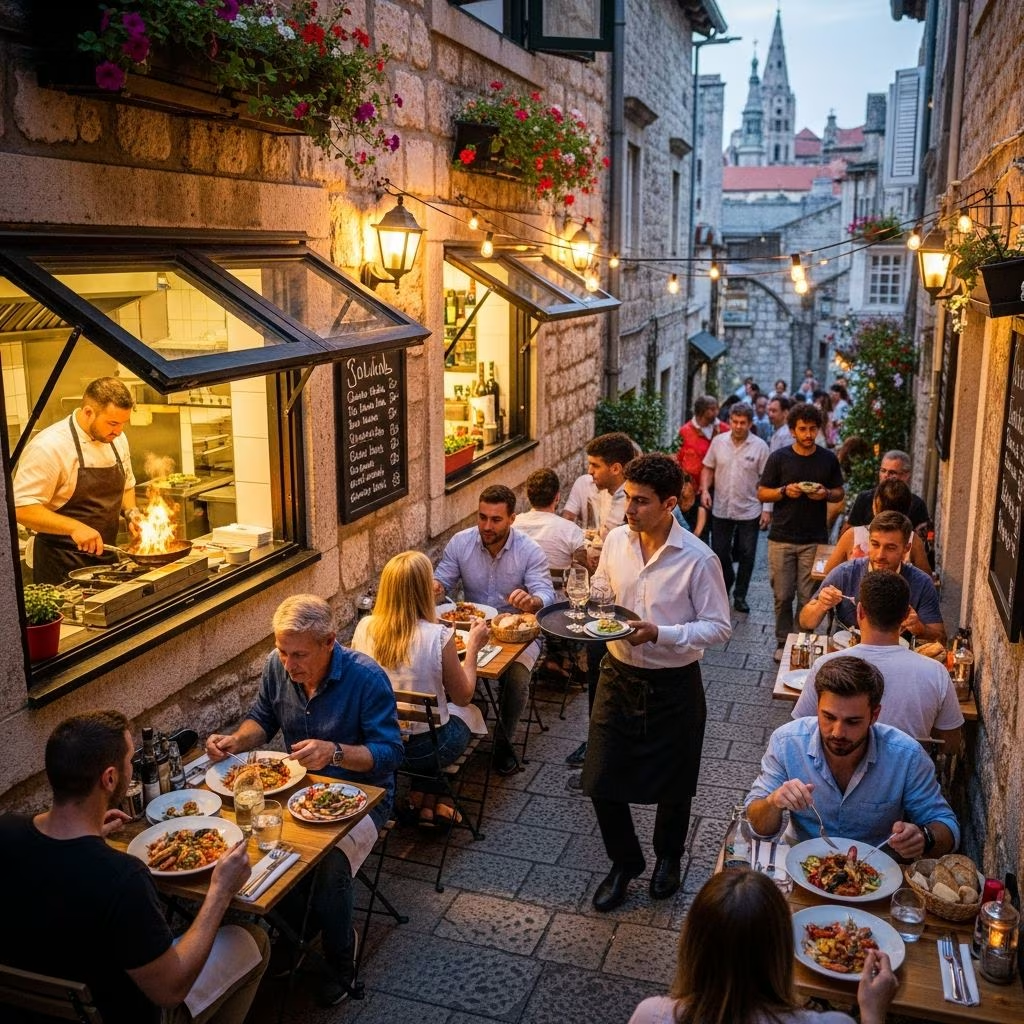
One of the most rewarding aspects of international travel is experiencing the authentic culinary landscape of a destination. Yet many travelers find themselves eating at chain restaurants or overpriced establishments catering exclusively to tourists, missing out on the genuine flavors and cultural experiences that define a region’s food culture. Learning how to identify and navigate toward authentic local dining venues transforms your travel experience from merely visiting a place to truly understanding how its residents live, eat, and gather.
Understanding the Core Philosophy Behind Local Dining
The foundation of discovering genuine local restaurants rests on understanding why locals choose where they eat. Unlike tourists seeking convenience or recognizable names, residents prioritize value, quality, and authenticity. They support establishments that offer seasonal ingredients, reflect regional culinary traditions, and provide the kind of dining experience that’s woven into the fabric of daily community life. This fundamental distinction—between tourism-oriented establishments and community gathering spaces—serves as your primary compass when navigating unfamiliar restaurant landscapes.
When you align your dining choices with local preferences, you gain access to meals that represent the true character of a place. These are not restaurants designed to appeal to international palates or simplified for outsider preferences. Instead, they showcase how people in that region actually cook and eat when not performing for visitors. This approach simultaneously saves money, improves food quality, and deepens cultural understanding.
Identifying Red Flags in Tourist-Oriented Establishments
Certain visual and operational markers immediately signal that a restaurant prioritizes tourist revenue over authentic dining. Recognizing these warning signs helps you redirect your dining dollars toward more rewarding venues.
- Multi-language printed menus: When establishments display menus in five or more languages, they’re signaling that their target customer is international visitors, not locals who already know the cuisine. These menus typically feature standardized dishes designed for broad appeal rather than specialties unique to the region.
- Aggressive exterior solicitation: Staff members positioned outside restaurants actively recruiting passersby is a commercial tactic targeting confused tourists unfamiliar with local dining culture. Locals navigate to restaurants through word-of-mouth and personal knowledge, not street recruitment.
- English-language signage emphasizing quality: Signs declaring “No Frozen Food” or “Fresh Daily” often indicate the opposite reality. Locals don’t need these assurances because they already understand where quality food exists through community knowledge.
- Pre-printed menus unchanged seasonally: The same menu year-round suggests dishes aren’t responsive to ingredient availability, a fundamental characteristic of authentic regional cooking.
- Prominent location on main thoroughfares: The busiest, most visible streets typically host establishments that profit from tourist foot traffic rather than reputation-based local patronage.
Recognizing Green Flags of Authentic Venues
Conversely, specific characteristics consistently indicate establishments that genuinely serve local communities:
- Handwritten or dated menus: These formats signal that offerings change regularly based on ingredient availability and seasonal cycles. A menu updated with today’s date indicates that morning’s market purchases dictate the kitchen’s offerings.
- Menu in local language only: When restaurants don’t provide English translations, they’re operating primarily for native speakers. This isn’t exclusivity—it’s simply how locals dine.
- Concise menu offerings: Restaurants featuring ten to fifteen dishes rather than encyclopedic menus typically prepare each item with greater care and utilize fresher ingredients than high-volume operations.
- Chalkboard specials: These temporary offerings represent what the chef has sourced that day or week, embodying the responsive, seasonal cooking that defines local cuisine.
- Interior crowded with local diners: Visual confirmation that residents choose this establishment for their meals provides validation that quality and value align with local standards.
Navigating Beyond the Tourist District
The strategic decision to physically move away from central tourist zones represents one of the most effective restaurant discovery methods. Tourist districts concentrate visitor-oriented businesses precisely because they’re convenient for travelers. This convenience comes at the cost of authenticity and value.
Instead, identify side streets, neighborhood blocks, and quieter commercial areas where residents conduct their everyday lives. These locations host family-owned establishments, neighborhood gathering spots, and restaurants sustained by repeat local customers rather than one-time visitors. The slight inconvenience of reaching these venues actually serves your interests—lower foot traffic means lower rent, which translates to lower prices and incentives to maintain quality that keeps locals returning.
When exploring these neighborhoods, observe where people are actually walking, shopping, and congregating during meal times. The authentic restaurant district won’t be marked on tourist maps; it will simply be where residents choose to eat.
Strategic Intelligence Gathering
Rather than relying solely on guidebooks or online reviews, gathering intelligence from people embedded in the local community yields superior recommendations. Service staff—bartenders, servers, and café workers—inhabit the dining landscape professionally and possess comprehensive knowledge about where different types of meals are best experienced.
Building rapport with staff at your first few dining stops pays dividends. These individuals can provide specific recommendations tailored to your preferences and availability, directing you to establishments tourists never discover through conventional research methods. A brief conversation with a bartender about where they personally eat lunch reveals authentic neighborhood venues instantly.
Additionally, skipping hotel-based breakfast recommendations in favor of walking the neighborhood and asking residents where they eat creates both discovery opportunities and informal social connections. This approach transforms dining from a logistical transaction into a genuine cultural engagement.
Understanding Regional Menu Structures and Daily Specials
Many European regions employ specific menu structures designed to balance business needs with quality offerings. Spain’s “menu del día” (daily menu), France’s “la formule,” and similar fixed-price offerings in other countries represent exceptional value combined with seasonal authenticity.
These daily specials typically feature three courses at prices substantially lower than ordering à la carte. More importantly, they showcase what the chef considers the day’s best ingredients—the quality focus that distinguishes authentic restaurants. These menus change daily or weekly based on market availability and seasonal cycles, embodying the responsive cooking philosophy that defines genuine local establishments.
Embracing Regional Specialties Over International Comfort Foods
The instinct to seek familiar foods—pizza chains in Italy, burger restaurants in America, or fast-food equivalents worldwide—fundamentally undermines the purpose of traveling to experience different cultures. While these establishments exist worldwide, eating at them erases the uniqueness of your location.
Instead, deliberately prioritize regional specialties. These dishes embody local ingredients, traditional cooking methods, and the accumulated culinary knowledge of generations. They taste fundamentally different in their origin regions because of water chemistry, soil conditions, ingredient quality, and preparation traditions that can’t be replicated elsewhere.
Street foods and humble preparations merit particular attention. Kebabs, local pastries, regional soups, and simple preparations often provide the most authentic and affordable culinary experiences. These foods occupy central roles in how locals actually eat daily, rather than representing curated experiences designed for special occasions or visitor entertainment.
Developing Restaurant Selection Skills Through Observation
Before committing to a restaurant, practice observing what other diners are eating. This informal research reveals which dishes represent the kitchen’s strength and which might disappoint. When you notice multiple tables enjoying identical dishes, that’s your indication that the item represents an establishment specialty worth ordering.
Similarly, don’t hesitate to ask servers about regional specialties or dishes you don’t recognize. These inquiries signal genuine interest in local food culture and often result in recommendations that exceed standard menu offerings. Staff at authentic establishments take pride in sharing their culinary heritage with interested visitors.
Maximizing Value Through Local Dining Customs
Different regions maintain distinct dining customs that, when understood and respected, enhance both experience and value. Happy hours in various European countries, for instance, often include specially-priced beverages accompanied by complimentary small plates. Understanding these customs allows you to eat well while spending considerably less than pricing during standard hours suggests.
Similarly, recognizing that lunch often features better pricing and more relaxed atmospheres than dinner service means adjusting meal timing to match local patterns rather than importing your home country’s schedule. This adaptation demonstrates respect for local culture while providing superior value and experience.
Practical Implementation Strategies
Implementing these principles requires specific tactics:
| Strategy | Implementation | Expected Outcome |
|---|---|---|
| Neighborhood exploration | Walk residential and commercial blocks adjacent to, but not within, tourist zones | Discovery of venues sustained by local clientele |
| Menu evaluation | Examine establishments for handwritten menus, date markings, and single-language offerings | Identification of restaurants using seasonal, market-driven cooking |
| Staff consultation | Build rapport with service personnel and ask specific questions about where they dine personally | Access to recommendations filtered through local standards and preferences |
| Pattern observation | Watch what dishes dominate tables and which establishments maintain steady local traffic | Validation of quality and authentic appeal before committing to dining |
| Timing adjustment | Eat lunch instead of dinner, arrive during local mealtimes rather than tourist convenience hours | Better pricing, authentic atmosphere, and experience of genuine local dining culture |
Frequently Asked Questions
How do I know if a restaurant is truly local versus tourist-focused?
The most reliable indicator is the composition of the dining room. If tables are filled with residents eating comfortably, the establishment has earned local patronage through consistent quality and value. Tourist-focused restaurants often feature groups of visitors consulting guidebooks or comparing experiences, while locals eat intently focused on their meals, familiar with both the restaurant and menu.
Are there online tools that help identify authentic restaurants?
While crowdsourced review sites can provide information, they’re most useful when filtered for local contributor patterns. Food journalism, regional blogs operated by residents, and community forums often provide more reliable information than general tourism platforms. However, in-person exploration and local consultation typically surpass any online resource.
What if I don’t speak the local language?
Language barriers shouldn’t deter exploration. Pointing at dishes other diners are enjoying, using translation apps for menu items, and making eye contact while asking questions transcends linguistic limitations. Most hospitality professionals appreciate genuine interest in local cuisine and will assist non-speakers enthusiastically.
How far from tourist zones should I venture?
The optimal distance varies by city size and layout. Generally, moving three to five blocks away from primary tourist attractions suffices. You’re seeking areas where residents shop, work, and live daily—not extreme remote locations. These neighborhoods maintain convenient access while hosting primarily local traffic.
Is it disrespectful to ask where locals eat?
Quite the opposite. Demonstrating genuine interest in local food culture and seeking insider recommendations typically elicits enthusiastic responses. People take pride in their communities’ culinary offerings and appreciate visitors genuinely attempting to experience authentic culture rather than tourist-sanitized versions.
The Broader Value of Authentic Dining
Beyond the practical benefits of superior food and lower prices, prioritizing authentic local restaurants transforms how you experience destinations. Meals become opportunities for cultural immersion rather than mere fuel consumption. The character of a place reveals itself in what people eat, how they gather while eating, and what values their food choices reflect.
These dining experiences often provide the most memorable moments of travel—not famous landmarks or major attractions, but ordinary moments seated among residents, tasting foods prepared with the care and tradition that transforms ingredients into expressions of culture. These memories, more than any postcard-worthy photograph, constitute what travel ultimately provides.
References
- Skip The Tourist Traps With Rick Steves’ Secret To Finding Traditional Local Food — Tasting Table. https://www.tastingtable.com/1908921/rick-steves-traditional-local-food/
- Rick Steves’ Best Tips For Eating Like A Local In Europe — PlanetWare. https://www.planetware.com/2108769/rick-steves-best-tips-eating-like-local-europe/
- Rick Steves’ Simple Menu Rule To Find The Best Restaurants Abroad — Food Republic. https://www.foodrepublic.com/1989523/rick-steves-menu-rule-find-best-restaurants-abroad/
- Travel Talk Video: Restaurant-Finding Tips — Rick Steves’ Europe. https://www.ricksteves.com/watch-read-listen/video/travel-talks/restaurant-tips
- Eating Well in Europe by Rick Steves — Rick Steves. https://www.ricksteves.com/watch-read-listen/read/articles/eating-well-in-europe
On This Page
Understanding the Core Philosophy Behind Local Dining Identifying Red Flags in Tourist-Oriented Establishments Recognizing Green Flags of Authentic Venues Navigating Beyond the Tourist District Strategic Intelligence Gathering Understanding Regional Menu Structures and Daily Specials Embracing Regional Specialties Over International Comfort Foods Developing Restaurant Selection Skills Through Observation Maximizing Value Through Local Dining Customs Practical Implementation Strategies Frequently Asked Questions The Broader Value of Authentic Dining← Previous
How to Help Kerr County Flood Victims in 2026
Next →
Faroe Islands Self-Drive Guide: Roads, Routes & Self-Navigating Cars
Related Reading
More in Food & Culture
Food & Culture Food & Culture
 Food & Culture
Best Places to Eat in Rome: Neighborhood Dining Guide
 Food & Culture
 Food & Culture