

 Travel Essentials
 Travel Essentials

Discover practical strategies for flying with children, from pre-flight preparation to managing boarding and keeping kids engaged during flight.
 Travel Essentials
Air travel with young children presents unique challenges that can test even the most patient parents. From navigating airport procedures to managing behavior during flight, families require strategic planning and practical solutions to ensure a positive experience. Understanding how to approach each phase of the journey—preparation, boarding, and in-flight management—transforms what many parents dread into a manageable and even enjoyable family adventure.
Before stepping foot in an airport, laying the groundwork for your child’s understanding of air travel significantly impacts their comfort level and behavior throughout the journey. Children who know what to expect experience fewer anxiety-related meltdowns and adapt more readily to the unique demands of flying.
One of the most effective preparation methods involves familiarizing children with aviation concepts through various media. Expose your child to images of aircraft, educational videos about flight, model airplanes, or documentaries designed for young viewers. This visual and informational exposure demystifies the experience and reduces the fear factor associated with entering an unfamiliar environment.
Consider creating a simple home-based simulation of the flying experience. Practice the concept of “airplane mode” at home, explaining when children can move freely (before takeoff and after landing) and when they must remain seated (during takeoff, landing, and when the seatbelt sign illuminates). Demonstrate how to use headphones with tablets, explaining why audio devices enhance the travel experience. Teach them about ear pressure changes by explaining the sensation of ears “popping” and introducing the techniques used to manage it, such as chewing gum or drinking liquids during ascent and descent.
Reading age-appropriate books about first flights or traveling by plane provides context and normalizes the experience. These stories help children understand airport procedures, security checkpoints, and what happens aboard an aircraft from a child-friendly perspective.
The boarding process represents one of the most chaotic and stressful phases of air travel, particularly for families. Rather than allowing this frenetic activity to overwhelm your children, employ a strategic two-phase approach that separates luggage management from child supervision.
If traveling as a couple or with another adult, designate one adult to handle all luggage, carry-on items, strollers, and equipment during the pre-boarding phase. This person focuses exclusively on loading the overhead bins, organizing the seating area, and gate-checking items like strollers. Meanwhile, the second adult remains in the gate area with the children, keeping them occupied and engaged away from the boarding chaos.
During this separation period, encourage physical activity and exploration. Walk children around the gate area, point out interesting architectural features, count floor tiles, or visit a designated play area if your airport offers one. Some airports feature child-friendly zones with play equipment, allowing kids to expend energy in a structured environment. Even simple activities like walking laps around the gate, visiting a water fountain, or taking a bathroom break contribute to wearing children out before they board.
By waiting to board until the very last zone is called, you minimize the time children spend confined to their seats before the aircraft departs. This timing strategy proves particularly valuable because it reduces the period between boarding and takeoff—typically 10 to 15 minutes with proper coordination—when children sit idle and potentially become restless or irritable. Once your family boards and settles into seats, the aircraft departs relatively quickly, eliminating the frustration of extended ground delays where children feel trapped.
Modern air travel with children requires a realistic and pragmatic approach to screen time and entertainment. Parents often struggle with guilt about allowing device usage, but during flight, strategic technology use serves a legitimate purpose in maintaining cabin harmony and child comfort.
Evaluate your child’s preferences and temperament honestly. Some children engage contentedly with books, drawing materials, and puzzles; others require digital entertainment to remain settled. Rather than forcing activities you believe are “better,” align entertainment choices with what genuinely captures your child’s interest. If your child loves animated programs, downloading episodes to a tablet provides reliable engagement. If your child enjoys creative activities, pack notebooks, colored pencils, or activity books suited to their age.
Ensure all devices operate in airplane mode and utilize headphones or earbuds specifically designed for children, featuring volume controls to protect developing hearing. Bring extra batteries, charging cables, or portable chargers to prevent devices from dying mid-flight. Consider downloading multiple entertainment options—programs, movies, audiobooks, educational apps—to provide variety and prevent boredom from a single source.
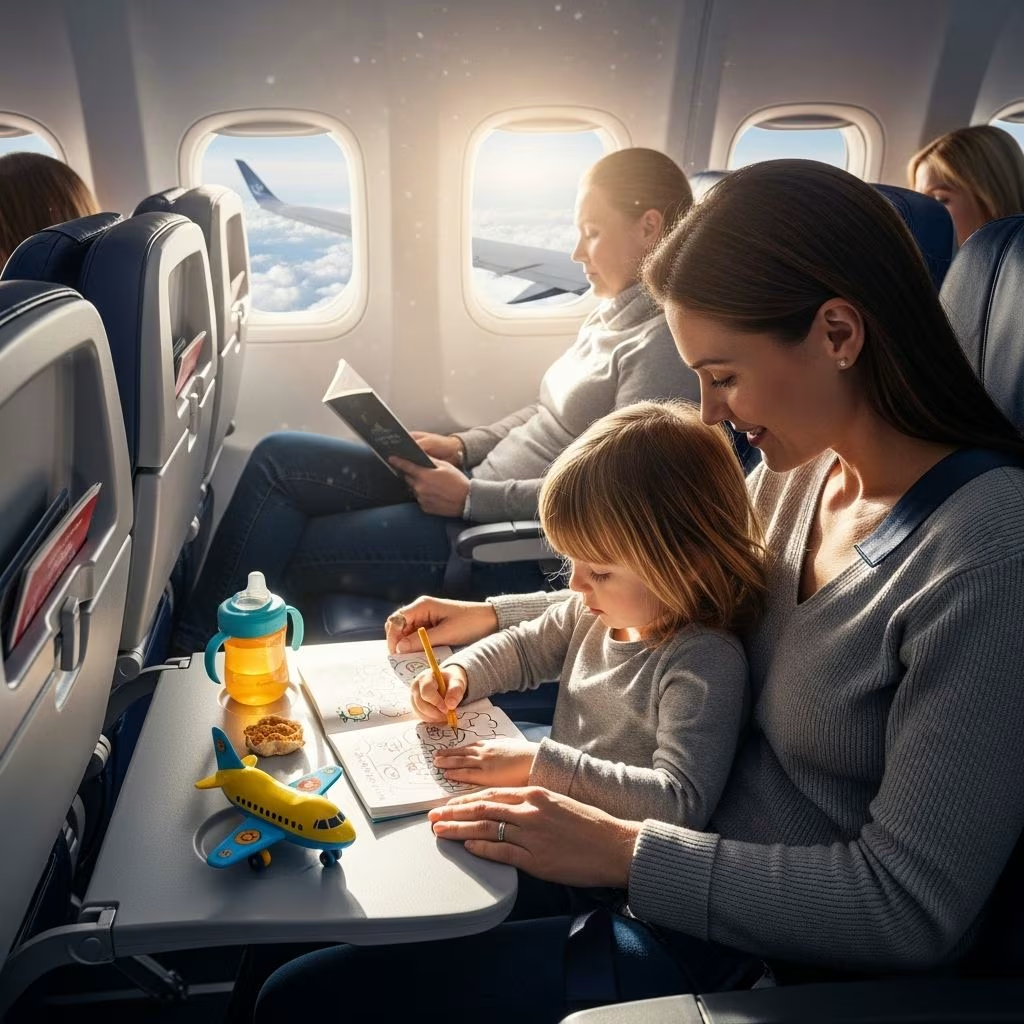
Supplement digital entertainment with tangible items that provide novelty and engagement. Special toys reserved exclusively for flights create excitement and offer something to look forward to. Small activity books, magnetic games, or reusable sticker collections provide screen-free options for rotation throughout the flight.
Children internalize parental reactions to situations and use these observations as templates for their own emotional responses. During air travel—an inherently stressful situation—your demeanor significantly influences your child’s ability to remain calm and cooperative.
Begin with your arrival at the airport itself. Approach the airport experience with optimism and patience, maintaining a calm tone even when procedures move slowly or lines form. When children observe you handling minor frustrations with grace—a delayed security line, a crowded gate area, a flight delay—they learn to adopt similar coping mechanisms. Conversely, if children witness you becoming stressed or frustrated, they mirror that anxiety, escalating their own emotional dysregulation.
Explain airport procedures to your child in age-appropriate language. Describe what happens at security checkpoints, why people must remove shoes and place items in bins, and how long the process typically takes. Transform potentially anxiety-inducing procedures into learning opportunities by discussing the purpose behind each step.
Respect and courtesy toward flight crew deserves particular emphasis and modeling. Explain the extensive training, physical demands, and responsibilities carried by flight attendants. Teach children to say “please” and “thank you,” to follow crew instructions immediately, and to recognize that flight attendants are professionals providing a service—not childcare providers. This modeling of respect establishes behavioral standards that your children internalize and emulate.
The confined quarters and environmental conditions of aircraft present specific challenges for maintaining child comfort and cleanliness throughout the flight.
Before boarding, use airport bathroom facilities to address all bathroom needs. While flights include lavatories, aircraft bathrooms present challenges for young children—they’re cramped, sometimes intimidating due to loud suction sounds, and require navigating narrow aisles. Taking a final bathroom break before boarding minimizes mid-flight restroom emergencies and reduces disruption to other passengers.
Choose seating strategically based on your family’s needs and potential mid-flight requirements. While children often prefer window seats for the view, families with young children may benefit from aisle seats. Aisle positioning allows easier access for potty breaks without disturbing adjacent passengers. For frequent fliers, the aisle seat eliminates the need to climb over sleeping passengers or request repeated exits.
Pack a well-stocked supply kit containing wet wipes, tissues, hand sanitizer, paper towels, plastic bags for trash or accidents, and any necessary medications. Flight attendants are not babysitters and should not be expected to provide these supplies. Responsibility for child cleanup remains with parents, making preparation essential. Importantly, establish clear rules prohibiting children from drawing, writing, or marking any aircraft surfaces—walls, seats, windows, or overhead bins.
Changes in cabin altitude during takeoff and landing create pressure imbalances in the inner ear, causing discomfort or pain. Children often lack the vocabulary to communicate this sensation, sometimes expressing discomfort through crying, complaints, or behavioral changes.
Equip yourself with strategies to manage ear pressure before problems arise. Offer gum to older children, encouraging them to chew continuously from 15 minutes before takeoff through 15 minutes after the aircraft reaches cruising altitude. For younger children who cannot safely chew gum, offer a drink through a cup or bottle to promote swallowing. Sucking on lollipops or hard candies (for children old enough to safely manage them) also encourages the swallowing motion that equalizes pressure.
Explain the ear-popping sensation beforehand using simple language: “Your ears might feel a little funny, and you might hear or feel them pop—that’s normal and means they’re working correctly.” This explanation prevents confusion or fear when the sensation occurs.
Recognizing that children confined to vehicles and aircraft accumulate significant pent-up energy, strategic approaches to managing this energy at your destination contribute to overall travel success and family wellbeing.
Upon arrival at your hotel or accommodation, prioritize opportunities for energetic play before settling into activities or attractions. Many hotels feature hallways, lobbies, or outdoor spaces safe for controlled physical activity. Simple, inexpensive props enhance these opportunities—balloons inflated with air remain lightweight, won’t cause damage if they contact walls or furniture, and provide legitimate entertainment for children working through accumulated tension.
Similarly, bubbles offer therapeutic value and airport-friendly portability. Despite concerns about TSA liquid restrictions, a small bottle of bubbles occupies minimal space in allowed liquids, and the activity provides peaceful, engaging entertainment in waiting areas or outdoor spaces before flights.
Restaurant selection impacts children’s behavior and parents’ ability to enjoy meals during family travel.
When seeking dining locations, prioritize establishments offering booth seating rather than tables with individual chairs. Booth environments naturally contain children within defined spaces, provide a sense of enclosure that many children find calming, and often result in children becoming drowsy or settling contentedly. Traditional casual dining chains—establishments with established reputations for family-friendly atmospheres—offer predictable menus, booth availability, and staff accustomed to managing child diners. While the culinary quality may not rival fine dining establishments, the practical benefits of efficient, stress-free meals often outweigh dining sophistication concerns.
Hotel rooms present both opportunities and hazards when traveling with young children. Upon entering any new space—hotel room, Airbnb, cruise cabin, or vacation rental—conduct an immediate safety assessment before unpacking or settling in.
Verify that all windows lock securely and balcony doors close completely. Identify any dangling electrical cords that might entangle or cause injury and secure them with duct tape if necessary. Tape drawers, cabinet doors, and toilet lids shut using strong duct tape to prevent curious exploration of potential hazards. Create safe activity spaces using available furniture—the ironing board, when lowered to appropriate height, transforms into an additional table surface for meals, coloring, or quiet play activities, providing valuable counter space without requiring furniture rearrangement.
Extended periods of walking through airports and standing while managing children creates physical strain that compounds travel stress.
Pack lightweight flip-flops and baby powder as compact additions to carry-on luggage. During rest breaks or meals, exchange comfortable walking shoes for flip-flops and apply baby powder to feet. This simple intervention refreshes tired feet after hours of standing, particularly following 6-10 hour sightseeing expeditions. The minimal space required for these items makes them practical additions to any family travel packing list.
Perhaps most importantly, approaching air travel with children requires acknowledging that despite excellent preparation and strategic planning, occasional meltdowns, unexpected issues, or challenging moments will occur. Building flexibility and resilience into your travel mindset allows you to navigate difficulties without allowing isolated incidents to derail your overall trip experience.
Children learning to fly for the first time benefit from understanding that flight is a normal, routine experience handled by trained professionals every day. When you convey calm confidence about air travel, you provide your children with the emotional tools to approach flying positively throughout their lives.
