

 Travel Essentials
 Travel Essentials

Learn proven methods to secure better seats on flights through strategic booking, timing, and polite in-person requests.
 Travel Essentials
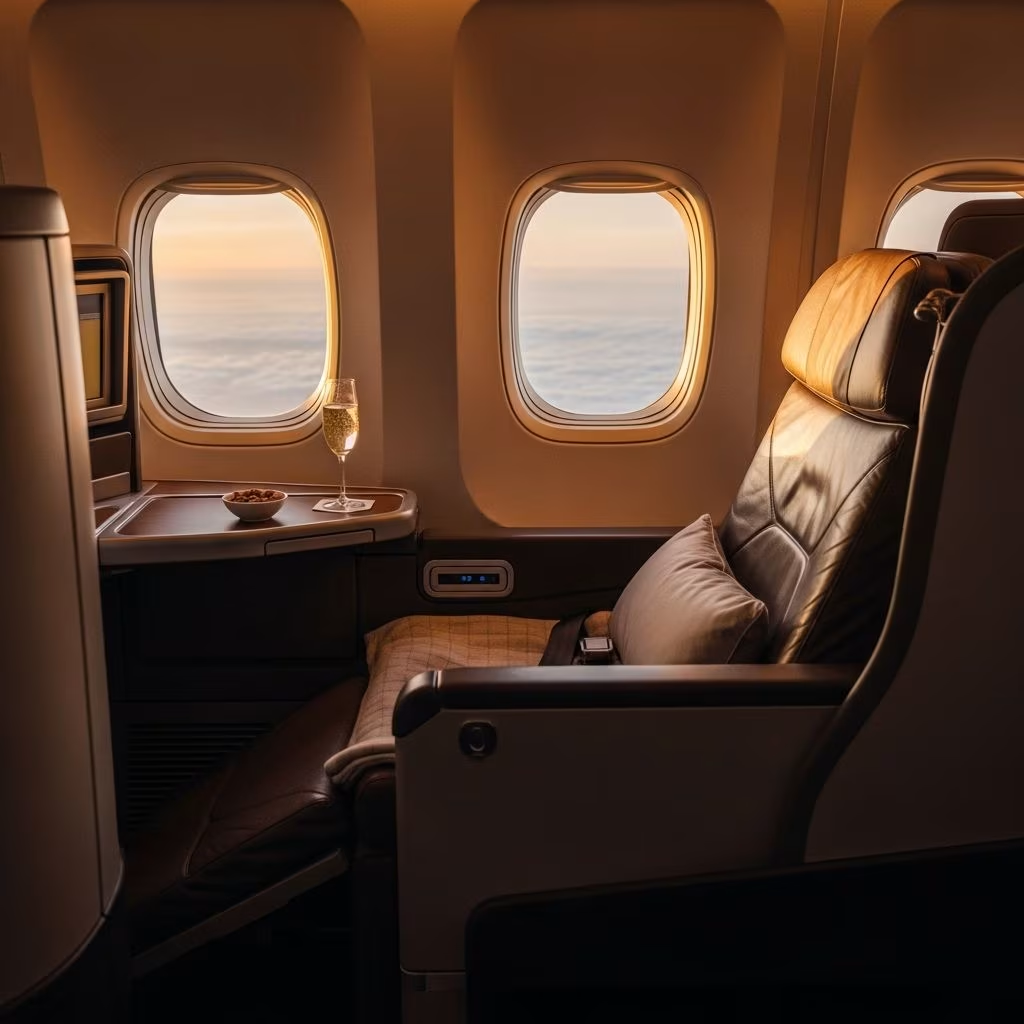
Air travel has become increasingly expensive, with costs for premium seating options rising substantially over the past decade. While upgrading to business or first class often requires significant additional expenditure, many travelers remain unaware of practical strategies that can help them secure better seats without paying premium prices. Understanding the mechanics of airline seat allocation and timing your requests appropriately can substantially improve your chances of obtaining an enhanced travel experience.
Airlines operate under specific protocols when managing seat assignments and upgrades. The availability of improved seating depends on multiple variables including flight capacity, booking patterns, passenger load factors, and operational decisions made by airline staff. Rather than viewing upgrades as entirely random occurrences, recognizing these operational realities allows travelers to position themselves strategically within these systems.
The likelihood of receiving an upgrade varies dramatically based on flight characteristics and timing decisions. Flights operating at near-capacity with minimal unoccupied seats offer virtually no upgrade opportunities, while lightly booked flights present numerous possibilities for seat improvements. This fundamental principle should guide your initial approach to planning travel that maximizes upgrade potential.
Your first opportunity to influence upgrade probability occurs during the initial flight selection process. When multiple departure options exist for your intended destination, choosing flights based on anticipated passenger volume significantly impacts your prospects. Airlines track historical booking patterns by route, time, and season, allowing savvy travelers to identify less-popular departure times.
Consider these flight characteristics when planning:
However, these patterns vary significantly based on geography, route popularity, and seasonal considerations. A mid-week flight departing during the Christmas holiday period may actually be heavily booked, while a weekend early morning flight in March might operate below capacity. The key involves researching your specific route and travel dates rather than applying blanket recommendations.
Once you have booked your flight, the check-in process represents a critical opportunity for seat optimization that many travelers overlook entirely. Airlines typically open check-in exactly 24 hours before departure, and this window presents special advantages for identifying and securing improved seating.
During the 24-hour check-in period, several dynamics work in your favor. Premium economy and extra legroom seats that remained unsold at that point often become available to the general traveling public, as airlines recognize they will not generate revenue from those expensive seats at that late stage. Using the airline’s mobile application for this check-in provides the smoothest experience and allows you to view updated seat maps immediately.
Beyond seat upgrades, the 24-hour window reveals important information about your specific flight’s passenger load. Examining your updated seat map indicates how many seats have been assigned to other passengers and how many remain unoccupied. A flight with numerous visibly empty seats after the 24-hour check-in suggests strong upgrade probability once you reach the airport.
For travelers with airline loyalty status or elite membership benefits, the 24-hour check-in window often activates complimentary upgrade certificates or priority processing. Checking in at precisely this moment ensures you capture any benefits to which you are entitled before they expire or become unavailable.
Arriving at your gate too early or too late both diminish upgrade prospects, making precise timing essential. Gate agents typically begin their shift approximately one to two hours before scheduled departure. Arriving significantly earlier than this window means no agents are present to process your request, while arriving later means other passengers have already engaged agents about seat availability.
The optimal arrival window at your gate falls between 60 and 90 minutes before scheduled departure. This timing ensures gate agents are actively staffing the desk and reviewing passenger manifests while still maintaining some flexibility in seat assignments. After this window closes, gate agents become focused on final boarding procedures and have diminished ability to accommodate seat change requests.
Arriving at the gate during this window serves an additional purpose beyond upgrade requests. Many passengers approach gate agents seeking seat changes for legitimate reasons—traveling with family members, resolving unwanted seat positions, or addressing specific accessibility needs. Observing these interactions provides valuable intelligence about which seats have been relocated and which premium seats might now be available.
The conversation you initiate with gate agents significantly influences their willingness and ability to assist with upgrade requests. Professionalism, friendliness, and respect for their time and authority dramatically increase positive outcomes compared to demanding or transactional approaches.
The most effective approach begins with genuine human courtesy. A warm greeting acknowledging the agent’s work and expressing appreciation for their assistance establishes positive rapport before presenting your request. Your demeanor, facial expression, and tone communicate respect for their role and authority in a manner that words alone cannot convey.
When presenting your request, frame it as a minor favor rather than an entitlement. Phrases such as “I noticed the flight appears to have some availability” or “If it’s not inconvenient, I would appreciate any opportunity to move to a better seat” demonstrate respect for their decision-making authority. This approach recognizes that the agent possesses discretion in seat assignment and is offering assistance rather than obligating them to fulfill your request.
Avoid mentioning that you did not pay for premium seating or that you deserve an upgrade based on your status or loyalty. Gate agents are aware of these factors already and make decisions based on operational needs and passenger circumstances rather than what travelers believe they deserve. Acknowledging their expertise and authority while presenting yourself as appreciative of any assistance proves far more effective than arguing about fairness or entitlement.
Should gate agents prove unable to accommodate your request, in-flight opportunities for seat improvements still exist but require different tactics and timing. After boarding begins and passengers settle into their assigned seats, a clearer picture of actual flight occupancy emerges compared to what manifests suggested.
Once the cabin door closes and final boarding announcements conclude, ring your call button to politely request a conversation with a flight attendant. At this point, if the flight is not operating at full capacity, mentioning specific circumstances such as a celebration (birthday, anniversary, honeymoon) may motivate crew members to relocate you to a better available seat. Crew members possess discretion similar to gate agents and appreciate passengers who recognize this authority and request assistance respectfully.
This in-flight approach works optimally when combined with several favorable conditions: the flight must not be completely full, you must display genuine gratitude for any assistance offered, and you must make your request after boarding is completely finished rather than interrupting crew preparations. Flight attendants managing a partially full flight often appreciate the ability to consolidate passengers into fewer rows, reducing their workload during the flight.
Recognizing situations where upgrades are genuinely impossible prevents wasting your own time and the crew’s efforts. Completely full flights operating at 100 percent capacity with no available seats outside your assigned row make upgrades impossible regardless of circumstances or requests. Accepting this reality gracefully preserves your positive relationship with airline staff and allows you to focus your energy on flights where genuine possibilities exist.
Certain high-demand routes during peak periods almost always operate at full capacity, including transcontinental flights during summer vacation periods and holiday travel windows. Choosing alternative flight times, dates, or routes remains more effective than investing hope in unlikely upgrade scenarios on these particular flights.
While upgrade strategies work effectively for many travelers, it bears acknowledging that premium cabin seating legitimately costs substantially more for quantifiable reasons. Enhanced legroom, priority boarding, improved meal service, and attention from experienced crew members represent genuine value additions rather than arbitrary pricing premiums.
For frequent travelers on long-haul routes, investigating airline frequent flyer programs and premium credit cards often generates better long-term value than focusing solely on occasional upgrade requests. Accumulating elite status through spending or strategic flying unlocks consistent upgrade benefits and preferred seating access that surpasses sporadic in-flight requests.
Early morning flights departing before 6 AM and late evening flights after 8 PM typically operate below capacity compared to mid-day options. However, this varies significantly by specific route and travel date.
Mentioning celebrations works more effectively during in-flight requests when flight attendants have flexibility, rather than gate agent interactions. This additional context provides crew members reasonable justification for accommodating your request.
Arriving 60 to 90 minutes before departure provides the optimal window when gate agents are actively staffing desks and can process seat changes effectively.
While appearance certainly influences first impressions, your behavior and courtesy matter far more to gate agents and flight attendants than clothing choices. A respectful demeanor proves more influential than appearance alone.
Accept this reality gracefully. Completely full flights offer no upgrade opportunities regardless of circumstances, and pushing the issue wastes everyone’s time and creates negative impressions.
