

 Travel Essentials
 Travel Essentials

Comprehensive guide to Beijing's transportation: subways, buses, taxis, bikes, and airport links for effortless travel.
 Travel Essentials
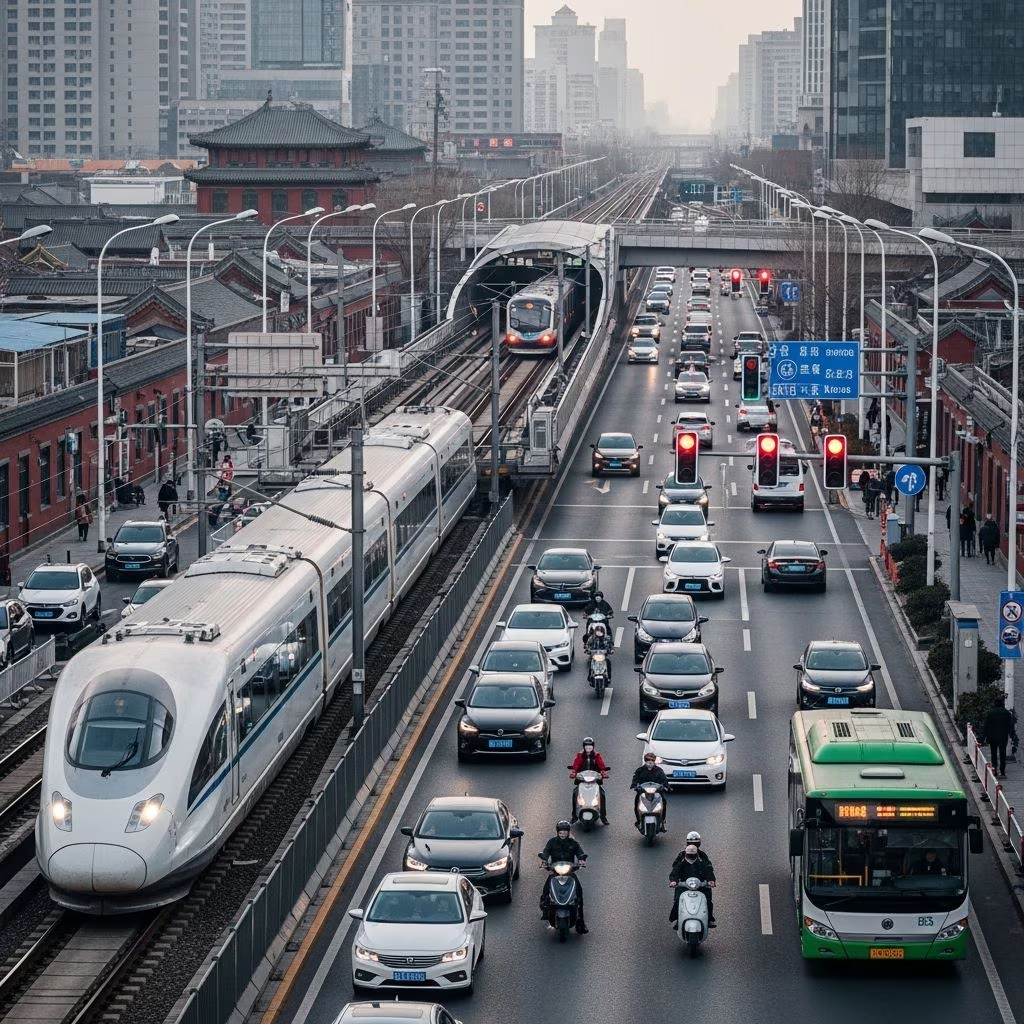
Beijing, China’s dynamic capital, boasts one of the world’s most extensive public transportation systems, making it easy for visitors to explore its iconic landmarks without the frustration of traffic congestion. With rapid subways, comprehensive bus networks, reliable taxis, and innovative bike-sharing, getting around is both affordable and efficient. This guide breaks down every option, helping you plan seamless journeys from airports to ancient sites.
The subway stands as the premier choice for traversing Beijing, offering speed, punctuality, and coverage to nearly every major attraction. As the world’s second-longest metro network after Shanghai, it features over 29 lines, including airport expresses, spanning urban and suburban areas. Trains run from around 5 a.m. to midnight, with higher frequency during peak hours (8 a.m. and 6 p.m.).
Key advantages include bypassing ground-level jams, short intervals (every 2-5 minutes), and easy transfers within stations. For tourists, it’s ideal for reaching sites like the Forbidden City (Line 1), Bird’s Nest (Line 8), or Summer Palace (Line 4). Fares start low, often under ¥10 for central trips, payable via cards or mobile apps like Alipay/WeChat.
| Line | Key Destinations |
|---|---|
| Line 1 | Tiananmen Square, Forbidden City, Universal Studios |
| Line 2 | Beijing Railway Station, Lama Temple |
| Line 4 | Summer Palace, South Railway Station |
| Line 5 | Temple of Heaven |
| Line 8 | Olympic Park, Bird’s Nest |
| Airport Express | Capital Airport to city center (30 mins) |
Pro tip: Download a subway app for real-time maps, schedules, and English navigation. Security checks are standard—keep bags light.
Beijing’s buses complement the subway with over 2,200 routes, including urban (1-122), suburban (300+), night lines (201-212 after 11 p.m.), and sightseeing options (900-998). Operating from 5 a.m. to 11 p.m., with 36 night routes extending service, they reach remote spots like the Great Wall or hutongs that subways miss.
Sightseeing buses are tourist favorites: Lines 1 and 2 loop the Forbidden City, Tiananmen, and Temple of Heaven for ¥15 (or ¥10 with a transport card). Direct buses from hubs like Qianmen go to Badaling Great Wall. Payment via cash, cards, or apps; expect crowded rides during rush hours.
Buses are cheaper than subways but slower due to traffic—combine with subway for best results.
For flexibility, taxis are ubiquitous and metered, with a ¥13 base fare plus ¥2.3/km. Hail them on streets (green dashboard light indicates availability) or at stands near hotels, malls, and airports. Official colors: yellow (BAIC), blue/green (others). Avoid unregistered black cabs.
Ride-hailing apps like Didi (China’s Uber) offer cheaper, trackable rides via Alipay/WeChat. English support is limited, so use translation apps or show addresses in Chinese. Taxis shine for late nights or groups, but surges occur during peaks.
Beijing’s bike-sharing revolutionizes short trips. Stations cluster at subway exits—scan QR codes via apps like Mobike or HelloBike to unlock for ¥1-2/hour. Perfect for hutong wandering, Central Axis sightseeing, or bridging subway-to-site gaps (e.g., 1-2 km).
Paths along historic axes provide scenic, leisurely rides amid local life. Helmets aren’t mandatory but recommended; traffic demands caution. E-bikes add power for hills.
Beijing Capital (PEK) and Daxing (PKX) airports connect seamlessly. Capital Airport Express (Line) whisks you to Dongzhimen in 30 minutes for ¥25. Daxing Express serves Line 19. Airport buses and taxis fill gaps—taxis take 45-90 minutes to center (¥100-150).
For trains: Subways link Beijing Station (Line 2), South (Line 4), West (Line 9), North (Lines 2/13). Long-distance buses depart from stations like Dongzhimen or Liuliqiao.
Get a Beijing Pass or Yikatong card (¥20 deposit) for seamless subway/bus payments—reload via machines/apps. Mobile payments (Alipay/WeChat) dominate; link international cards if needed. Cash works but slows lines.
Peak hours (7-9 a.m., 5-7 p.m.) pack subways—travel off-peak. English signs abound in stations; use maps offline. For groups/luggage, taxis or airport shuttles. Women-only cars on some lines during rush.
| Option | Speed | Cost | Best For |
|---|---|---|---|
| Subway | Fastest | Low (¥3-10) | Attractions, trains |
| Bus | Medium | Very low (¥1-2) | Sightseeing, suburbs |
| Taxi/Didi | Variable | Medium (¥30+) | Door-to-door, night |
| Bike | Slow | Minimal | Short, scenic |
Yes, signs, apps, and announcements are bilingual. Download maps for navigation.
Airport Express subway (30 mins) or taxi (45-90 mins).
Most modern ones yes, especially sightseeing lines.
Limited; prefer transport card or mobile pay.
Direct tourist buses from Qianmen or Dongzhimen.
Combine modes: Subway to Tiananmen, bus to Temple of Heaven, bike through hutongs. For multi-day trips, a transport card saves time. Beijing’s system evolves—check apps for updates.
With these tools, unlock Beijing’s wonders effortlessly, from imperial palaces to modern marvels.
