

 Travel Essentials
 Travel Essentials

Discover the best ways to explore Bhutan, from chauffeured cars and domestic flights to buses, cycling tours, and the iconic Trans Bhutan Trail, all while respecting the kingdom's unique travel rules.
 Travel Essentials
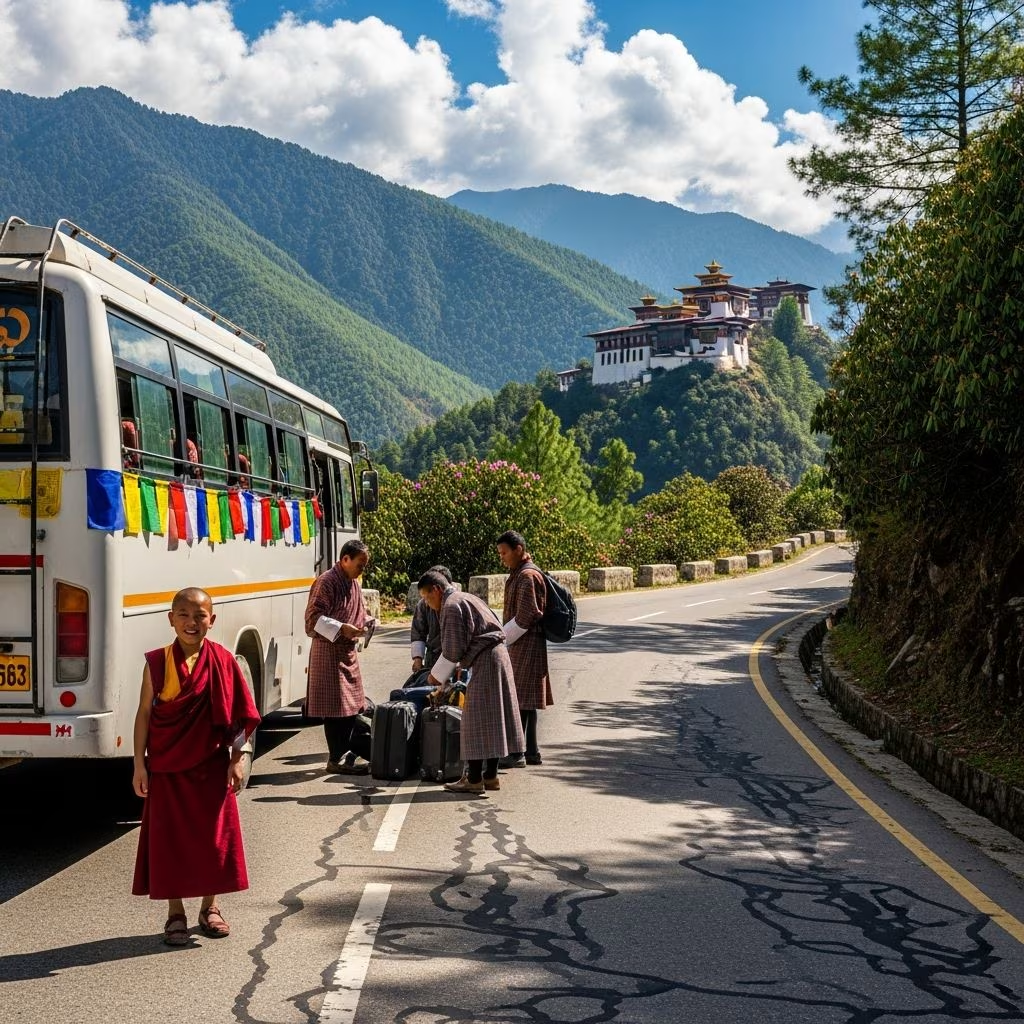
Bhutan, nestled in the eastern Himalayas, offers breathtaking vistas of snow-capped peaks, lush valleys, and ancient monasteries, but its remote location and rugged terrain demand careful planning for transportation. Most visitors rely on organized tours that bundle drivers and guides, ensuring compliance with the kingdom’s Sustainable Development Fee (SDF) and permit requirements. Private vehicles remain the cornerstone of travel, supplemented by limited flights, buses, and adventurous options like cycling and trekking.
Traveling by car with a dedicated driver is the most reliable and scenic method to traverse Bhutan’s single major artery, the East-West Highway, which snakes from Phuentsholing in the southwest to Trashigang in the east. This well-maintained road climbs through dramatic mountain passes adorned with fluttering prayer flags and descends into terraced valleys dotted with traditional farmhouses. All rentals include professional drivers experienced in navigating hairpin turns and potential weather disruptions; self-driving is prohibited for non-Indian tourists.
Tour operators provide a range of vehicles, from sturdy 4×4 SUVs ideal for off-road detours to spacious minibuses for groups. Costs are integrated into the daily SDF of around $100 per person (as of recent updates), covering fuel, maintenance, and the driver’s expertise. Popular routes include the 3-hour ascent over Dochula Pass from Thimphu to Punakha, where 108 stupas offer panoramic views on clear days.
Urban mobility in Thimphu and Paro allows independent taxis (unmetered—negotiate fares upfront) or walking, as these compact towns feature pedestrian-friendly streets lined with markets and cafes. Bicycle rentals in Thimphu add a fun, eco-friendly twist for short explorations.
Bhutan’s national carrier, Drukair (Royal Bhutan Airlines), operates from the sole international airport in Paro to key domestic hubs like Bumthang (Bathpalathang) and Gelephu. These short hops dramatically cut travel times; for example, Paro to Jakar flies in 30 minutes versus 10 hours by road. Flights are weather-dependent due to the challenging topography, with valleys often shrouded in mist.
| Route | Flight Duration | Road Alternative |
|---|---|---|
| Paro to Bumthang | 30 minutes | 10+ hours |
| Paro to Gelephu | 20 minutes | 6-8 hours |
| Paro to Trashigang (seasonal) | 45 minutes | 15+ hours |
Book early via tour packages, as seats fill quickly. These flights complement road trips by linking distant regions efficiently, ideal for time-constrained itineraries covering eastern Bhutan.
As Bhutan’s only public transport, state-run buses connect major towns along the highway, offering fares from $2-12 for multi-hour trips. They depart from Thimphu’s central station to destinations like Phuentsholing, Gelephu, and Trashigang (with overnights on longer routes). Operators include Meto, Khorlo, and Pelyab Transport.
Expect crowded conditions, basic seating, and delays from mechanical issues or landslides, but the thrill of winding roads compensates. Foreigners must travel with a guide, making buses a secondary choice within tours rather than standalone public use. They shine for authentic glimpses of local life, with passengers hauling goods and chatting animatedly.
For adrenaline seekers, Bhutan’s roads and trails beckon with cycling and motorbike tours led by operators like Spice Roads. Multi-day pedaling or riding reveals alpine meadows and rhododendron forests up close. Helmets and support vehicles ensure safety on steep descents.
Trekking elevates exploration, from the half-day hike to Paro Taktsang (Tiger’s Nest) Monastery—clinging impossibly to a cliff—to epic routes like the Druk Path Trek (linking Paro and Thimphu via glacial lakes) or the formidable Snowman Trek. The crown jewel is the 403km Trans Bhutan Trail, revived in 2022 as 28 sections traversable by foot, horse, or bike, tracing ancient mule paths used for centuries.
Combine these with driving: trek a trail section, then motor to the next valley. Permits and guides are mandatory beyond Paro/Thimphu; pack layers for altitude shifts from 2,000m to 4,000m+.
Bhutan’s climate influences travel: clear winter roads (October-March) suit festivals but chill high passes; spring (March-May) blooms with flowers; monsoon (June-August) risks landslides, slowing buses and flights. Pack motion sickness remedies for curvy drives.
Permits via the Department of Tourism cover standard western circuits (Paro-Thimphu-Punakha); eastern extensions need extras. Indian nationals enjoy relaxed rules, including self-driving.
No, except Indian citizens; all others require a driver-guide combo through licensed tours.
About 1.5 hours, covering 50km of scenic highway.
No, landlocked with no rail network; roads and flights dominate.
October-November or March-May for stable weather and visibility.
Yes, multiple daily services on main routes, but confirm with stations.
This blend maximizes Bhutan’s diversity, balancing drives with active segments for holistic discovery.
