

 Travel Essentials
 Travel Essentials

Learn how to navigate Brussels using metro, buses, trams, bikes, and trains. Discover ticketing options, accessibility features, and practical tips for efficient city travel.
 Travel Essentials
Brussels, the capital of Belgium and heart of Europe, features a sophisticated and interconnected public transportation infrastructure that makes exploring the city straightforward and cost-effective. Whether you’re arriving at the airport, visiting iconic landmarks, or venturing into residential neighborhoods, understanding the city’s transport options is essential for maximizing your time and minimizing frustration.
Brussels’ transportation system represents a coordinated effort among multiple operators, each serving distinct geographical areas and serving different purposes within the urban landscape. The Brussels Intermunicipal Transport Company (STIB-MIVB) manages the metro, tram, and most downtown bus services, forming the backbone of urban mobility. Beyond the central city, De Lijn operates in Flanders and TEC operates in Wallonia, extending transportation reach into surrounding regions and municipalities.
This multi-operator structure reflects Belgium’s regional governance, but modern integration tools have simplified the experience for travelers. The Floya app consolidates journey planning and payment across all these operators, alongside bike-sharing and car-sharing services, creating a unified digital interface for transportation decisions.
The Brussels Metro system comprises six lines—four conventional metro lines and two light rail lines (underground tramways). However, the actual navigation experience differs from what raw numbers suggest. In the city center, two metro lines merge into a single track, effectively creating three primary metro corridors for most of Brussels, which many observers consider insufficient for a capital city.
Each line serves distinct directional purposes:
Metro frequency varies by time and day. During peak periods, trains arrive every 5 to 10 minutes, ensuring minimal wait times. Outside rush hours, service drops to every 20 minutes, though the city-center track merging means you rarely experience the full 20-minute wait.
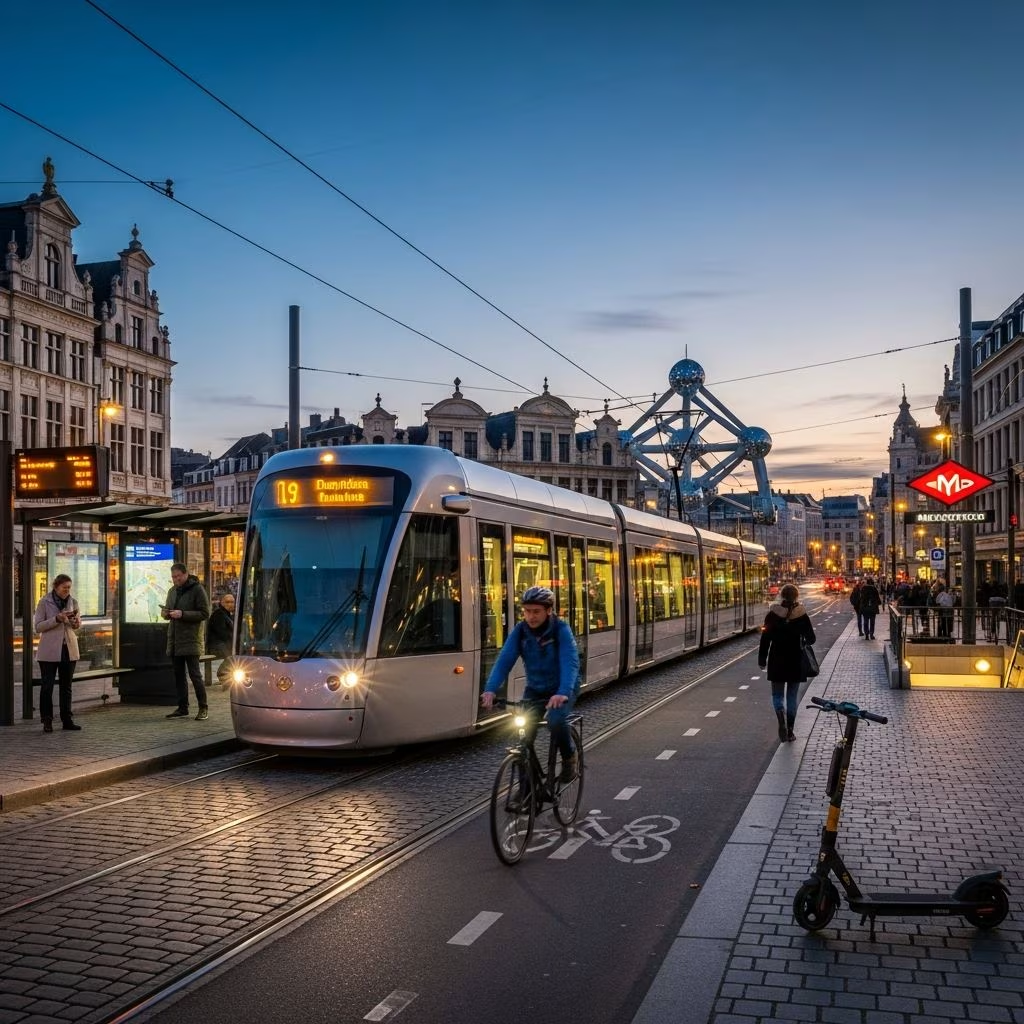
Beyond the metro, trams provide comprehensive coverage across Brussels with multiple dedicated lines serving different neighborhoods and destinations. Trams operate on the same ticketing system as the metro when provided by STIB-MIVB, making transfers seamless for riders.
Buses serve as the most extensive transportation network, reaching areas inaccessible by metro or tram. STIB-MIVB operates the majority of downtown bus routes, while De Lijn and TEC cover suburban areas. This geographic division creates an important consideration for passengers: tickets are not interchangeable between these operators, requiring careful selection based on your destination.
For nocturnal travelers, Noctis provides night bus service on late Friday and Saturday evenings, supplementing standard public transportation that typically ends around midnight. This late-night option ensures mobility even during Brussels’ vibrant evening entertainment hours.
The ticketing landscape in Brussels has evolved to accommodate diverse traveler preferences and payment technologies. The BRUPASS (Brussels Pass) represents the most comprehensive solution, functioning across all public transportation operators and formats—metro, buses, trams, and regional trains. Loading BRUPASS onto a MOBIB card (analogous to London’s Oyster system) allows flexibility through single-trip purchases or blocks of ten journeys.
For those preferring modern payment methods, contactless payment devices available at every STIB station accept contactless bank cards and smartphone payment apps including Google Pay, Apple Pay, Fitbit Pay, and Garmin Pay. This technology eliminates the need for physical tickets while maintaining security and ease of use.
Tickets for specific operators can be purchased from drivers or through online platforms, with e-tickets requiring validation through the relevant app before boarding. Multiple language options on ticket machines and digital interfaces accommodate Brussels’ international visitor base.
Your Brussels journey often begins at Zaventem Airport, requiring efficient transport to the city center. The train provides the fastest option, completing the journey in just 16-18 minutes to Brussels-Central station. For budget-conscious travelers, Bus 272 connects the airport to downtown, though frequent stops extend travel time considerably.
Understanding these options before arrival streamlines your transition from air travel to urban exploration, setting a positive tone for your Brussels experience.
Brussels presents itself as a remarkably walkable city, enabling exploration on foot across numerous neighborhoods and attractions. The compact center and pedestrian-friendly infrastructure make wandering an enjoyable discovery method.
For those seeking two-wheeled transportation, Brussels offers multiple bike-sharing services including Villo!, Blue-Bike, and Dott, providing 24-hour access to bicycles. These services cater to short-distance trips, local exploration, and environmentally conscious travelers. The city’s bike-friendly infrastructure and relatively flat terrain make cycling an efficient alternative to public transit for many journeys.
Public transportation efficiency varies throughout the day. Rush hours—typically 6:00 AM to 9:00 AM and 4:00 PM to 6:00 PM—experience heightened crowding on metro, bus, and tram systems. Timing your travel outside these windows, when possible, significantly improves comfort and reduces delays.
Brussels accommodates passengers with mobility limitations through comprehensive infrastructure. The majority of metro stations feature lifts, and most trams and buses are wheelchair-accessible. STIB-MIVB provides specialized guidance for passengers with disabilities, ensuring informed travel planning.
For families, children under 6 travel free on STIB public transport when accompanied by a paying adult, reducing family travel costs while encouraging multi-generational exploration.
Beyond standard public transportation, Brussels offers supplementary options for specific needs. Collecto provides taxi service with fixed-rate pickups from STIB-MIVB stops and drop-offs at any Brussels address, combining the reliability of scheduled stops with taxi-like convenience. This hybrid service proves particularly valuable for late-night arrivals or journeys with substantial luggage.
Successful Brussels navigation begins with planning. The STIB-MIVB website provides comprehensive network maps, real-time schedules, frequency information, and fare calculations. The Floya app extends this functionality by integrating all operators and shared mobility services into a single planning interface, enabling comparison of different route options and transportation modes.
Understanding whether your destination falls within STIB-MIVB territory, De Lijn service areas, or TEC zones determines your ticketing requirements and payment method. This geographic awareness prevents the frustration of purchasing incorrect tickets after boarding.
Travelers venturing beyond central Brussels into surrounding municipalities benefit from BRUPASS XL, extending coverage across an 11.5 km radius encompassing all 19 Brussels municipalities. This expanded pass enables day trips and explorations of metropolitan area attractions without purchasing separate regional tickets.
Contemporary Brussels transportation embraces digital solutions through multiple applications and online platforms. Beyond Floya’s comprehensive integration, individual operators maintain their own apps providing real-time updates, journey planning, and digital ticketing. Downloading these applications before arrival ensures immediate access to information regardless of internet connectivity challenges.
Train service offers the fastest connection, delivering passengers to Brussels-Central in 16-18 minutes. Bus 272 provides a cheaper alternative despite longer travel times.
The BRUPASS provides optimal value for multi-day stays, functioning across all operators and transport modes. Single-trip tickets suit occasional users or very short stays.
STIB-MIVB trams and buses share ticketing compatibility. However, buses operated by De Lijn or TEC require separate tickets.
Noctis night buses operate late Friday and Saturday evenings, while Collecto taxi service provides 24-hour availability.
STIB-MIVB services (metro, downtown trams, and buses) accept contactless payments at designated stations. Regional operators may have different systems.
