

 Travel Essentials
 Travel Essentials

Comprehensive guide to Denmark's public transport, including trains, metro, buses, cycling, and ferries for hassle-free travel across the country.
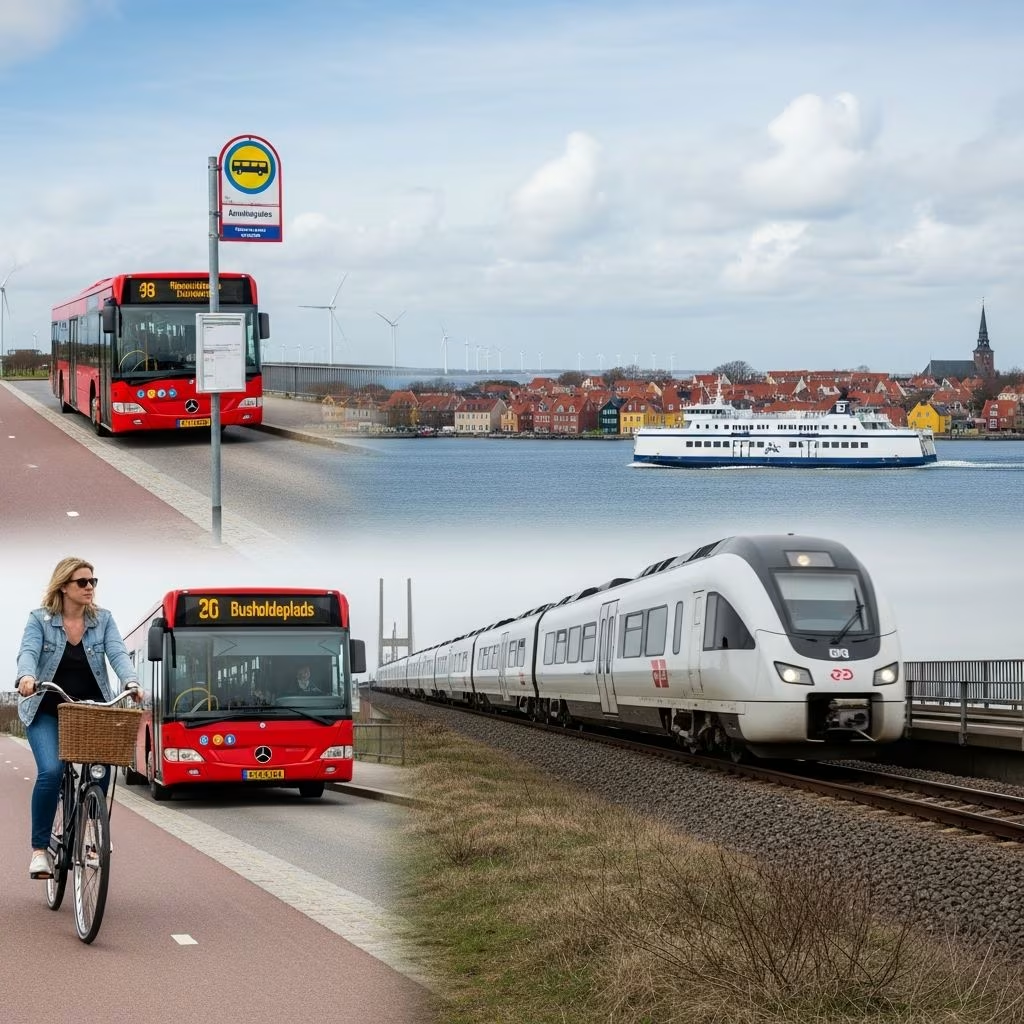 Travel Essentials
Denmark boasts one of Europe’s most efficient and eco-friendly transport systems, making it simple for visitors to travel between compact cities, scenic countryside, and numerous islands. Whether you’re arriving at Copenhagen Airport or venturing to Jutland, options like high-speed trains, driverless metros, extensive bus routes, and ubiquitous bikes ensure smooth mobility without a car.
Copenhagen Airport (CPH) connects effortlessly to the city center via regional trains or the metro, taking under 15 minutes with a 3-zone ticket costing around DKK 36. Regional trains head straight to Copenhagen Central Station, ideal for onward journeys, while the metro serves neighborhoods like Nørrebro and Vesterbro.
Other airports, such as Aalborg or Billund, link to local rail networks operated by Danish State Railways (DSB), providing quick transfers to major hubs. Always check Rejseplanen.dk for real-time schedules across all modes.
DSB dominates Denmark’s rail system, offering inter-city expresses (lyntog) for swift long-distance trips and regional trains for shorter routes. A journey from Copenhagen to Aarhus lasts three hours, to Odense 1.5 hours, and to Aalborg four hours.
Tickets use a zonal pricing system, including local transport at start and end points. Book via DSB’s website or app for early-bird “orange” discounts; reserve bikes or strollers ahead on inter-city lines. Rail passes like InterRail or Eurail cover DSB fully and offer discounts on private lines.
Copenhagen’s metro features driverless trains on four lines, operating 24/7 with arrivals every 3 minutes. Marked by an “M” logo, it’s spotless and links the airport to downtown efficiently.
The Greater Copenhagen Light Rail extends to suburbs like Ishøj and Rødovre (extending to Lyngby by summer 2026), with 5-minute frequencies daytime and easy S-train connections.
| Mode | Key Routes | Frequency | Best For |
|---|---|---|---|
| Metro | Airport to City Center | Every 3 min, 24/7 | Quick, late-night travel |
| S-train | Greater Copenhagen | Every 10 min | Suburban commutes |
| Light Rail | Ishøj to Rødovre/Lyngby | Every 5 min daytime | Metro area outskirts |
Trams electrify Aarhus and Odense, providing green, reliable inner-city loops.
Denmark’s bus network fills gaps in rail services, especially rural areas and smaller villages. DSB operates some, but private firms like FlixBus handle long-distance routes affordably.
In cities, buses integrate with trains via Rejsekort (loadable travel card) or app tickets. Harbour buses in Copenhagen offer scenic routes from Teglholmen to Refshaleøen, using standard bus tickets.
Plan via Rejseplanen, which covers trains, buses, ferries, and Copenhagen’s S-train/metro.
Biking defines Danish mobility; cities are flat, bike-friendly with dedicated lanes. Rent from shops, Donkey Republic street bikes, or e-scooters via apps.
Walking suits compact centers like Copenhagen’s Strøget or Aarhus old town.
With hundreds of islands, ferries are vital. Domestic routes connect Jutland to Funen and Zealand; operators like Scandlines link to Sweden and Germany.
Copenhagen-Oslo cruises by DFDS provide overnight options. Many ferries accept standard tickets; check for bike allowances.
Rejsekort is key for pay-as-you-go across buses, trains, metro. Multi-ride or period tickets suit frequent travelers.
Copenhagen Card: Unlimited transport in capital region + 80+ attractions (24-120 hours, €54-133 adults; kids discounts).
Jutland (Aarhus, Aalborg): DSB trains from Copenhagen; local buses/trams; bike rentals abundant.
Funen (Odense): Quick rail hop; ferries to islands like Ærø.
Bornholm:
Ferry from Ystad (Sweden) or direct from Copenhagen.
Metro or regional train: 12-15 minutes with a 3-zone ticket.
Yes for DSB; discounts on private lines like Hirtshals.
Yes, with ticket/reservation; restrictions during peaks.
Use Rejsekort or Rejseplanen app for seamless payment.
Copenhagen Metro yes; others reduce nights, check schedules.
