

 Travel Essentials
 Travel Essentials

Discover efficient ways to explore England by train, bus, bike, car, or boat. Learn about costs, tips, and best routes for budget-friendly and scenic travel.
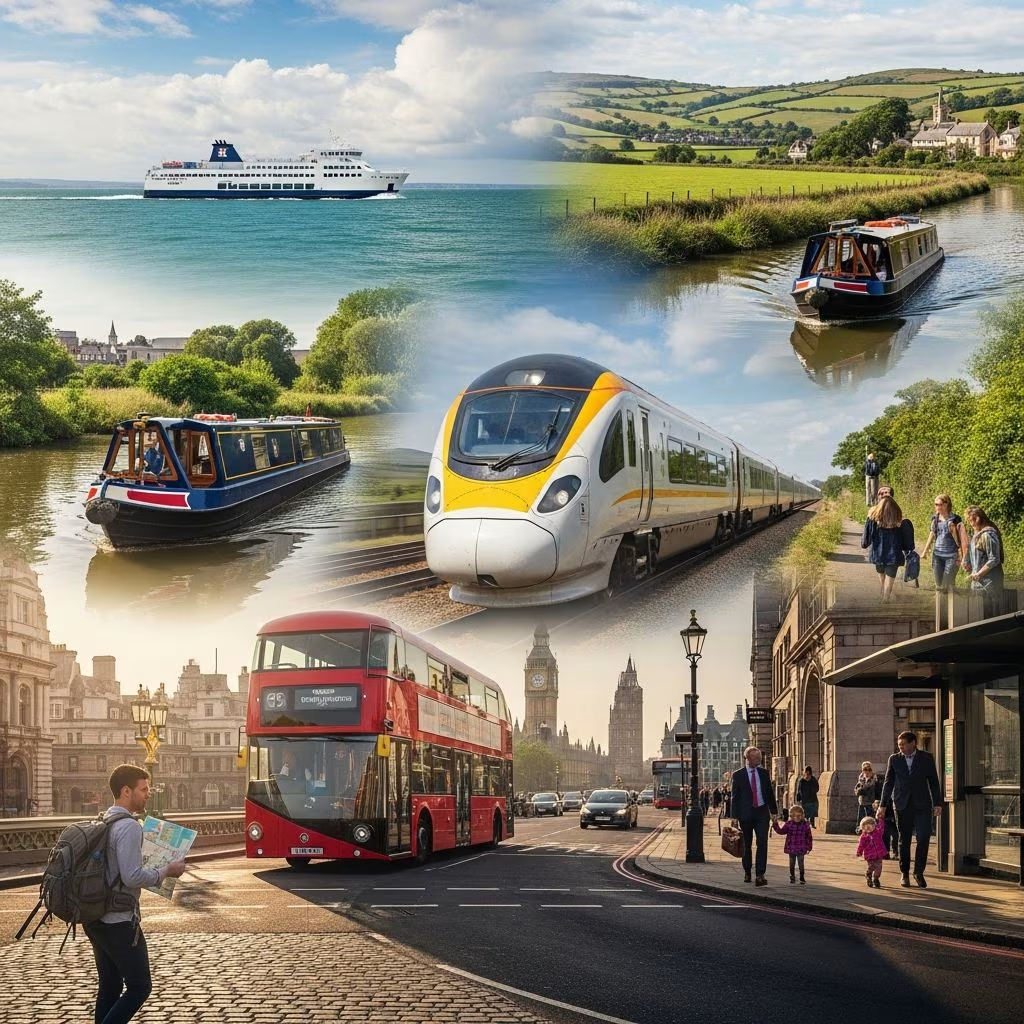 Travel Essentials
England offers a robust network of transport choices that cater to every traveler’s needs, whether you’re rushing between major cities or leisurely exploring hidden villages. From the iconic rail system connecting distant corners to eco-friendly cycling paths and reliable local buses, understanding these options ensures smooth journeys without unnecessary stress or expense.
Trains stand out as the premier choice for covering vast distances quickly and comfortably across England. The extensive rail network spans over 2,500 stations, linking urban hubs like London, Manchester, and Edinburgh with scenic routes through rolling hills and coastlines. Services operated by various companies provide frequent departures, making it simple to hop from the capital to destinations such as Brighton or Cardiff in mere hours.
For optimal savings, book tickets via the National Rail Journey Planner app well in advance. Advance fares can slash costs significantly compared to on-the-day purchases, especially during off-peak times. Reliability hovers around 85% on-time performance for intercity routes, with modern stations featuring amenities like free Wi-Fi, dining options, and accessible facilities.
Consider rail passes like the BritRail for multi-stop itineraries, offering flexibility for spontaneous adventures.
For those watching their wallets, long-distance coaches provide the most affordable intercity links. Operators like National Express and Megabus connect nearly every major town, with fares dropping to rock-bottom prices when reserved early or during low-demand periods.
While journeys may take longer—often 20-50% more time than trains—the comfort has improved with Wi-Fi, charging ports, and spacious seating on newer fleets. Routes from London to Birmingham or Leeds are frequent, running multiple times daily.
| Route | Average Coach Time | Average Train Time | Typical Coach Fare (Off-Peak) |
|---|---|---|---|
| London to Bristol | 3.5 hours | 1.5 hours | £15-25 |
| London to Liverpool | 5 hours | 2.5 hours | £10-20 |
| Manchester to London | 4 hours | 2 hours | £12-22 |
Apps like Omio or the operators’ own platforms simplify booking and real-time tracking, ensuring you never miss a connection.
The heart of England’s transport pulses in London, where the Tube, buses, and more form one of the globe’s most extensive systems. Transport for London (TfL) oversees an integrated network reachable via their user-friendly journey planner app.
The Underground, or Tube, zips passengers across 11 color-coded lines to over 270 stations. Iconic routes like the Circle Line loop through landmarks, while the Elizabeth Line offers swift airport links. Complementing this are red double-decker buses, including the world’s largest night network servicing 24/7 routes for late-night revelers.
Walking remains underrated; many central spots like Covent Garden to Leicester Square are quicker on foot than by Tube.
Outside London, trams and metros enhance city mobility. Manchester, Birmingham, Sheffield, Nottingham, and Blackpool boast efficient tram networks, with tickets available from machines or conductors. The Tyne and Wear Metro links Newcastle Airport to the city center in 20 minutes, proving invaluable for northern travelers.
Glasgow’s Subway, though technically Scottish, connects seamlessly for cross-border trips. These systems prioritize affordability and frequency, often cheaper than taxis for group travel.
Embrace England’s growing cycling culture with dedicated lanes in cities and national routes like Sustrans paths crisscrossing the countryside. Bike-share schemes in London, Manchester, and beyond allow hourly or daily hires via apps, promoting green commutes.
E-scooters add zip to short urban jaunts, rentable through providers like Lime. For longer adventures, rental shops offer e-bikes equipped for hills in areas like the Peak District. Helmets are recommended, and traffic rules mandate using cycle lanes where available.
Renting a car unlocks rural England, from Cotswolds villages to Lake District trails, but comes with high costs—fuel, rentals from £130/week, and potential tolls. Left-hand driving, narrow lanes, and roundabouts challenge international visitors; international permits are advised alongside comprehensive insurance.
Key tips: Use apps like Waze for traffic, park outside congestion zones (e.g., London’s ULEZ requires clean-emission vehicles), and prioritize motorways (M1, M6) for speed. Public transport often suffices, avoiding parking hassles in walkable towns.
England’s 2,000+ miles of canals invite slow travel via self-hired narrowboats from bases near Oxford or Rugby. Ferries ply short hops like Portsmouth to Isle of Wight or Penzance to Isles of Scilly, offering breezy escapes with vehicle options.
Canal & River Trust resources detail rentals and tours, blending relaxation with history amid locks and wildlife.
Rural buses link communities, though schedules favor school and market days, thinning on weekends or holidays. Operators like Stagecoach provide apps for timetables; multi-operator passes save money in regions like the Midlands.
Research via local council sites prevents stranding—combine with trains for hybrid itineraries to places like the Cotswolds.
Black cabs and Uber fill gaps, with apps like Citymapper integrating all options. Accessible vehicles are widespread; TfL mandates step-free Tube stations.
For groups, pre-booked minicabs beat haggling.
Leverage Trainline, Moovit, TfL Planner, and Citymapper for routes. Visitor Oyster cards or rail passes like 16-25 Railcard (1/3 off) optimize budgets.
Coaches via National Express or Megabus, booked early, often under £20.
No for cities; yes for remote areas like national parks, but public transport covers most.
About 85% on time for long-distance; check apps for disruptions.
TfL Go or Citymapper for real-time updates.
Yes, on TfL, most trains, and buses.
