

 Travel Essentials
 Travel Essentials

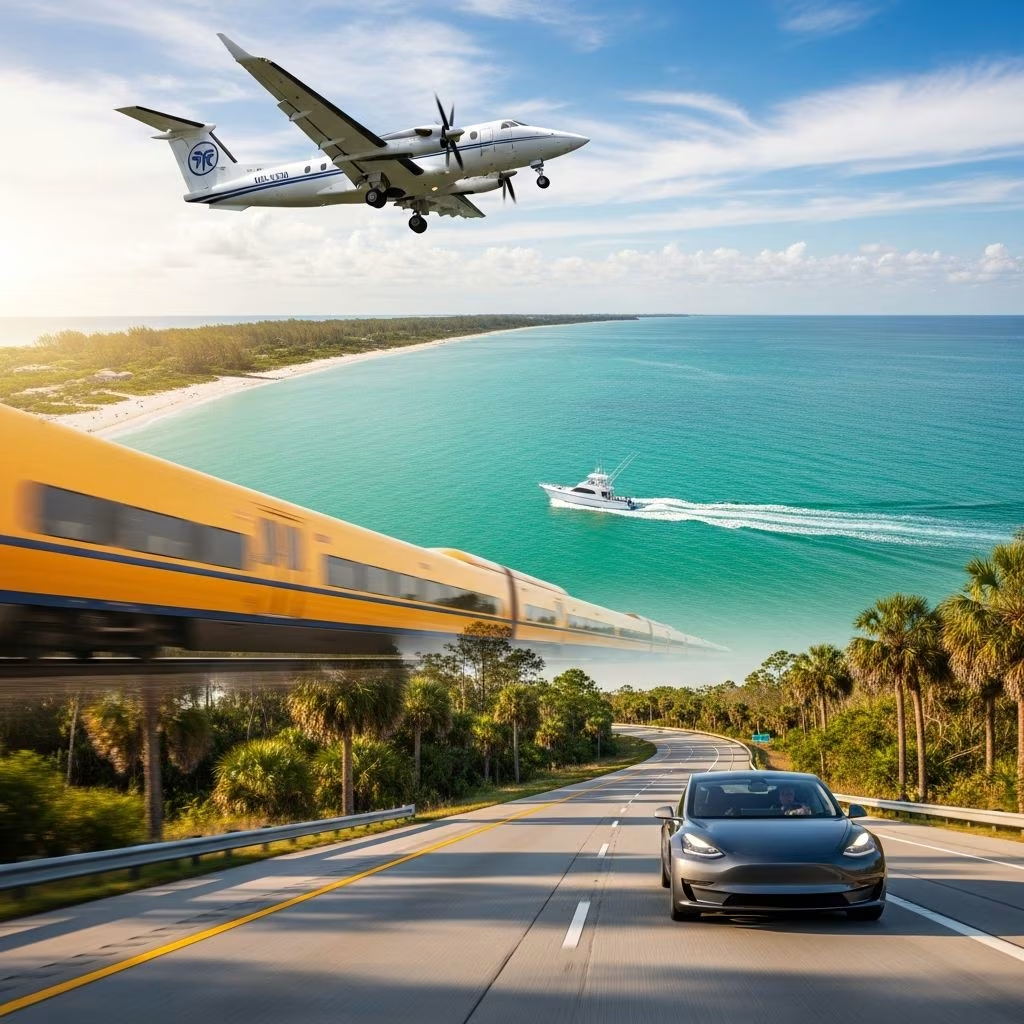
Explore Florida's diverse transportation options including trains, buses, ferries, and trolleys for seamless travel across the state.
 Travel Essentials
Florida’s expansive geography and diverse attractions make it essential to understand the various transportation methods available throughout the state. While many visitors assume they need a rental car to explore the Sunshine State, numerous alternatives provide convenient, cost-effective, and often more enjoyable ways to travel between cities and regions. From modern high-speed rail to scenic water taxis and vintage trolleys, Florida offers something for every traveler’s preference and budget.
Though Florida’s car-dependent infrastructure makes driving the most common choice, public transportation networks have expanded significantly in recent years. The state’s geography—stretching over 500 miles from north to south with numerous coastal areas, natural parks, and urban centers—creates natural transit corridors that rail, bus, and ferry services can effectively serve. Understanding these alternatives allows travelers to avoid highway congestion, reduce travel costs, and experience Florida from unique perspectives that rental cars cannot provide.
Florida hosts one of the most comprehensive passenger rail systems in the eastern United States through Amtrak. The rail service maintains 19 stations throughout the state, offering travelers multiple routing options across different regions.
The Silver Meteor route provides 14 stops beginning in Jacksonville and extending through Orlando’s central location before traveling south along the Atlantic coastline, passing through West Palm Beach and concluding in Miami. This routing makes it ideal for visitors interested in exploring both the interior and coastal regions sequentially.
The Silver Star offers even more flexibility with 18 Florida stops, also originating in Jacksonville but following a more westerly path through Orlando, Tampa, and Winter Haven before curving back toward the Atlantic coast through Fort Lauderdale to Miami. This route provides access to Florida’s Gulf Coast communities and is particularly valuable for travelers not staying near major highway corridors.
For those traveling along the broader East Coast, the Auto Train represents a unique solution. This overnight service connects Sanford, Florida, with Lorton, Virginia, allowing passengers to transport personal vehicles, motorcycles, or recreational equipment without enduring lengthy highway drives. This option proves particularly popular among extended-stay visitors and those relocating temporarily to Florida.
Brightline operates Florida’s premier high-speed rail system, featuring modern amenities and express service between major metropolitan areas. The system connects Miami, Aventura, Fort Lauderdale, Boca Raton, West Palm Beach, and Orlando with frequent daily departures.
Travel times make Brightline particularly competitive with driving. A Fort Lauderdale to Miami journey takes approximately 30 minutes, while West Palm Beach to Miami requires one hour. The Miami-to-Orlando route takes roughly three hours, making theme park visits and airport transfers substantially faster and more relaxing than driving.
Tri-Rail connects 18 stations across South Florida, running from just north of West Palm Beach southward to Miami International Airport. This system serves both commuters and tourists, with several stations offering connecting bus routes that extend access to downtown areas. The service provides an economical way to explore the Miami metropolitan region without dealing with parking challenges.
Orlando-area travelers benefit from SunRail’s 17-station network, spanning from DeLand in the north to Kissimmee’s Poinciana station in the south. This commuter rail system enables visitors to explore Central Florida attractions without relying entirely on I-4, which frequently experiences severe congestion.
For budget-conscious travelers or those without rail access in their destination areas, Florida’s bus network provides affordable statewide connectivity. National operators including Greyhound maintain multiple daily routes connecting major Florida cities including Miami, Orlando, and West Palm Beach. Regional carriers like FlixBus and GotoBus expand available routes and often offer competitive pricing.
Bus services typically feature lower fares than rail and some operators include onboard entertainment. While travel times exceed rail or air transport, buses provide direct routes to secondary cities and smaller towns without rail access.
Major Florida cities operate comprehensive bus networks serving both residents and visitors. Miami, Orlando, Tampa, and Jacksonville all maintain extensive local transit authorities managing bus routes throughout their metropolitan areas. These services connect neighborhoods, attractions, and transportation hubs, making independent exploration accessible without rental vehicles.
Several Florida communities have developed distinctive trolley and streetcar systems that combine practical transportation with nostalgic charm. Clearwater’s Jolley Trolley, St. Petersburg’s Beach Trolley, and Tallahassee’s free StarMetro provide affordable connections between downtown areas and major attractions. Miami operates a free Citywide Trolley serving the Miami Beach area, making waterfront exploration particularly accessible.
Specialized trolley services add tourism dimensions to transportation. Key West’s Old Town Trolley offers hop-on-hop-off sightseeing tours, allowing visitors to explore historic neighborhoods at their own pace. St. Petersburg’s Looper Trolley similarly combines transportation function with guided tour elements. The I-RIDE Trolley in Orlando’s International Drive Resort Area serves major theme park attractions at affordable prices, particularly valuable for families without car access.
Notably, Gainesville has implemented an innovative autonomous shuttle system operating along one of its principal thoroughfares, representing forward-thinking urban mobility solutions.
Florida’s extensive waterways provide transportation alternatives that combine practical utility with scenic experiences. The Yankee Freedom III ferry operates as the sole public transportation to remote Dry Tortugas National Park, located 70 miles offshore in the Florida Keys, providing access to this seven-island paradise.
Water taxis serve multiple coastal and river communities throughout Florida. Jacksonville travelers can utilize St. John’s River Taxi & Tours, while Tampa offers the Pirate Water Taxi. Additional water taxi services operate in Naples, Fort Lauderdale, and Destin, providing alternatives to vehicular congestion in waterfront areas.
Major tourism destinations provide shuttle services complementing or replacing traditional transportation needs. Disney Resort guests benefit from complimentary shuttle services connecting resort properties to all four theme parks, complemented by boat and monorail transportation systems. These integrated systems allow extended stays without vehicle rentals or daily parking expenses.
Beyond Disney, shared and private bus services like Florida Shuttle Transportation accommodate travelers requiring point-to-point transportation between airports, hotels, and attractions.
For visitors choosing vehicular transportation, understanding Florida’s road network proves essential. The state maintains an extensive highway system including major interstates I-95, I-75, and I-4 connecting principal cities and regions. Scenic routes like the Overseas Highway through the Florida Keys offer coastal experiences unavailable via standard highways.
Several major routes charge tolls, including the Florida Turnpike (extending from Ocala to Homestead), a portion of Interstate 75 between Miami and Naples, and the Bee Line Express between Orlando and Cape Canaveral. Travelers should budget for these toll expenses and research toll payment methods, as most accept electronic payments via FasTrak systems.
Understanding seasonal traffic variations is crucial for planning. The period from October through April—known as “Snowbird Season”—brings substantial population influxes from northern states seeking warmer weather. This seasonal migration creates significantly higher-than-normal highway congestion during these months, making alternative transportation particularly valuable during peak season.
| Transportation Method | Best For | Typical Speed | Cost Range | Accessibility |
|---|---|---|---|---|
| Brightline Rail | Point-to-point travel between major cities | High speed | Moderate | Limited to major stations |
| Amtrak | Leisurely journeys with sightseeing | Moderate | Moderate to High | 19 stations statewide |
| Commuter Rail (SunRail/Tri-Rail) | Regional exploration | Moderate | Budget-friendly | Metropolitan areas only |
| Bus Services | Budget-conscious travelers | Moderate | Very affordable | Extensive statewide coverage |
| Water Taxis/Ferries | Scenic coastal travel | Moderate | Varies | Coastal areas and islands |
| Trolleys | Short-distance urban travel | Slow | Very affordable | Limited to specific cities |
Experienced travelers often combine various transportation methods to optimize their trips. A typical itinerary might include Brightline rail between Miami and Orlando, SunRail commuter transit for theme park access, local trolleys for downtown exploration, and water taxis for scenic detours. This multi-modal approach minimizes costs while maximizing experiences and flexibility.
Florida’s transportation network accommodates diverse mobility needs through various specialized services. Community Transportation Coordinators can help determine eligibility for low-cost or free transportation services available throughout the state. The findarideflorida.org resource helps identify appropriate transportation options for individual mobility requirements.
Yes. Major cities have public transit systems, and rail services connect principal destinations. Combining buses, trains, trolleys, and shuttles allows comprehensive exploration without personal vehicle rental, though journey times may exceed driving.
Bus services typically offer the most economical statewide transportation, while many local trolleys and commuter rail systems cost under $5 per trip. Several services, including Miami’s Citywide Trolley and Tallahassee’s StarMetro, offer free fares.
For Miami-to-Orlando trips, Brightline saves approximately 1.5 hours compared to driving, eliminates parking concerns, and costs less than fuel plus parking fees combined, making it particularly valuable for time-conscious travelers.
The Yankee Freedom III ferry from Key West provides the only public transportation to Dry Tortugas National Park, offering day-trip access to this remote island paradise.
October through April, known as Snowbird Season, brings substantial traffic increases due to seasonal population influxes from northern regions. Alternative transportation proves particularly valuable during these peak months.
Florida’s transportation landscape extends far beyond the assumption that driving represents the only viable option. From modern high-speed trains to scenic ferries and charming trolleys, the Sunshine State offers diverse ways to explore its 500-mile expanse. By understanding available alternatives, visitors can choose transportation methods matching their priorities—whether prioritizing speed, economy, scenery, or convenience. Strategic use of Florida’s public transportation systems not only reduces travel costs but often provides more memorable experiences than highway driving, particularly during peak season when traffic congestion makes alternative transport increasingly attractive.
