

 Travel Essentials
 Travel Essentials

Discover efficient ways to explore France via high-speed trains, urban metros, regional buses, car rentals, and cycling. Practical tips for budgets, accessibility, and booking ensure stress-free journeys.
 Travel Essentials
France offers one of Europe’s most advanced transportation networks, blending high-speed rail with urban public systems and flexible road options. Whether crossing the country on a TGV or zipping through Paris by metro, understanding these options unlocks efficient, scenic travel.
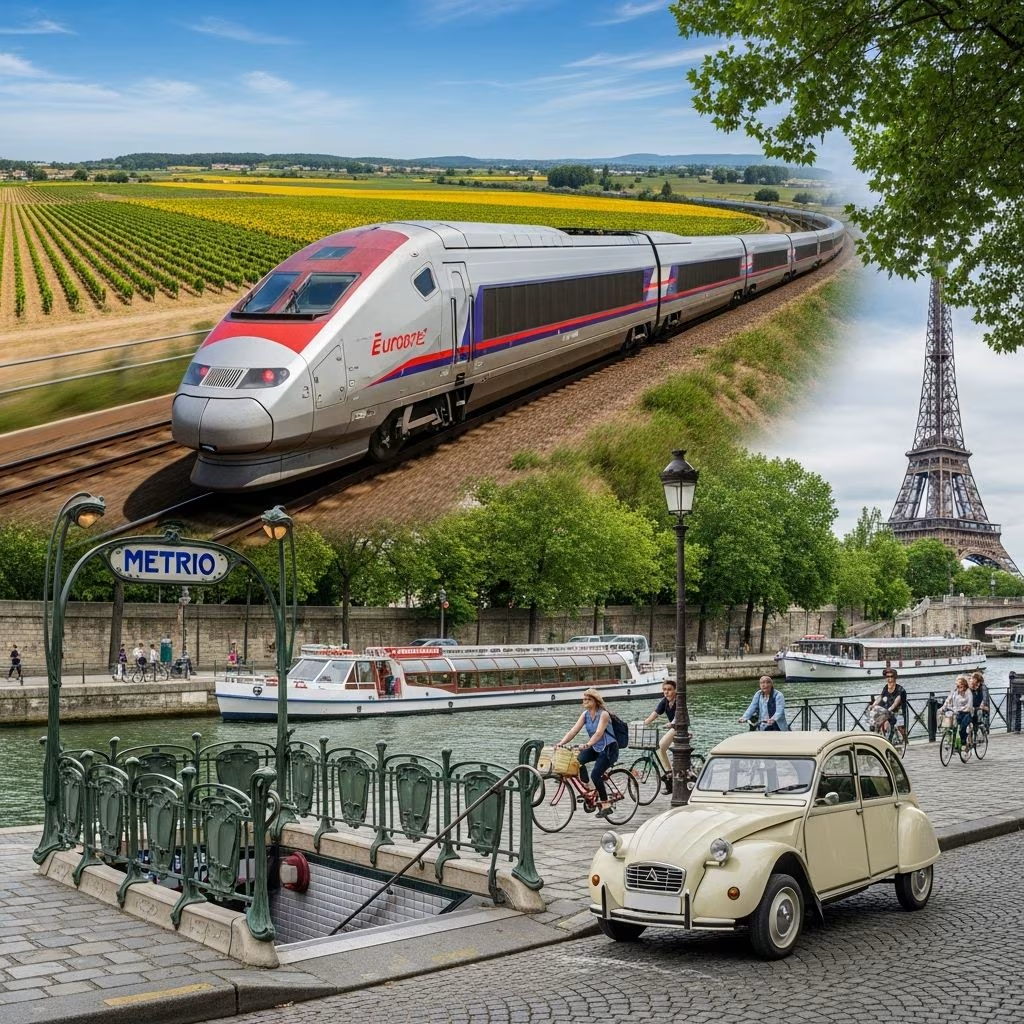
France’s rail system, managed by SNCF, stands out for its speed and reach. High-speed TGV trains connect major hubs like Paris, Lyon, Marseille, and Bordeaux in hours, often outperforming flights when factoring in airport logistics. For instance, Paris to Bordeaux takes just over two hours, with speeds up to 320 km/h.
Booking ahead secures fares from €20-€100, far cheaper than last-minute purchases. The network radiates from Paris, so inter-regional trips may involve a change there. Regional TER trains fill gaps for shorter routes, offering affordability without reservations.
Cities like Paris, Lyon, Marseille, Lille, Toulouse, and Rennes feature metro systems that are quick and intuitive. Paris’s extensive network, including RER for suburbs, handles millions daily with ticket machines supporting English. Trams have surged in popularity since the 1990s, providing eco-friendly routes; Paris alone has 11 lines spanning 78 miles.
Buses complement these, linking train stations to centers for under €3. Regional buses connect rural areas where rails don’t reach, though schedules align with school and market times. Validate tickets upon boarding to avoid fines.
| City | Metro Lines | Trams | Bus Coverage |
|---|---|---|---|
| Paris | 16 + RER | 11 lines | Citywide + suburbs |
| Lyon | 4 | Multiple | Urban + regional |
| Marseille | 2 | 3 lines | Coastal routes |
Domestic flights suit far-flung spots like Nice from Paris, where total door-to-door time rivals TGV despite 1:20 airtime—add airport transfers and security for 4+ hours. Airlines like Air France serve from CDG/Orly, but trains win for most routes due to central stations.
Budget carriers offer deals under €50, ideal for islands like Corsica. Check baggage rules and book early for savings.
Renting a car provides freedom for rural Provence or Dordogne, with firms at airports and stations. Tolls on autoroutes add €0.20/km, but scenic routes avoid them. Driving is right-side, with strict DUI laws (0.05% limit).
Car-sharing like Cityscoot (e-scooters in Paris) or Mobilize Share (electric cars in Lyon/Nice) suits short urban hops. Cycling networks thrive in Loire Valley and car-free paths; rent via apps like Truro for bikes or e-bikes.
France prioritizes accessible travel: Paris buses have ramps, though metro elevators are limited—use RER or trams instead. SNCF offers assistance at stations, and Wheeliz rents adapted vehicles. Airports provide mobility services.
For families, stroller-friendly trams and buses ease navigation. English signage grows, but apps like Citymapper aid non-French speakers.
Opt for rail passes like SNCF’s Ouigo for low-cost TGV or Interrail for multi-trips. City passes (e.g., Paris Visite) bundle transport and attractions. Buses beat trains on price for some routes, post-2015 deregulation.
| Option | Sample Cost (Paris-Lyon) | Duration |
|---|---|---|
| TGV | €30-€100 | 2 hours |
| Bus | €20-€40 | 5-7 hours |
| Flight | €50+ | 4+ hours total |
Advance booking via SNCF or FlixBus apps maximizes value. Shoulder seasons yield 30% discounts.
Carry ID for controls; strikes occasionally disrupt SNCF—monitor apps. Night trains (Intercités de Nuit) save hotel costs. For bikes, TER allows free transport off-peak.
Navigational aids: Google Maps integrates public transport; SNCF app shows disruptions.
TGV high-speed train, about 3 hours.
Yes, but plan around school/market schedules; cheaper than trains.
Use machines or app; Navigo pass for unlimited rides.
For countryside yes; avoid Paris due to traffic and ZTL zones.
SNCF Connect for trains/buses; Citymapper for cities.
France’s transport melds efficiency with adventure, from TGV sprints to coastal bike paths. Tailor choices to your itinerary for unforgettable exploration.
