

 Travel Essentials
 Travel Essentials

Comprehensive guide to traveling across Greece by bus, train, ferry, car, and air. Learn costs, booking tips, and best routes for mainland and island exploration.
 Travel Essentials
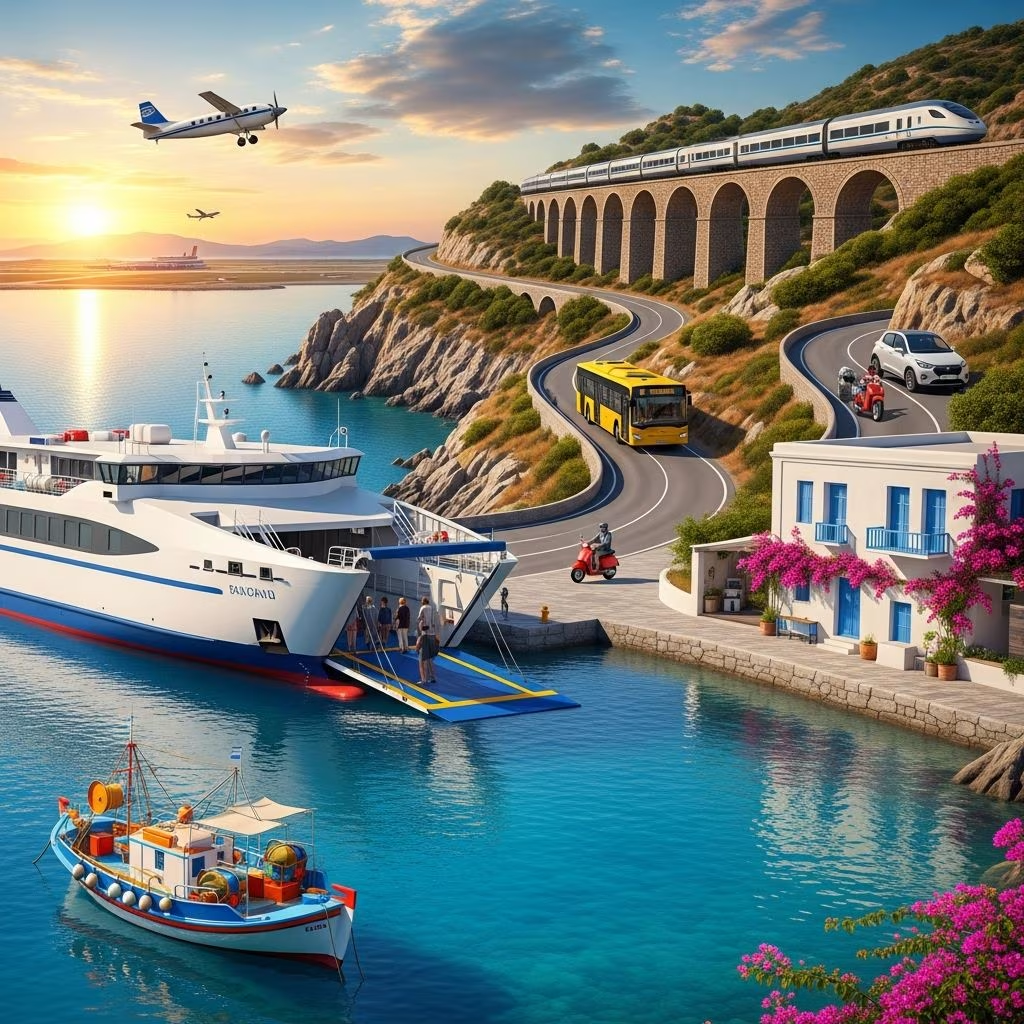
Traveling throughout Greece offers visitors access to a well-developed transportation network that connects the mainland, numerous islands, and remote villages. With multiple modes of transport available—from modern buses to scenic trains and traditional ferries—exploring this Mediterranean destination is remarkably accessible for travelers of all budgets and preferences.
Greece maintains a vast transport network that makes traveling reasonably straightforward regardless of your destination. The country’s transportation system evolved to serve both residents commuting between regional centers and tourists seeking to experience diverse landscapes and cultural sites. The network encompasses approximately 2,500 kilometers of railway across the mainland, complemented by extensive bus routes that penetrate even remote villages.
Each transportation mode serves distinct purposes within Greece’s geography. Mainland travel relies heavily on buses and trains for intercity connections, while reaching the Greek islands necessitates ferry services. For travelers prioritizing flexibility and convenience, rental vehicles and domestic flights offer alternatives to public transit options.
Buses represent the primary mode of transportation for intercity travel, serving both major cities and remote areas throughout Greece. The national bus network operates through regional KTEL companies—an acronym representing Kratikó Tamío Ellinikón Leoforíon—with over 60 individual KTEL operators managing a fleet of approximately 4,136 buses.
KTEL buses connect provincial cities with major urban centers including Athens, Thessaloniki, Patras, Ioannina, Volos, and Larissa. These services also link neighboring municipalities and extend to many Greek islands, making buses accessible for almost any destination within the country. The affordability of KTEL bus services makes them particularly attractive for budget-conscious travelers.
Service frequency varies significantly between major and minor routes. On primary corridors connecting major cities, buses operate frequent departures throughout the day with reliable schedules. Secondary routes experience less consistent schedules with potentially longer wait times between departures. Even the smallest villages typically receive at least one or two weekly bus services, though these often cater to residents conducting town business rather than tourist schedules.
Island bus services typically coordinate with ferry schedules, with buses linking ports to main town centers and timed to accommodate passenger arrivals and departures. This integration ensures tourists and residents can efficiently transfer between maritime and ground transportation.
Ticket acquisition varies by route popularity. Major routes like Athens-Patra issue electronic tickets with assigned seating, making advance purchase advisable during peak seasons when buses fill rapidly. Smaller routes often allow onboard ticket purchases, though seat availability cannot be guaranteed. Boarding approximately 20 minutes before scheduled departure provides reasonable buffer time.
Multiple bus terminals in larger towns can create confusion, as different destinations may operate from separate stations. Verifying the correct terminal location prevents missed departures and travel delays. KTEL buses maintain modern standards with air conditioning and comfortable seating arrangements.
Greece’s railway network, operated by Hellenic Train (formerly known as OSE), provides scenic alternatives to bus travel across the mainland. While train services cannot match bus network comprehensiveness, certain routes offer remarkable value and unforgettable travel experiences.
Two primary train categories serve different traveler needs. Regular (slow) trains stop at all stations along routes, providing opportunities to observe countryside and smaller settlements. Intercity (IC) express trains link major cities and significantly reduce travel times, though at marginally higher fares. The Athens-Thessaloniki route operates as a popular express service completing the journey in approximately 4.5 hours.
Additional notable routes include connections to Alexandroupoli, Vólos, and Kalambáka. The Drama-to-Xanthi route ranks among Europe’s most beautiful train journeys, offering spectacular scenic value for passengers prioritizing experience over speed.
Train fares can be substantially cheaper than bus tickets on non-express services, with return tickets offering discounts up to 50% compared to single journeys. First-class accommodations cost approximately 25% more than second-class options, with first-class sometimes including meal services on extended routes. Intercity train carriages feature comfortable seating arrangements and on-board café-bar facilities.
Ferries serve as essential transportation for traveling between the mainland and Greek islands. Greece’s extensive island network—featuring hundreds of inhabited islands—relies entirely on maritime connections. Ferry services range from quick commuter routes between nearby islands to longer journeys spanning several hours across open waters.
Ferry operations coordinate with bus schedules, creating integrated transportation chains where travelers connect from mainland buses to maritime services. Many ferries accommodate vehicles, enabling travelers to transport rental cars to larger islands where road networks justify automotive transportation. Conversely, smaller islands may lack adequate road infrastructure or have restricted vehicle access, making car transportation unnecessary or impractical.
Greece’s major cities maintain distinct transportation systems optimized for urban navigation. In Athens, the capital, multiple transport options coexist: the Metro system, electric and suburban railways, city buses, trolleybuses, trams, and taxis. This comprehensive network enables efficient movement throughout the metropolitan area without personal vehicles.
Public transport proves more frequent and extensive in major urban centers, with expanded stop networks and greater geographic coverage than smaller municipalities. Cities employ buses as the primary efficient transit method, with railway networks providing supplementary services. The Athens Metro system operates exclusively within the capital, providing rapid transit on core corridors.
Renting a car offers flexibility for exploring multiple destinations at your own pace, particularly on the mainland. Main toll highways provide efficient access to major destinations including Thessaloniki and the Peloponnese region. Vehicle rental enables travelers to visit smaller villages and scenic areas inaccessible via public transportation or requiring multiple transfers.
Mainland roads accommodate automotive travel reasonably well, with modern highway infrastructure connecting primary destination points. However, local driving can be aggressive, requiring defensive driving practices and familiarity with local traffic patterns. Toll highway systems provide reliable routes between major centers, though travelers should understand toll payment mechanisms and maintain valid documentation.
Island roads present significantly different conditions compared to mainland highways. Roads become extremely narrow, winding, and frequently congested, particularly in populated resort areas and during peak tourist seasons. These constrained conditions make vehicle operation challenging for drivers unfamiliar with tight passages and steep elevation changes. Private transfers offer practical alternatives for inter-island destination movement, particularly for tourists prioritizing convenience over independence.
Rental cars make most sense for mainland exploration, with typical pickup following arrival in Athens and drop-off before island transfers. Not all ferries accommodate vehicles, and many islands lack adequate road networks justifying automobile transportation. Evaluating specific island characteristics before committing to vehicle rental prevents unnecessary expense and stress.
Greece maintains an extensive domestic air network enabling rapid movement between distant regions. Domestic flights prove practical for travelers with limited time or significant distances between destinations. These services typically operate between major cities and larger islands, offering time savings compared to combined ferry and surface transportation routes.
Taxis represent a less affordable alternative to public transportation but provide convenient point-to-point service without navigation or parking challenges. Meters remain required in towns and cities during standard hours (Tariff 1), with premium rates applying for late-night or rural trips (Tariff 2). Island taxi services sometimes employ fixed fares on established routes and may wait until vehicles fill before departing.
Additional charges apply for baggage transported in vehicle boots and airport or port pickups. Phone booking incurs meter charges from when drivers depart to collect passengers, making this service option more expensive than street hails or predetermined rates.
Bicycles and scooters/motorcycles provide alternative transportation for travelers seeking active engagement or enhanced flexibility on islands and smaller mainland regions. These options work particularly well on island destinations where distances between towns remain manageable and road networks facilitate safer passage.
Rental outlets for scooters, motorcycles, and bicycles operate throughout substantial towns and resort areas on islands. These vehicles supplement public transportation options, enabling exploration of countryside areas and smaller villages inaccessible via scheduled bus services. Riders should exercise caution on narrow island roads and understand local traffic regulations before operating rented vehicles.
Travelers exploring the mainland efficiently combine regional buses between major cities with potential rail service on specific scenic routes. KTEL buses provide most accessible mainland connections, offering reasonable fares and extensive coverage. Train travel works best for specific routes offering scenic value or significant schedule advantages over bus alternatives.
Island travel requires ferry bookings between destinations, supplemented by island-based buses or rental vehicles depending on infrastructure and personal preferences. Larger islands with developed road networks justify car rentals, while smaller islands may rely entirely on bus services or private transfers. Integration of island services with ferry schedules allows seamless multi-island itineraries.
KTEL buses offer the most economical transportation option across Greece. Train travel on non-express services provides competitive pricing, particularly with return tickets. Advance planning and flexibility regarding travel dates enable maximum fare advantages. Conversely, taxis and private transfers represent premium-priced options justified only by significant time constraints or accessibility requirements.
Greece’s transportation infrastructure evolved through decades of development prioritizing connectivity between regional centers, tourist destinations, and smaller settlements. This comprehensive approach creates remarkable accessibility for travelers regardless of budget constraints or schedule requirements. Modern buses maintain air conditioning and comfortable seating, trains provide scenic journey options, and ferries enable island exploration otherwise impossible via terrestrial routes.
The coordination between different transportation modes—where bus services time departures to ferry arrivals and ferry schedules accommodate onward transportation—demonstrates thoughtful infrastructure planning. This integration allows travelers to navigate complex multi-destination itineraries without excessive wait times or complicated transfer logistics.
