

 Travel Essentials
 Travel Essentials

Comprehensive guide to arriving in and getting around Gyeongju by train, bus, bike, taxi, and foot, with routes, costs, and tips for key sites.
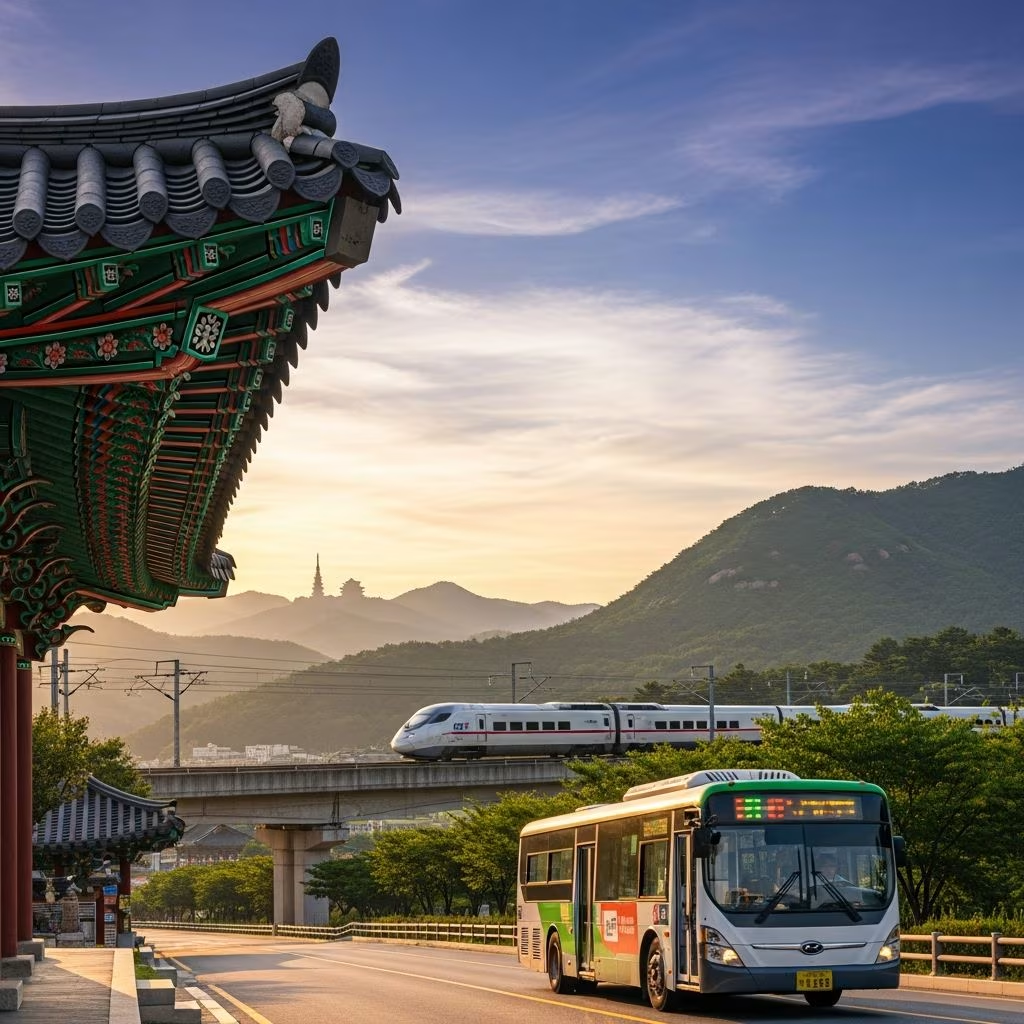 Travel Essentials
Gyeongju, often called the ‘Museum Without Walls,’ offers a treasure trove of ancient Silla Kingdom relics spread across a compact yet expansive area. Efficient transportation is key to maximizing your visit without hassle. This guide details options from arrival via high-speed rail to local exploration by bus, bike, taxi, or foot, ensuring you connect major attractions like Bulguksa Temple, Tumuli Park, and Anapji Pond with ease.
Reaching Gyeongju is straightforward thanks to its connectivity via Korea’s advanced rail and bus networks. Most visitors arrive at either Gyeongju Station (formerly Singyeongju) for KTX trains or the central Intercity/Express Bus Terminal.
The Korea Train eXpress (KTX) provides the quickest link from Seoul or Busan. From Seoul Station, the ride to Gyeongju Station takes about 2.5 hours and costs around 50,000 KRW in economy class. From Busan, it’s a mere 30 minutes for 11,000 KRW. Note that Gyeongju Station sits outside the city center, requiring a 20-30 minute bus transfer to accommodations or sights.
Buses offer a practical alternative, dropping you right in the heart of Gyeongju. Seoul’s Express Bus Terminal to Gyeongju Intercity Bus Terminal takes 3.5 hours for 20,000-30,000 KRW. Busan buses run hourly, covering the distance in about 1 hour for 5,000-7,000 KRW, with direct access to central spots like Hwangnidan-gil Street.
| Route | Duration | Cost (KRW) | Arrival Point |
|---|---|---|---|
| Seoul to Gyeongju | 3.5 hours | 20,000-30,000 | City Bus Terminal |
| Busan to Gyeongju | 1 hour | 5,000-7,000 | City Bus Terminal |
Gyeongju’s bus system is reliable, affordable, and covers all major UNESCO sites. Fares are flat at 1,250-1,650 KRW per ride, with English announcements and route maps aiding navigation. Rechargeable IC cards like T-money (usable nationwide) or Mybi simplify payments—top up at convenience stores.
Buses 10 and 11 form hop-on-hop-off style loops from the twin bus terminals and Gyeongju Station, running every 20 minutes from 6am to 9:40pm.
From Bulguksa, reverse routes apply: Bus 11 hits Bomun Lake, Bus 12 goes to Seokguram Grotto. Weekends get crowded—arrive early.
Specialized buses extend reach:
From Gyeongju Station Exit 1, buses 50/60/61/70/302/332/700/710/711 head cityward.
Gyeongju’s flat terrain and low traffic make it a cyclist’s paradise, especially around Tumuli Park and central ruins. Rentals abound near stations and terminals at 4,000 KRW/hour or 15,000 KRW/day for standard bikes. Paths connect tombs, pagodas, and ponds without strenuous climbs.
Metered taxis are plentiful, clean, and cheap—flag from streets or use apps. Short rides like station to museum cost 3,500 KRW (5 mins); city center to Bomun Lake ~10,000 KRW. Ideal for groups, late nights, or bus gaps. Uber operates but local taxis suffice.
Central Gyeongju is highly walkable: Hwangnidan-gil to Daereungwon Tombs (1km), Anapji Pond nearby. Distances between core sites like the museum, observatory, and bridges are 10-20 minutes on foot. Early mornings avoid summer heat.
Plan around peak hours (weekends, holidays). Use Naver Maps or KakaoMap apps for real-time bus tracking (English available). IC cards beat cash for speed. Parking lots serve drivers at Namsan and temples, but walking/busing is preferable post-arrival.
| Transport | Pros | Cons | Best For |
|---|---|---|---|
| Bus | Cheap, scenic, comprehensive | Crowded weekends, no transfers | Site-hopping |
| Bike | Flexible, healthy, fun | Weather-dependent | Central ruins |
| Taxi | Door-to-door, fast | Costlier for solos | Night/group travel |
| Walk | Free, immersive | Limited range | Core area |
Take buses 50, 60, 61, 70, or 700 from Exit 1—20 minutes, 1,250 KRW. Taxis cost ~5,000 KRW.
Yes, stops announced in English; some maps too. Apps enhance navigation.
Absolutely—recharge at CU stores or stations; works on all local buses.
No—public options suffice; parking available but central walking dominates.
Bus 10/11 from center (30-40 mins) or 700 from station. Combine with Seokguram via Bus 12.
(Word count: 1678)
