

 Travel Essentials
 Travel Essentials

Comprehensive guide to navigating Ireland's public transit, rental cars, and alternative transportation methods for all budgets and travel styles.
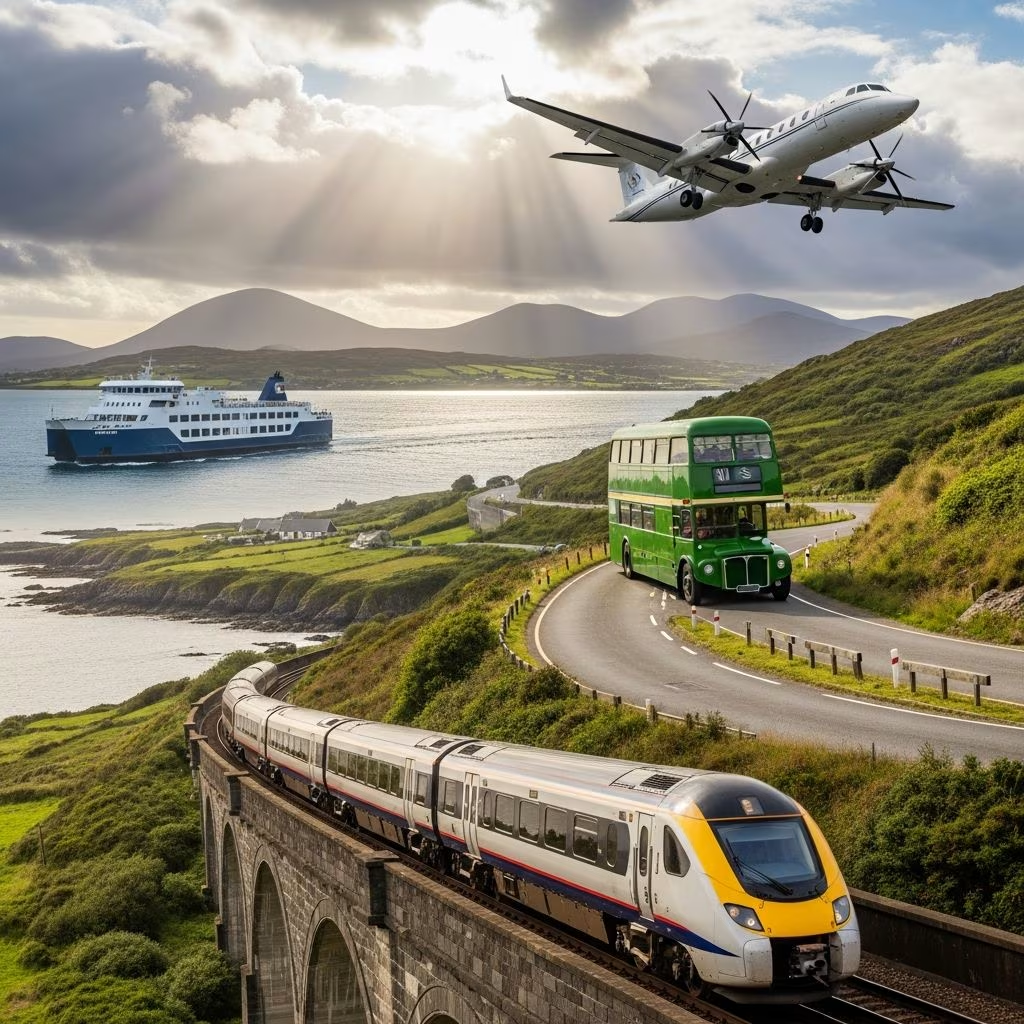 Travel Essentials
Planning a journey through the Emerald Isle requires understanding the diverse transportation options available to visitors. Whether you’re seeking budget-friendly alternatives, maximum flexibility, or the most comfortable travel experience, Ireland’s extensive network of public transit, car rental services, and alternative transport methods can accommodate virtually any travel preference. This guide explores every viable option for moving around Ireland, helping you make informed decisions based on your itinerary, budget, and travel style.
When arriving in Ireland, travelers face several fundamental decisions about how to explore the country. The choice between renting a vehicle, relying on public transportation, or combining multiple methods depends on several interconnected factors. Your decision impacts not only costs but also the pace of your journey, the destinations you can realistically reach, and the overall quality of your Irish experience.
Ireland’s transportation infrastructure has evolved significantly, with modern public transit systems now providing viable alternatives to traditional car rentals. However, regional variations mean that transportation accessibility differs considerably across the country. Urban centers like Dublin offer comprehensive transit networks, while rural areas and coastal regions require different approaches to reach effectively.
Ireland’s rail system provides an excellent foundation for inter-city travel, particularly among visitors seeking comfort and reliability. Irish Rail operates an extensive network connecting major urban centers across the Republic and Northern Ireland, with modern trains offering comfortable seating and scenic routes through the Irish countryside. The rail system has established itself as increasingly popular among travelers, particularly as vehicle rental costs continue climbing.
Rail travel offers several distinct advantages for tourists. Journey times between major cities are predictable and often faster than bus alternatives, allowing for more efficient trip planning. The experience itself provides memorable views of Ireland’s landscapes from dedicated rail corridors that often follow historic routes through regions that might otherwise be difficult to access by road.
Understanding Irish Rail’s pricing model helps travelers maximize their transportation budget. The system implements substantial discounts targeting specific demographics, with travelers under 24 receiving significantly reduced fares. Additionally, the Leap Card system provides comprehensive savings across multiple transport modes, offering reductions up to 30 percent and implementing price caps for multi-leg journeys. This card-based system works across buses, trams, and trains, making it essential for visitors planning extensive public transit use.
Advance booking often yields better rates, particularly for popular routes during peak travel seasons. Solo travelers and small groups should research combination fares and package deals that bundle multiple journeys at reduced rates.
While Irish Rail connects most major cities effectively, the network exhibits gaps in coverage compared to bus services. Certain regions, particularly in the northwest and southwest, have limited rail access, requiring bus travel or alternative arrangements to reach them. Understanding these limitations during initial trip planning prevents disappointment and allows for realistic itinerary construction.
Bus services form the backbone of Ireland’s public transportation system, offering comprehensive coverage that extends far beyond rail routes. Bus Éireann operates as the primary national carrier, supplemented by private companies providing intercity routes with enhanced comfort and direct service to major destinations. This multi-operator system means that buses reach smaller towns and villages throughout the country that trains cannot access.
Bus transportation in Ireland exhibits regional variation in service quality and frequency. Major urban corridors and busy routes between primary cities maintain reliable, frequent service throughout the day and into evening hours. However, services become less frequent as you travel toward more remote regions or smaller population centers. This reality requires flexible planning when incorporating bus travel into your itinerary, particularly if your journey involves reaching less-trafficked destinations.
Modern intercity buses provide surprisingly comfortable travel experiences. These coaches typically feature climate control, spacious seating, and adequate luggage storage, making multi-hour journeys pleasant rather than grueling. A typical Dublin-to-Kilkenny bus journey requires approximately two hours and costs around 15 euros, demonstrating the affordability of this transportation mode compared to alternatives.
Smart travelers often discover that buses offer advantages over trains for specific routes. Bus services frequently provide more direct routing, higher departure frequency, and access to destinations that rail lines don’t serve. Additionally, scenic bus routes through rural Ireland can provide reward equivalent to or exceeding the final destination, allowing you to experience countryside villages and landscapes that highways miss.
The Leap Card provides substantial savings across Bus Éireann and other major operators, making this the preferred payment method for frequent bus users. For visitors planning occasional bus travel between specific destinations, individual tickets remain straightforward and affordable options.
Ireland’s capital city operates dedicated transportation systems that differ from national infrastructure. Dublin Bus provides extensive local coverage, while the Luas tram system offers a modern, efficient alternative for specific corridors.
The Luas represents Dublin’s modern transit solution, offering light rail service across two intersecting lines. The Green Line operates north-south through the city, while the Red Line travels east-west, with both lines crossing at central transfer points. The Luas efficiently moves travelers between downtown Dublin and outer neighborhoods at lower cost than traditional taxis or ride-sharing services, making it an excellent choice for visitors exploring the capital.
For day trips beyond Dublin’s city center, the DART (Dublin Area Rapid Transit) provides a unique opportunity to explore coastal areas north and south of the capital. This commuter rail service connects Malahide and Howth in northern suburbs to Greystones in the south, passing through numerous beach towns and coastal communities. The DART offers convenient day-trip options for visitors interested in Dublin’s surrounding regions without requiring car rental or lengthy coach journeys.
Vehicle rental remains a significant transportation option despite higher costs, particularly for travelers seeking maximum flexibility and planning to visit multiple remote locations. Rental cars enable route customization, spontaneous detours, and travel at your preferred pace without adherence to public transit schedules.
The primary advantage of renting a vehicle lies in freedom—the ability to stop at unexpected attractions, explore smaller villages, and follow scenic routes without concern for bus schedules or train timetables. This flexibility becomes especially valuable when traveling with companions, as per-person costs decrease with vehicle sharing. Self-drive journeys also simplify visiting remote coastal regions, mountainous areas, and rural destinations that public transportation may not efficiently serve.
Vehicle rental in Ireland has become increasingly expensive, prompting many visitors to reconsider this option. Beyond rental fees, additional costs include fuel, parking, road tolls, and potentially insurance supplements. These cumulative expenses can significantly exceed public transportation costs, particularly for solo travelers or those staying primarily in urban areas.
Many experienced Ireland travelers employ combination approaches, leveraging different transport methods for distinct journey segments. This strategy optimizes both cost and experience, using trains for long inter-city routes, buses for regional exploration, and short-term car rentals for accessing specific remote regions.
Organized day tours from major cities provide convenient exploration of popular tourist destinations without requiring extensive planning or vehicle rental. These tours work particularly well in combination with public transportation for reaching tour departure points and exploring independently between scheduled excursions. This approach balances structure with flexibility, offering guided experiences and local insights while maintaining independence on other journey segments.
Some travelers rent vehicles for only specific portions of their Irish journey. For example, you might use buses and trains for primary city-to-city connections, then rent a car for 2-4 days to explore scenic coastal routes or remote mountain regions. This targeted approach captures the flexibility benefits of self-drive travel while maintaining the cost advantages of public transit for primary transportation.
| Transportation Mode | Cost Level | Geographic Coverage | Frequency | Best For |
|---|---|---|---|---|
| Train (Irish Rail) | Moderate | Major cities | Regular | Inter-city travel, comfort |
| Bus (nationwide) | Budget | Extensive | Frequent in cities | Affordability, rural access |
| Luas (Dublin) | Budget | Dublin only | Very frequent | Dublin city exploration |
| Car Rental | High | Complete | Self-determined | Remote areas, flexibility |
| Organized Tours | Moderate-High | Popular destinations | Daily | Guided experiences, insights |
Cities including Dublin, Cork, Galway, and Belfast support comprehensive public transportation networks making car-free exploration entirely feasible and often preferable. These urban areas have invested in modern transit infrastructure, and having a vehicle actually complicates city navigation through parking challenges and traffic congestion.
Less densely populated areas require different planning approaches. Buses provide the most realistic option for vehicle-free travel, though service frequency may be limited. Some travelers planning extended rural stays choose to rent vehicles for flexibility, while others accept longer travel times in exchange for lower costs.
Smart travelers employ several strategies to reduce transportation costs while maintaining journey quality. Purchasing a Leap Card immediately upon arrival provides discounts across multiple operators, often paying for itself within 3-4 journeys. Advance booking of rail and coach services yields better rates than walk-up purchases. Grouping purchases—traveling with companions who share vehicle rental costs—improves per-person economics significantly.
Planning your route geography strategically reduces backtracking and unnecessary travel time. Arranging your itinerary so that each journey moves you progressively through the country rather than returning to previous locations saves both money and time.
Websites including GetThere.ie simplify journey planning across multiple transport operators, allowing you to compare routes, times, and fares before booking. These tools eliminate the need to visit individual operator websites, providing consolidated information for more efficient trip planning.
Public transportation, particularly buses, offers the most budget-friendly option. The Leap Card multiplies savings across operators, making frequent transit users especially cost-effective. Solo travelers find buses particularly economical compared to car rental.
Yes, absolutely. Public transportation and combination approaches using tours and transit are entirely viable for exploring Ireland. The system works best with flexible scheduling and realistic expectations about regional service variations.
Train travel generally provides superior comfort for long inter-city journeys, with spacious seating and the ability to move about during travel. Modern intercity buses offer acceptable comfort but less mobility than trains.
The Luas tram system provides the most efficient Dublin city navigation, supplemented by Dublin Bus for areas the tram doesn’t serve. The DART works well for coastal day trips.
