

 Travel Essentials
 Travel Essentials

Comprehensive guide to getting around Lima covering public transit, taxis, bike-sharing, and airport transfers with practical tips for visitors.
 Travel Essentials
Lima, Peru’s vibrant capital and largest city, presents travelers with a dynamic array of transportation options that blend modern infrastructure with traditional methods. Understanding the nuances of each system transforms what might initially seem overwhelming into an opportunity for authentic urban exploration. Whether you’re traveling between districts like Barranco and Miraflores, heading to the historic center, or making your way from the airport, this guide provides everything you need to navigate Lima’s bustling streets confidently.
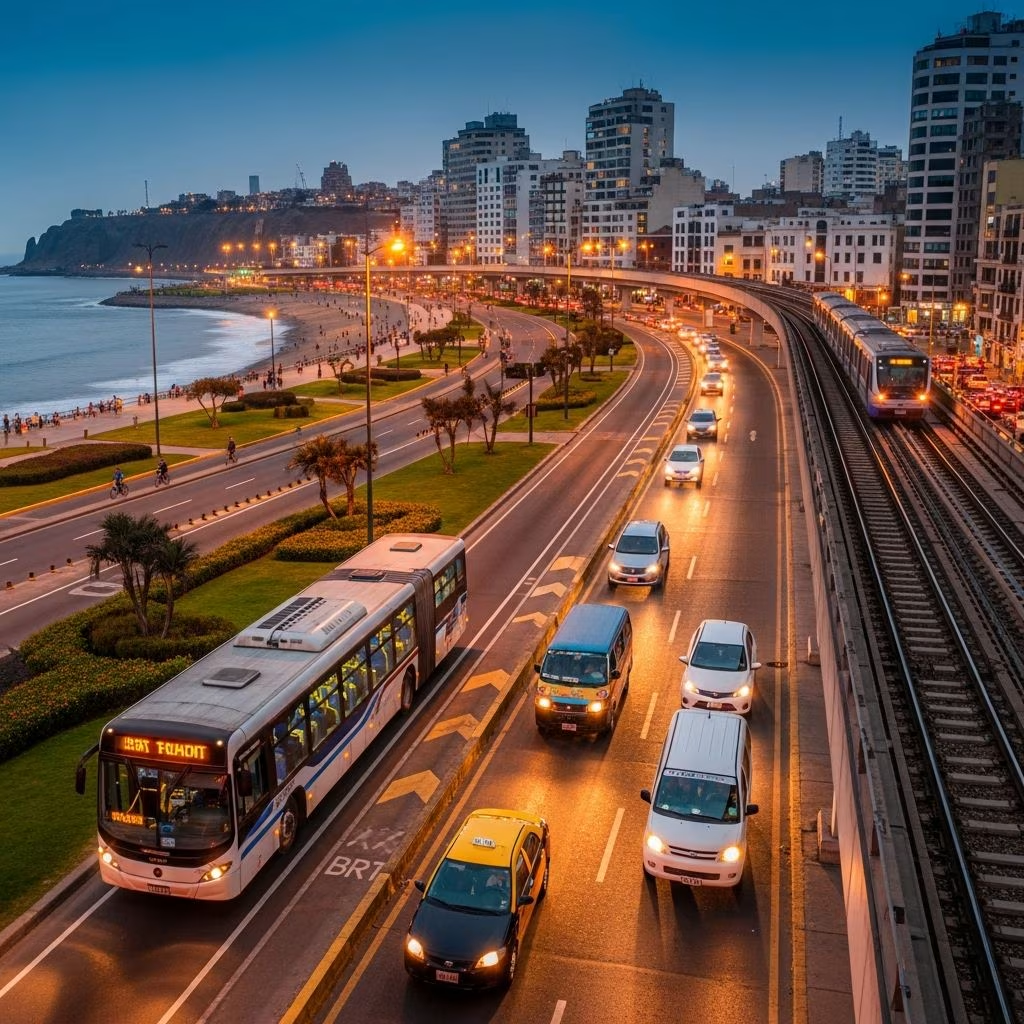
For visitors seeking reliability and efficiency, the Metropolitano stands out as Lima’s most straightforward public transportation option. Operating as a bus rapid transit system, it uses dedicated lanes along the Paseo de la Republica expressway, allowing vehicles to bypass heavy traffic that often congests regular streets. This innovative system was the first of its kind in Peru and fundamentally changed how residents and tourists navigate the city.
The Metropolitano operates 450 gas-powered buses across 38 stations, connecting 11 districts from Chorrillos to Comas. The system’s reach makes it particularly valuable for tourists staying in popular neighborhoods like Barranco or Miraflores who need access to the historic center. Bi-articulated buses—longer vehicles designed to handle high passenger volumes—form the backbone of this network, departing at regular intervals throughout the day.
Before boarding, you’ll need to purchase a rechargeable card from any metro station kiosk. The initial card costs approximately S/.5.00 (around $1.40 USD). This card serves as your gateway to all Metropolitano services and can be reloaded with credit whenever needed. You have flexibility in how much credit you load onto your card—some travelers purchase small amounts for individual trips, while others prefer loading larger balances for extended visits.
To board, simply swipe your card at the electronic turnstile and proceed to the elevated platform where buses arrive. The system mirrors subway stations in its organization, with passengers waiting in designated areas and each station equipped with customer information booths to assist with route planning and general inquiries.
The Metropolitano operates from approximately 6:00 AM until 10:00 PM daily, providing extensive coverage during standard tourist hours. Fares range from S/.0.80 to S/.1.50 depending on distance traveled, with buses typically arriving every 5-10 minutes during peak periods. This frequency makes the system convenient for spontaneous trips without requiring advance trip planning.
The north-south route exemplifies the system’s efficiency—a 16-mile journey that would take significantly longer via regular buses takes just 55 minutes during peak hours thanks to dedicated lanes. Dedicated lanes slash travel times considerably, making the Metropolitano an attractive option for those prioritizing speed and reliability.
Beyond the Metropolitano lies Lima’s extensive network of traditional buses and minibuses known locally as micros and combis. These privately operated vehicles have served Lima’s residents for decades and provide an authentic, if sometimes chaotic, glimpse into daily urban life. With routes painted directly on vehicle sides, these buses serve virtually every corner of the city, making them invaluable for reaching neighborhoods beyond major transit corridors.
Traditional buses offer advantages in terms of coverage—they reach areas where the Metropolitano hasn’t extended—but come with trade-offs. Routes lack official timetables, and schedules vary unpredictably. During peak hours, standing room only is common, and vehicles may feel crowded. The older fleet requires more patience and local knowledge to navigate effectively.
Successfully using Lima’s traditional bus system requires a shift in approach compared to more formal transit networks. Rather than relying on schedules, observe where locals board and ask the driver directly whether they’re heading in your desired direction. Most drivers respond helpfully to simple questions, even if language barriers exist. Fares are typically paid in coins, so keeping small denominations (S/.1-2 pieces) readily available streamlines the boarding process.
To identify your correct bus, note the route painted on the side of the vehicle. However, don’t rely solely on this—conversations with the driver provide the most reliable confirmation. Bus stops are less formally marked than Metropolitano stations, and you’ll often see informal clusters of people waiting along major streets.
For travelers seeking something between traditional buses and the Metropolitano, the Corredor Azul presents an intermediate solution. This relatively newer bus system offers four designated routes stretching from Barranco to Rimac with a flat fee of approximately S/.1.50 (around US$0.40). Designated bus stops mark these routes clearly, and the system represents a compromise between reliability and accessibility.
The TuRuta app has revolutionized bus navigation in Lima, displaying over 3,000 buses and their updated routes in real-time. This technological solution removes much uncertainty from traditional bus travel, allowing you to track routes, estimate wait times, and plan multi-leg journeys. Downloading this app before your trip significantly reduces navigation stress and increases confidence in using Lima’s extensive bus network.
Lima’s underground metro system, Línea 1, currently operates with limitations that make it less useful for most tourists. The metro line runs from east to west, connecting 16 stations along Line C, but doesn’t reach most major tourist attractions and popular neighborhoods. For residents living in eastside residential areas, the metro provides excellent access to commercial hubs, and for archaeologically-minded visitors, the Atocongo station offers access to the Pachacamac archaeological site.
The metro requires a rechargeable card purchased at kiosks or ticket offices within stations, with fares comparable to the Metropolitano. Passengers load credit using cash (notes of 10, 20, or 50 soles) or coins, then swipe their card to pass through turnstiles. While well-maintained and efficient, the metro’s limited routing means most visitors will rely more heavily on bus systems and other transportation methods.
Taxis represent the most expensive transportation option in Lima but offer advantages for specific situations. Travel between districts becomes more convenient via taxi, particularly for visitors unfamiliar with bus routes or traveling with substantial luggage. Taxis are especially valuable late at night when bus frequency decreases and when traveling with elderly relatives or small children.
Standard taxis in Lima charge metered fares or negotiate flat rates before boarding. While more expensive than public transit, taxi fares remain relatively reasonable compared to many international cities. Always agree on fares beforehand if the meter isn’t functioning, and consider ride-sharing apps as alternatives that provide transparent pricing.
Jorge Chávez International Airport sits approximately 16 kilometers north of central Lima, requiring strategic transportation planning for arrival and departure. Several efficient options exist for this critical journey.
The Airport Express Bus provides the fastest option for travelers heading to Miraflores or nearby areas. This dedicated service makes four stops in Miraflores near major hotels, operating from 6:50 AM to 9:50 PM depending on the specific stop. The express bus bypasses much traffic and costs considerably less than taxi services, making it attractive for budget-conscious travelers.
Shuttle bus services, such as those offered by QuickLlama and similar operators, provide another intermediate option between public buses and private taxis. These services offer personalized attention while maintaining reasonable costs. Many accommodations arrange shuttle pickups for guests, providing convenience without premium taxi pricing.
For visitors interested in slower-paced exploration, Lima offers emerging alternatives to motorized transport. A fun bike-sharing service operates in the pretty Miraflores neighborhood, allowing tourists to explore coastal areas and residential districts at a relaxed pace. This option works particularly well for mornings or late afternoons when traffic isn’t as congested.
Walking remains viable in specific neighborhoods like Miraflores, Barranco, and San Isidro, where sidewalks are maintained and pedestrian infrastructure exists. These areas feature interesting architecture, cafes, and shops best appreciated on foot. However, Lima’s sprawling layout and traffic patterns make walking impractical for longer distances or travel between distant districts.
Carrying appropriate denominations simplifies urban transportation. Many bus systems operate primarily on cash, so maintaining S/.5-10 in coins facilitates smooth transactions. While some Metropolitano cards accept card-based loading at modern kiosks, many bus stops operate with cash-only systems. ATMs are widely available throughout Lima, allowing you to withdraw cash as needed.
Lima experiences notoriously heavy traffic during peak hours (typically 7-9 AM and 5-8 PM weekdays), making afternoon travel more efficient than morning commute periods. Allow extra time for journeys during these windows, and plan major sightseeing during mid-morning or late afternoon hours when transportation moves faster.
While Lima’s public transportation networks are generally safe for tourists, common-sense precautions apply. Avoid displaying expensive jewelry, cameras, or excessive cash. Keep belongings secured and maintain awareness of your surroundings, particularly on crowded buses during peak hours. Many tourists prefer taxis or ride-sharing apps during evening hours for added security and convenience.
Savvy travelers blend multiple transportation types based on specific needs. Use the Metropolitano for long distances and major routes, traditional buses for neighborhood exploration, and occasional taxis for complex journeys or late-night travel. This mixed approach optimizes both cost efficiency and experience quality.
| Transportation Type | Cost | Speed | Coverage | Best For |
|---|---|---|---|---|
| Metropolitano | S/.0.80-1.50 | Very Fast | 11 Districts | Long distances, major routes |
| Traditional Buses | S/.1-2 | Slow | Entire City | Neighborhood exploration |
| Taxi/Rideshare | S/.15-50+ | Medium | Entire City | Direct routes, late night |
| Lima Metro | S/.0.80-1.50 | Very Fast | 16 Stations (Limited) | East-side destinations |
| Bike-Sharing | S/.10-15/hour | Slow | Miraflores Area | Local exploration |
The Metropolitano bus system offers the best combination of reliability, affordability, and accessibility for most tourists. Its dedicated lanes, scheduled operations, and English-speaking information staff make it significantly easier to navigate than traditional buses, while remaining far more economical than taxis.
Yes, the TuRuta app is invaluable for bus navigation, displaying real-time route information for over 3,000 buses throughout the city. This technology-enabled approach removes significant uncertainty from using Lima’s traditional bus network.
Public transportation is generally safe for tourists who exercise standard urban precautions. Avoid displaying valuables, maintain awareness of surroundings, and consider taxis for late-night travel. Many tourists successfully use buses and the Metropolitano throughout their stays without incident.
Budget approximately S/.10-15 ($2.50-4 USD) daily for public transportation if using buses and the Metropolitano exclusively. Occasional taxi rides would increase this to S/.30-50 ($8-13 USD) daily depending on travel frequency and distance.
The Airport Express Bus offers the fastest public option to Miraflores for approximately S/.10-15. Shuttle services provide personalized service at reasonable rates, while taxis offer convenience for those prioritizing speed and luggage handling above cost considerations.
