

 Travel Essentials
 Travel Essentials

Discover practical alternatives and expert tips for traveling through London during transport strikes, including buses, cycling, walking routes, and cost considerations.
 Travel Essentials
When London’s transport networks experience disruptions, millions of residents and visitors suddenly find themselves searching for new ways to reach their destinations. What might seem like an overwhelming challenge becomes manageable with proper planning and knowledge of the various alternatives available across the city. This guide provides practical strategies for maintaining mobility during transport strikes, helping you understand your options and make informed decisions about how to navigate London effectively.
One of the most important realizations about London during transport disruptions is that the city maintains significant transportation redundancy. While the Underground receives considerable attention, London’s transport infrastructure extends far beyond the Tube system. Multiple networks operate independently, meaning that when some services face disruptions, others typically continue operating normally. Understanding which services remain active allows you to construct alternative routes using combinations of different transport modes.
The key to successful navigation during disruptions lies in recognizing that London was not designed around a single transport system. Instead, the city has evolved with layered networks that serve complementary functions. Buses connect neighborhoods that Tube lines don’t reach directly. National Rail services provide longer-distance connectivity between major London stations and surrounding areas. The Elizabeth Line offers modern connections across central London and to airports. Each system serves specific geographic areas and journey types, creating a resilient overall network.
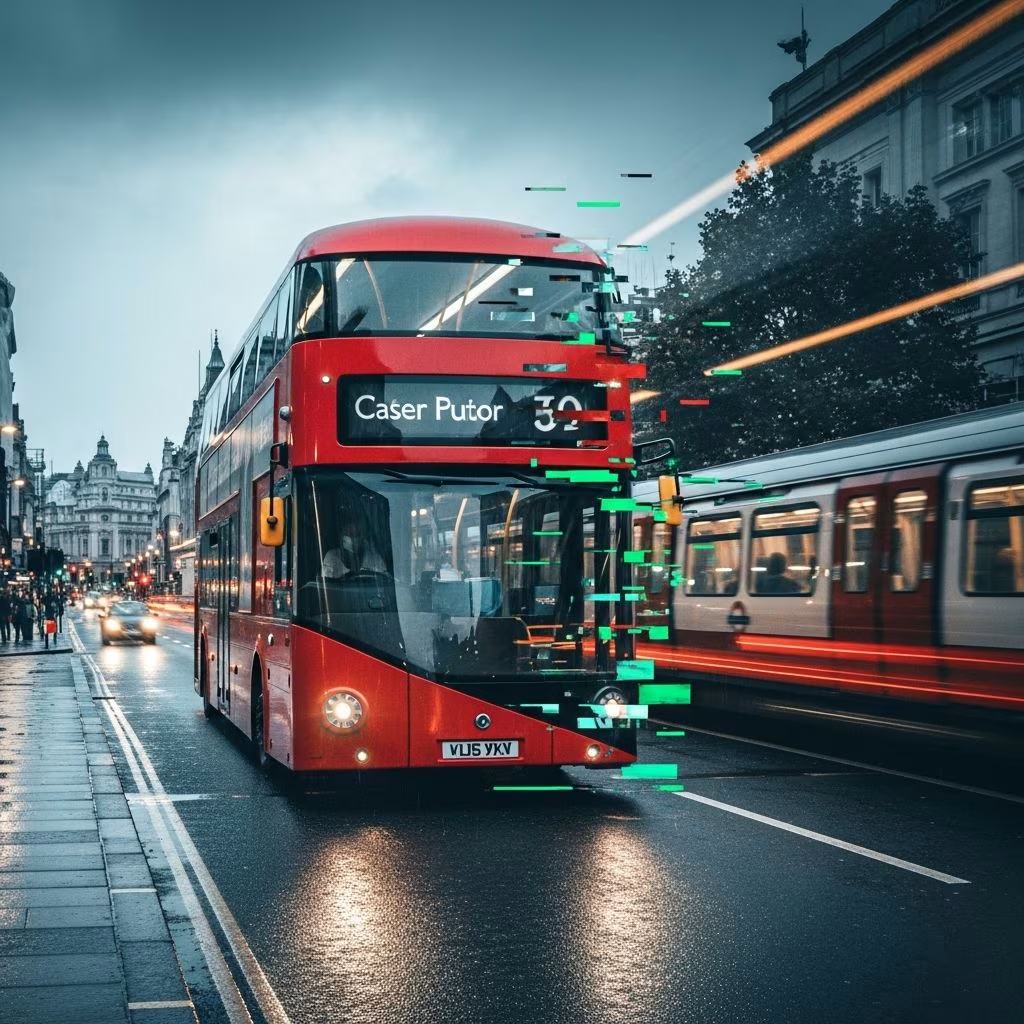
Buses represent the most readily available alternative when rail services face disruptions. Unlike the Tube, which operates along fixed underground routes, the bus network covers virtually every London neighborhood with remarkable comprehensiveness. Transport for London operates hundreds of bus routes, many of which provide direct connections between areas that might otherwise require multiple Tube changes or lengthy walks.
During transport disruptions, bus services typically continue operating, though increased demand means longer wait times and crowded vehicles. Strategic use of bus travel requires understanding route patterns and timing. Rather than heading directly to central London where bus congestion peaks, consider how buses might take you to alternative Tube stations that are still operational. For instance, buses serving outer zones often experience less crowding than those concentrated on central routes.
Using the TfL Go application provides real-time information about bus arrivals and service status. This tool becomes invaluable during disruptions when routes may experience unexpected delays. Planning journeys during off-peak hours—typically mid-morning, early afternoon, or late evening—significantly improves bus travel experiences. Many Londoners avoid peak disruption hours altogether by adjusting their schedules when possible.
London’s transport infrastructure includes several rail systems that operate independently from the Underground. The Elizabeth Line has become increasingly important for cross-London travel, particularly for connecting west and east zones. The London Overground serves specific areas with generally better connections than the Tube for radial routes that bypass central zones. National Rail services connect London to suburban destinations and surrounding regions.
The Overground operates two particularly useful radial routes: the North London line connecting areas in a wide arc across the north, and the South London line serving neighborhoods south of the river. These services often provide cheaper and sometimes faster connections than traveling through the congested central zones. For journeys between different London boroughs, Overground services frequently offer more direct routing than Tube alternatives.
National Rail services deserve special attention during disruptions. Mainline trains operated by various companies continue serving major London terminals including King’s Cross, Liverpool Street, Paddington, Victoria, and London Bridge. While these trains primarily serve long-distance passengers traveling between cities, they occasionally provide useful local connections. During peak disruption periods, advance research into which national rail operators maintain services becomes worthwhile for understanding available options.
Cycling and walking offer surprisingly effective solutions for London travel, particularly for journeys under three kilometers. Many central London landmarks lie within reasonable walking distance of each other—Liverpool Street to Holborn, for example, represents a manageable walk of approximately 2.4 kilometers. Walking provides several advantages during disruptions: no waiting times, predictable journey durations, excellent exercise, and freedom from crowding.
The Santander Cycles bike-sharing system provides affordable access to bicycles throughout central and inner London. With thousands of bikes available at hundreds of docking stations, the system offers flexibility for spontaneous trips without requiring bike ownership. Short-term passes provide economical options for one-off or occasional cycling journeys. The TfL Go app includes dedicated cycle routing features that identify dedicated cycle lanes and quiet roads suitable for cycling.
Emerging micro-mobility options like e-scooters complement traditional cycling for short distances. While regulations limit scooter usage in certain areas, these devices can efficiently cover distances between 500 meters and 2 kilometers. Electric bikes available through rental services provide another option for covering longer distances with reduced physical exertion. These active transport modes appeal particularly to residents who want to maintain mobility during disruptions.
London’s river provides an often-overlooked transportation corridor. Thames Clipper services operate regular boat routes connecting destinations along the river, including Westminster, Embankment, Blackfriars, Tower Bridge, and Canary Wharf. Using a standard Oyster card or contactless payment, passengers tap in and out just like using terrestrial transport. River travel offers a unique perspective on London while providing genuine transportation utility during disruptions.
Thames Clippers operate with particular reliability during transport strikes because the river operates as an independent infrastructure separate from rail or road networks. Journey times vary depending on boat speed and number of stops, but river travel provides consistent alternatives to overcrowded buses or unavailable rail connections. Traveling by boat also offers benefits including scenic views, reduced crowding compared to peak ground transport, and efficient east-west connections through central London.
While not a primary solution, understanding driving costs during disruptions helps assess this option appropriately. London imposes two major charges on driving into central areas:
For occasional drivers during disruptions, combining these charges with parking costs quickly becomes expensive compared to public transport alternatives. However, for specific circumstances—such as traveling with multiple people or transporting goods—driving may prove economical. Park-and-ride strategies, where drivers park near functioning Tube stations and complete journeys by rail, often represent compromises between convenience and cost management.
Successful navigation during transport disruptions depends primarily on advance planning rather than reactive problem-solving on disruption days. Several steps improve outcomes significantly:
This proactive approach transforms strikes from stressful surprises into manageable logistical adjustments. Many Londoners who implement these strategies report that disruptions disrupt their routines less than expected.
Tourists and short-term visitors face different challenges than residents accustomed to transport disruptions. Visitors typically lack detailed knowledge of alternative routes and may not have Oyster cards or familiarity with all available transport options. Several strategies help visitors navigate disruptions successfully:
Many visitors discover that transport disruptions, while initially frustrating, ultimately enhance their London experience by encouraging exploration beyond typical tourist transport patterns.
No. Typically only specific services strike while others continue operating. TfL communications specify exactly which services face disruption, allowing strategic routing around affected services.
Yes, if trains operate on your route. Advance tickets remain valid, though service frequencies may be reduced and trains may be crowded. Most major routes maintain at least hourly service during strikes.
Journey times increase by 30-100% depending on service combinations and traffic congestion. Planning extra time and using quieter alternative routes minimizes delays significantly.
The Elizabeth Line provides reliable airport connections relatively independent of traditional strike disruptions. National Express coaches and private car services offer alternatives if rail services face issues.
Combination strategies work best: walking for short distances, buses for medium distances, Overground or Elizabeth Line for longer cross-London journeys, and river services where routes align with destinations.
Understanding London’s transport complexity transforms disruptions from obstacles into manageable variations in routine travel. The city’s layered networks, while sometimes confusing, create resilience through redundancy. Rather than viewing strikes as complete transport failures, experienced Londoners recognize them as requiring temporary route modifications using available alternatives.
Investing time in understanding London’s full transport network—beyond just the Tube—pays dividends during disruptions and often reveals cost-saving opportunities during normal operations as well. Familiarity with bus routes, Overground connections, and active transport options broadens mobility options regardless of service status. For visitors, accepting that disruptions provide opportunities to experience London beyond standard tourist routes often yields memorable discoveries and a more authentic city experience.
