

 Travel Essentials
 Travel Essentials

Comprehensive guide to getting around Malawi: buses, minibuses, ferries on Lake Malawi, car rentals, taxis, and tips for safe travel across this scenic African nation.
 Travel Essentials
Malawi offers a variety of transportation options that make it relatively straightforward to explore its diverse landscapes, from bustling cities to serene lake shores and rugged national parks. With well-maintained main roads, affordable public services, and unique water routes, visitors can choose methods suited to their budget, comfort level, and itinerary. This guide breaks down the key ways to get around, highlighting pros, cons, and practical advice drawn from reliable travel insights.
Malawi’s infrastructure stands out in East Africa for its accessibility. Major highways like the M1 linking Blantyre and Lilongwe are paved and generally in good condition, though potholes require caution, especially during rainy seasons. Distances between key spots—such as the capital Lilongwe to commercial hub Blantyre (about 300km) or to northern Lake Malawi towns—are manageable, often taking 5-7 hours by road. Public transport connects most towns, while remote areas demand private vehicles or guided tours. Lake Malawi’s ferries add a picturesque alternative for coastal journeys.
Travel times vary: Lilongwe to Mzuzu (north) is around 6-8 hours by bus, while ferries cover the lake’s length over days. Fuel costs are reasonable, but self-driving suits those comfortable with left-hand driving and occasional rough tracks. Always carry water, snacks, and a map app with offline capability.
For intercity travel, coaches provide the most dependable and scenic option. Operators like Axa, SoSoSo, and Stagecoach run frequent services between major centers. Luxury buses depart multiple times daily from Blantyre to Lilongwe, with air-conditioned seats and fewer stops. Expect high-volume music or videos, so pack headphones. Fares are budget-friendly, around 5,000-10,000 MWK (Malawian Kwacha) for long hauls, making it ideal for backpackers.
These services rarely overcrowd, unlike local minibuses, offering panoramic views of rolling hills and villages. Stations are central, with easy access to markets for pre-trip meals.
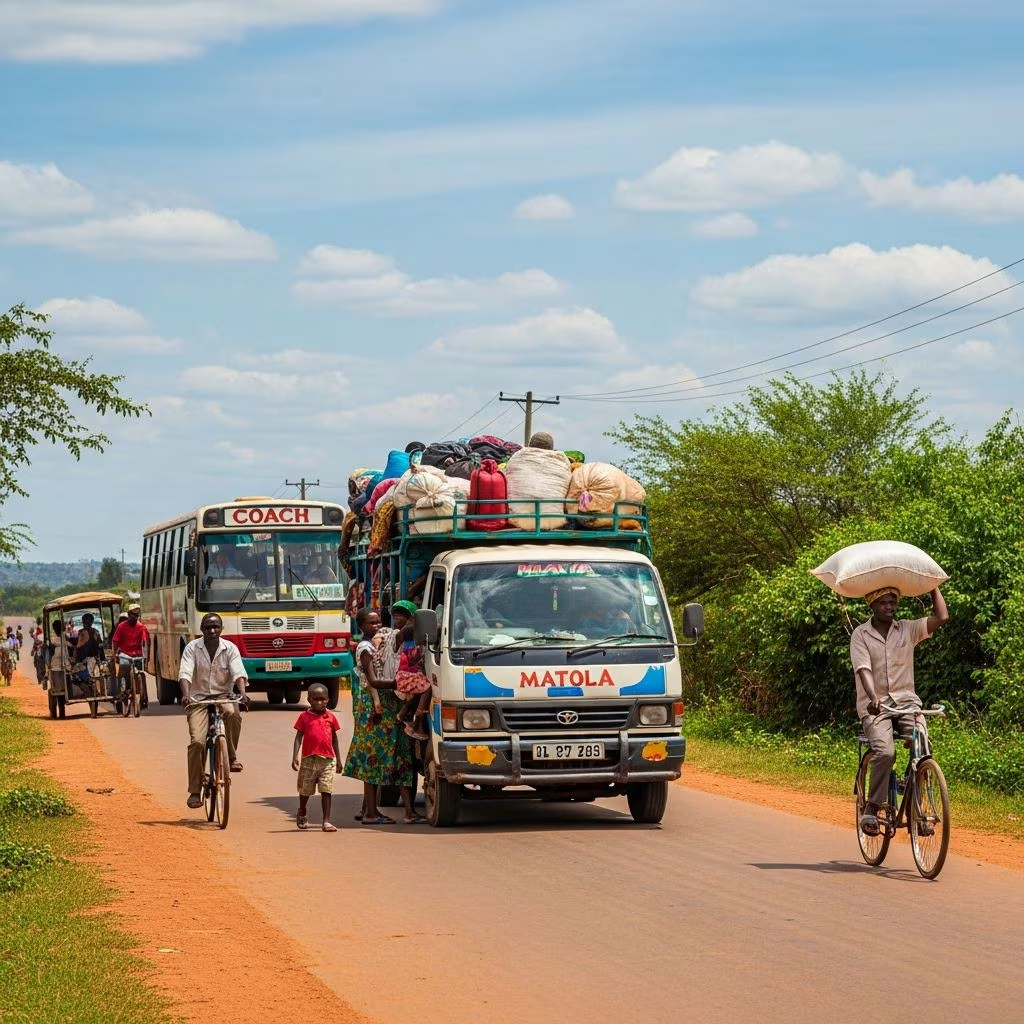
Minibuses, locally called motolas, dominate short and medium routes, filling gaps where coaches don’t go. They’re inexpensive—often under 2,000 MWK for 50-100km—but prioritize speed over safety. Vehicles cram passengers, luggage, and goods, leading to long waits (up to hours) until full. Roadsides buzz with conductors hawking rides; haggle politely for groups.
Pros include direct village access and local immersion. Cons: poor vehicle maintenance, reckless overtaking, and limited visibility. Avoid night travel; opt for daytime on busier routes like the lakeshore M5. Women and solo travelers should sit upfront.
| Route Example | Duration | Cost (MWK) | Comfort Level |
|---|---|---|---|
| Lilongwe-Salima | 1-2 hrs | 1,000-1,500 | Low |
| Blantyre-Zomba | 1.5 hrs | 1,200 | Medium |
| Mzuzu-Nkhata Bay | 2 hrs | 2,000 | Low |
The MV Ilala, a 70-year-old steamer, is Malawi’s transport legend, chugging 365km weekly from Monkey Bay (south) to Chilumba (north), with stops at Likoma Island, Nkhata Bay, and more. Carrying up to 400 passengers plus cargo, it blends utility and romance—think sunset views over Africa’s third-largest lake. Tickets start at 5,000 MWK deck class; cabins cost more. Schedules are approximate (e.g., southbound Saturdays), so confirm locally. MV Mtendere supplements but is less favored.
Day trips or hop-on/hop-off suit lake explorers. Bring food, as onboard options are basic; seasickness tablets help on windy days. It’s safer and more enjoyable than long drives, especially for backpackers.
Self-drive shines in Malawi due to low traffic and short distances. Rent from Lilongwe or Blantyre airports via firms like SS Rent A Car or Ambassador—4WD essential for parks like Nyika or Liwonde. Daily rates: 50,000-100,000 MWK including insurance. Roads are narrow; watch for pedestrians, cyclists, and animals. Fuel stations are frequent on M1 but sparse elsewhere.
Pros: Flexibility for parks and beaches. Cons: High costs, left-hand drive if unfamiliar. Hire drivers (extra 20,000 MWK/day) for remote spots; many tour operators bundle this.
Cities rely on taxis—ubiquitous, metered or negotiated (agree fares upfront, e.g., 2,000 MWK airport-city). Yellow Top Cab and Joy Taxi earn praise for reliability in Lilongwe/Blantyre; call ahead. Shared taxis (5 passengers) speed up waits.
Walking works in compact Zomba’s green streets or Blantyre’s core, but Lilongwe sprawls—use taxis. Avoid after dark; traffic chokes Blantyre.
Bikes are common locally for short hauls; tourists tackle backroads with sturdy models. Hazards: trucks on M1. Transport bikes via bus roofs. Trains exist (Blantyre-Limbe, sporadic north) but are overcrowded and unreliable—skip them. Air charters like Nyasa Express link remote airstrips (10-12kg baggage limit).
Stay vigilant: lock vehicles, avoid night buses/motolas, carry cash (ATMs limited). COVID-era masks/health checks may apply; check updates. Women: front seats, groups. Roadblocks are routine—polite compliance speeds passage. Apps like Google Maps work offline; SIM cards cheap at airports.
Costs Overview (per person, approx. MWK):
| Mode | Short Trip | Long Trip |
|---|---|---|
| Bus | 1,000-3,000 | 5,000-10,000 |
| Motola | 500-2,000 | 3,000-6,000 |
| Taxi | 1,500-3,000 | N/A |
| Ferry Deck | N/A | 5,000-15,000 |
Yes, with caution—main roads are good, but 4WD needed for parks. Low crime, high pedestrian traffic.
Fairly punctual for luxury coaches; motolas depart when full.
MV Ilala ferry for scenery and stops.
Essential for rough tracks like Nyika.
Often negotiated; use reputable firms.
