

 Travel Essentials
 Travel Essentials

Comprehensive guide to Milan's public transportation system, including metro lines, trams, buses, and ticketing options for visitors and residents.
 Travel Essentials
Milan stands as one of Europe’s most accessible cities, offering visitors and residents alike a well-integrated public transportation infrastructure that makes exploration straightforward and affordable. The Italian fashion capital’s compact urban layout combined with its modern transit systems means you can traverse from one neighborhood to another in under 45 minutes, allowing you to maximize your time experiencing the city’s world-class attractions, vibrant culture, and culinary scene.
The foundation of Milan’s transportation system rests on multiple interconnected modes of transit operated by Azienda Trasporti Milanesi (ATM). This comprehensive network encompasses five metro lines, an extensive tram system, numerous bus routes, and suburban rail connections. The integration of these services means that a single fare system covers all modes, streamlining the experience for travelers unfamiliar with the city.
Milan’s commitment to efficient urban mobility ensures that major neighborhoods including Porta Venezia, Porta Romana, and Navigli are served by at least one transit line. This accessibility transforms the city into a destination where spontaneous exploration becomes not only possible but encouraged, as you’re never far from a convenient transit connection.
The metropolitan subway system remains the fastest method for covering significant distances across Milan. Currently operating five color-coded lines, the metro network serves as the backbone of the city’s rapid transit infrastructure.
The M1 red line stretches from Sesto San Giovanni northward through the city center to Rho Fiera, connecting several important stations and neighborhoods along its route. The M2 green line provides northeast to southwest connectivity, with terminations at Cologno Nord and Assago Milanofiori Forum, and critically connects to Milano Centrale, the city’s primary train station.
The M3 yellow line operates between Comasina and San Donato, passing through the Duomo station where it intersects with the M1 line. The M4 blue line, which achieved full opening in 2024, links to Linate Airport, providing essential connectivity for air travelers. The M5 violet line connects the northeastern Bignami station to San Siro Stadium in the west, serving both cultural and sporting destinations.
Most metro lines operate from 6:00 AM until midnight, with extended hours on Saturday evenings until 2:00 AM, ensuring coverage for both early morning commuters and evening entertainment seekers. The frequent service intervals mean you rarely wait more than a few minutes for the next train during standard operating hours.
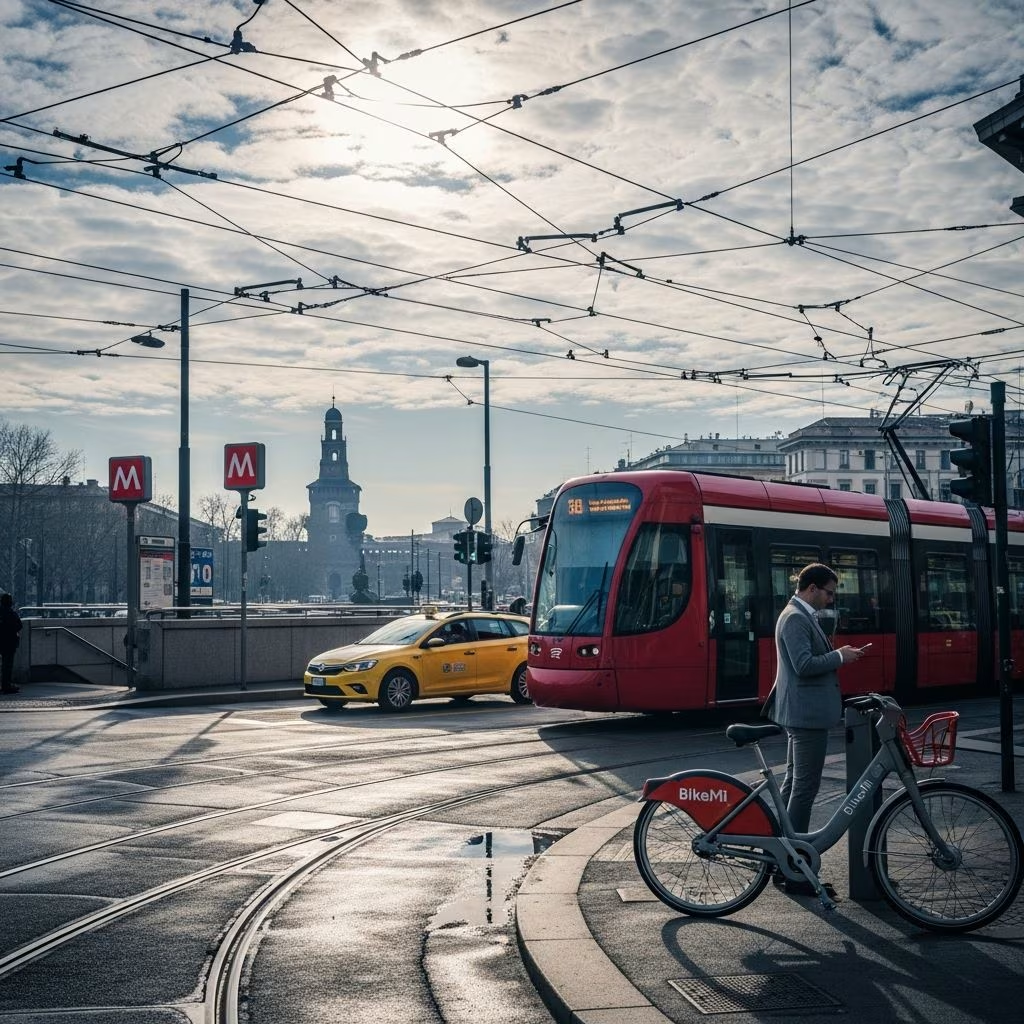
While the metro provides speed, Milan’s tram network offers something equally valuable: the ability to observe the city while traveling. The tram system provides what the metro cannot—a connection to Milan’s street-level character and architectural heritage as you move through different quarters.
Four tram lines dominate the central districts: lines 2, 4, 14, and 16 all converge at Piazza Duomo, making them essential for visitors wishing to experience the cathedral and surrounding attractions. Line 10 specifically serves the Navigli District, famous for its picturesque canal system where you can photograph Milan’s charming waterside architecture while in transit.
The tram network extends throughout the city center and into residential neighborhoods, offering comprehensive coverage that complements the metro system. For visitors prioritizing sightseeing over speed, trams provide an ideal balance between transportation function and experiential travel.
Milan’s bus system encompasses more than 80 eco-friendly routes, representing a commitment to sustainable urban mobility. Buses serve areas that the metro and tram networks don’t reach, making them invaluable for exploring neighborhoods beyond the city center or accessing specific attractions off the primary transit corridors.
The reliability of Milan’s bus system deserves particular attention, as most services maintain consistent schedules despite urban traffic challenges. For tourists, bus route 94 offers particular value as it circles the city center while stopping at many popular tourist destinations, functioning as a moving guided tour for the price of a transit ticket.
A notable recent development involves night bus routes that follow metro line stops when the underground system closes, ensuring transit availability throughout all hours for shift workers, night life enthusiasts, and early morning travelers.
Understanding Milan’s ticketing options enables cost-effective travel planning and prevents confusion at automated kiosks or ticket windows.
Single journey tickets cost €1.50 and remain valid for 90 minutes from validation, allowing you to make connections between different transit modes during this window. This 90-minute validity period proves particularly useful for combining metro and bus journeys without purchasing multiple tickets.
Day passes priced at €4.50 provide unlimited travel across all transit modes for 24 hours, making them ideal for visitors planning intensive city exploration. Weekly passes at €11.30 suit travelers staying for extended periods, while monthly passes at €35 serve residents and frequent visitors. Additional discounts apply to children, students, and senior citizens, reducing barriers to transit access for all demographic groups.
Tickets are available at metro stations, authorized newsstands, and automated kiosks throughout the city. The system now accepts contactless payments directly on buses and trams, modernizing the fare collection experience for those without paper tickets or cards.
Purchasing an electronic ATM travel card allows you to load various pass options and easily transition between different ticket types throughout your stay. This approach eliminates the need to repeatedly visit ticket windows and provides the flexibility to adjust your travel pass based on daily needs.
The Malpensa Express train provides direct connections from Malpensa Airport to Milan’s central stations including Milano Centrale, Cadorna FN, and Porta Garibaldi. At €11 for a one-way ticket and requiring approximately 40 minutes, this service represents the most straightforward option for airport transfers without navigating unfamiliar taxi systems.
The M4 metro line connection to Linate Airport offers an alternative for travelers using that facility, further diversifying arrival options and reducing dependence on expensive taxi or private transfer services.
For visitors interested in day trips to destinations like Lake Como or other Lombardy attractions, suburban trains (S-lines operated by Trenord) extend from Milan’s central stations. These trains also serve practical functions within the city itself, with S-line stops at stations like Porta Venezia and Porta Vittoria offering faster alternatives to the metro for cross-town journeys.
The integration of regional rail into Milan’s broader transit network means your city pass may cover certain suburban journeys, though integration fees may apply for longer distance travel. Checking specific fare requirements before boarding prevents unexpected charges and ensures smooth travel.
Milan’s bike-sharing system (BikeMi) provides flexible alternatives for short distances or when exploring specific neighborhoods at a leisurely pace. Stations are distributed throughout the city, including near major attractions, parks, and transit hubs, enabling integration with other transit modes.
For visitors renting bicycles, Milan’s relatively flat terrain and dedicated cycling infrastructure make two-wheeled exploration accessible even for those unaccustomed to cycling in urban environments. This option proves particularly appealing during pleasant weather or when visiting the canal-side neighborhoods where cycling captures the essence of Milanese urban life.
A critical practice often overlooked by first-time visitors involves validating tickets immediately upon boarding buses or trams. Failure to validate results in significant fines from transit police, representing an avoidable expense. Validation machines are located at bus and tram entrances, clearly marked and straightforward to use.
Metro tickets require no additional validation beyond initial purchase, as your entry through the turnstile registers your journey. This distinction between metro and surface transit validation protocols deserves clear mental note to avoid accidental violations.
Digital transit maps available through mobile applications and the official ATM website provide real-time information about service disruptions, delays, and alternative routes. Learning to read these resources before your journey prevents frustration and ensures you select the most efficient transit combination.
The color-coding system for metro lines greatly simplifies navigation, as each line maintains its distinctive color on all signage, maps, and information displays. This visual consistency means you can navigate even without reading Italian, following color indicators to reach your destination.
| Transit Mode | Speed | Coverage | Fare (Single) | Best For |
|---|---|---|---|---|
| Metro | Fastest | Major routes | €1.50 | Long distances, main attractions |
| Tram | Moderate | City center focus | €1.50 | Sightseeing, central neighborhoods |
| Bus | Slowest | Most comprehensive | €1.50 | Specific destinations, local areas |
| Bike Share | Variable | Station-dependent | Varies | Short distances, leisure exploration |
The weekly pass at €11.30 provides the best value for visitors staying 5-7 days and using transit multiple times daily, offering approximately 60% savings compared to purchasing individual €1.50 tickets.
Yes, a single validated ticket remains valid across metro, tram, and bus modes for 90 minutes, encouraging multi-modal journey combinations.
Major stations feature bilingual Italian-English signage, particularly those serving tourist attractions. Neighborhood stations may have limited English signage, making digital maps essential for less central journeys.
Immediately validate your ticket when discovering the oversight. Transit police conduct spot checks, and tickets without valid time stamps result in fines. Proactive validation demonstrates good faith compliance.
Small pets in carriers are permitted on all transit modes without additional charges, while larger dogs must use designated pet areas. Check current ATM regulations before travel.
Successfully navigating Milan’s transportation network transforms your visit from logistical challenge into seamless exploration. The system’s efficiency, affordability, and user-friendly design reflect Milan’s status as a modern European city committed to accessible urban mobility.
Whether you’re traveling from your hotel to the Duomo, exploring the Navigli’s artistic neighborhoods via tram, or taking a regional train for a Lake Como day trip, Milan’s integrated transit infrastructure supports whatever itinerary you envision. Invest time in understanding the basic systems—validate your tickets, learn the color-coded metro lines, and embrace the tram experience—and you’ll navigate this magnificent city with confidence and ease.
