

 Travel Essentials
 Travel Essentials

Explore efficient ways to travel in Morocco: trains, buses, taxis, car rentals, and more. Tips for budgets, safety, and city-specific transit.
 Travel Essentials
Morocco offers a diverse array of transportation choices that cater to every traveler’s needs, whether you’re hopping between bustling cities like Marrakech and Casablanca or venturing into remote desert landscapes. From modern high-speed rails to affordable shared rides, understanding these options ensures smooth, cost-effective travel. This guide breaks down the essentials, helping you choose the right method for your itinerary.
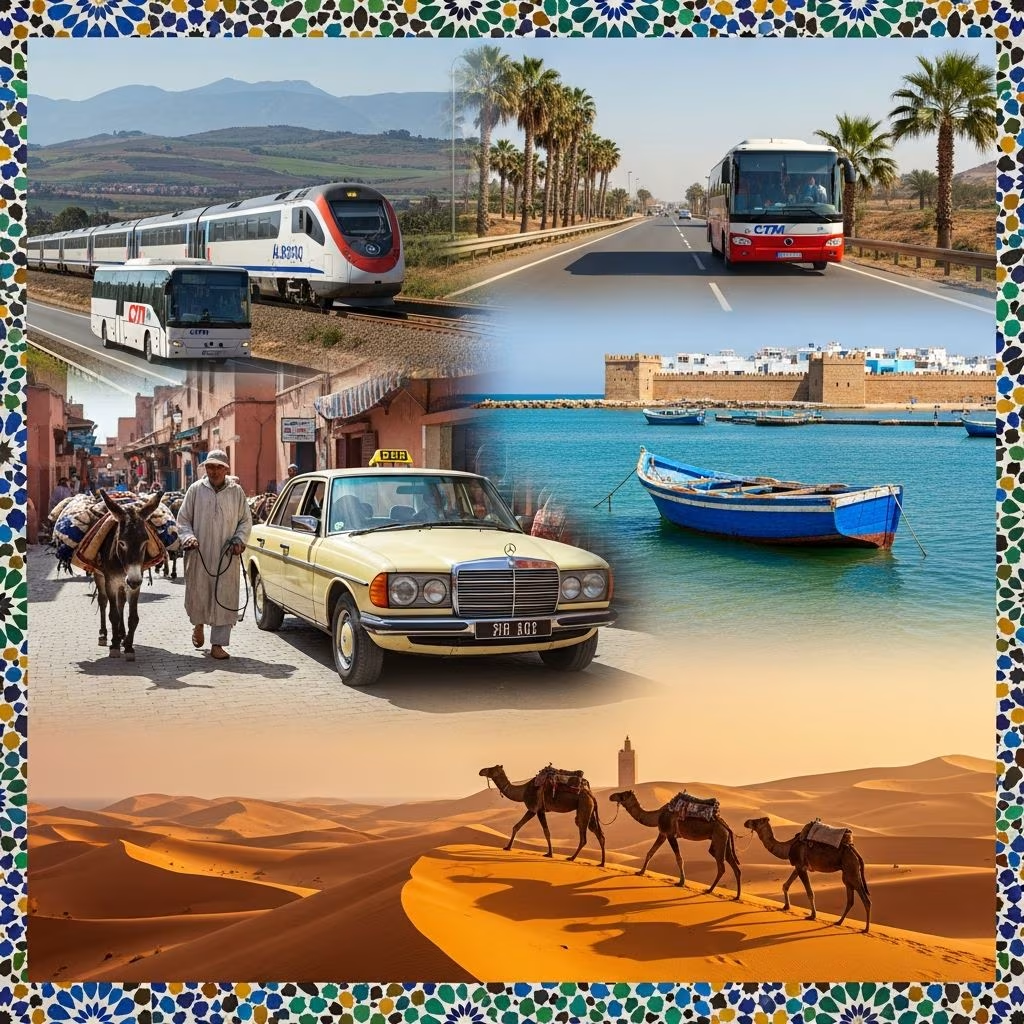
Morocco’s rail network, operated by ONCF, stands out as one of Africa’s most advanced, connecting key urban centers with efficiency and comfort. The flagship Al Boraq high-speed train revolutionized travel by slashing journey times dramatically. For instance, the route from Tangier to Casablanca now takes just over two hours at speeds up to 320 km/h, with stops in Kenitra and Rabat.
Conventional trains complement this by linking Tangier through Casablanca, Rabat, and Marrakech, extending to Fez, Meknes, and northeastern spots like Nador and Oujda. Tickets are budget-friendly, with first-class options providing extra space and fewer crowds. Purchase them online via the ONCF site or at stations, and note that schedules can occasionally face delays.
Buses form the most extensive public transport system in Morocco, ideal for destinations beyond rail lines. CTM, a state-backed operator, leads with modern fleets, assigned seats, and fixed timetables covering major cities and tourist hubs. Supratours, affiliated with ONCF, syncs bus departures with train arrivals for seamless connections.
Private companies like SATAS fill gaps to smaller towns, while “market buses” serve rural areas—hailable anywhere but often crowded and less comfortable. Always check stops, as CTM may use dedicated terminals separate from main stations.
| Bus Operator | Key Routes | Comfort Level | Booking |
|---|---|---|---|
| CTM | Casablanca-Marrakech, Fez-Tangier | High (AC, Wi-Fi on some) | Online/Station |
| Supratours | Train-linked to Essaouira, Agadir | Medium-High | ONCF counters |
| Private/Market | Rural villages | Variable | On-site |
During holidays, routes fill quickly—reserve early online for discounts and availability.
Taxis dominate short-haul and intercity travel, split into petit (small, city-only) and grand (larger, fixed-route shared). Petit taxis, color-coded by city (yellow in Marrakech, red in Casablanca, blue in Rabat), are metered and inexpensive for intra-city trips. Insist on the meter; exit if refused.
Grand taxis, often Mercedes vans now replacing classics, zip between towns faster than buses. They depart when full (six passengers), with fares slightly above buses. Negotiate for extra seats or exclusive hire for custom tours, costing around Dh50 per intercity leg.
Modern trams enhance urban mobility in hubs like Casablanca and Rabat. Casablanca’s extensive lines connect strategic sites; validate tickets bought from kiosks. City cards in Casablanca cut costs for multi-ride users.
Public buses supplement in cities, affordable but prone to crowds. Bikes or rickshaws suit eco-friendly short hops near sights, though traffic demands caution.
For independence, especially in remote areas like the Atlas Mountains or Sahara, renting a car offers unmatched flexibility. International firms operate at airports and cities; expect standard rates but factor in fuel and etiquette like yielding to pedestrians.
Challenges include aggressive driving, poor rural roads, and parking hassles in medinas. An international permit is wise, and 4x4s are essential for off-road.
| Rental Type | Best For | Cost Estimate (per day) | Requirements |
|---|---|---|---|
| Economy Car | Cities/Highways | Dh300-500 | Valid License |
| 4×4/SUV | Deserts/Mountains | Dh800+ | Int’l Permit |
Royal Air Maroc and budget carriers like Ryanair bridge far-flung spots such as Agadir or Dakhla efficiently. Airports in Casablanca, Marrakech, and Tangier handle most traffic. Flights save time over multi-day bus treks to the south.
Ferries link Morocco to Spain (Tangier-Algeciras) and serve Atlantic ports like Essaouira. Useful for Ceuta/Melilla or island hops; check schedules as weather impacts sailings.
Peak seasons (summer, Ramadan) amplify crowds—book ahead. Cash reigns; ATMs are plentiful but carry dirhams for taxis. Women travelers: opt for official services, dress modestly. Apps like ONCF or CTM aid planning.
| Route (e.g., Casablanca-Marrakech) | Train | CTM Bus | Grand Taxi | Car Rental (1 day) |
|---|---|---|---|---|
| Duration | ~3 hrs | ~4-5 hrs | ~3 hrs | Flexible |
| Cost (1 person, Dh) | 100-200 | 80-150 | 100-200 | 400+ |
Shared options win for solos; rentals for groups.
The Al Boraq high-speed train covers it in 2 hours 10 minutes.
Stick to reputable CTM for overnight routes; they’re reliable but lock bags.
No, but an international driving permit is recommended alongside your license.
Always use the meter for petits; agree on fares for grands beforehand.
Combine buses to Erfoud, then 4×4 tours or rentals.
This comprehensive overview equips you to traverse Morocco confidently, blending modern infrastructure with traditional charm for authentic experiences.
