

 Travel Essentials
 Travel Essentials

Comprehensive guide to traveling New Zealand by car, bus, train, ferry, plane, and more. Learn pros, cons, costs, and itineraries for seamless adventures across both islands.
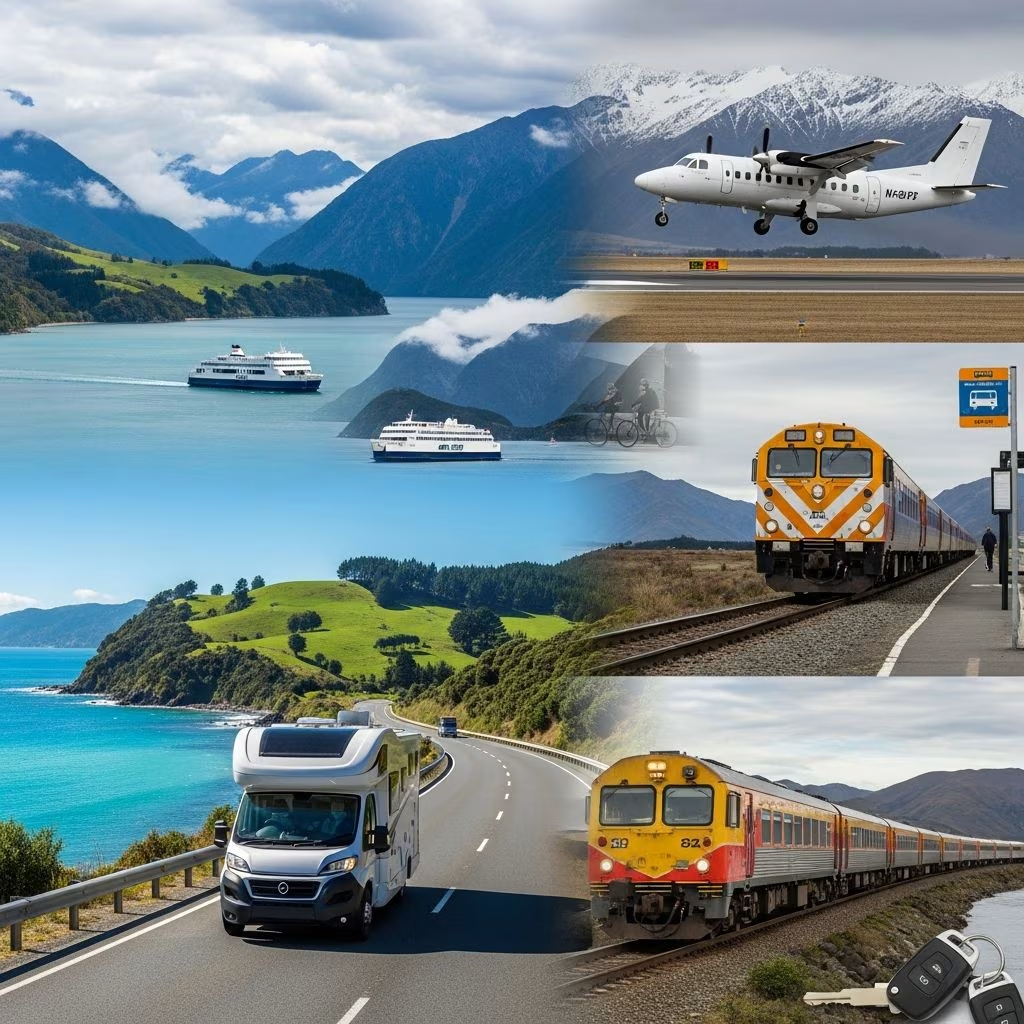 Travel Essentials
New Zealand’s diverse terrain—from rugged mountains and fjords to geothermal wonders and pristine beaches—demands thoughtful planning for transportation. Whether you crave the freedom of a road trip or prefer hassle-free public options, this guide outlines all viable methods to traverse the North and South Islands efficiently.
Self-driving stands out as the most flexible way to uncover New Zealand’s hidden gems. Vast distances between attractions mean public transport often skips the best spots, like remote hikes, secluded beaches, and winding coastal roads. Renting a car, campervan, or motorhome lets you dictate your pace, stopping for spontaneous photo ops amid cascading waterfalls or forgotten highways lined with ghost towns.
Key advantages include access to off-the-beaten-path sites such as glowworm caves, hot springs, and national parks unreachable by bus. For instance, the drive to Milford Sound reveals dramatic fjord views that buses can’t match in intimacy. Campervans add appeal for budget-conscious travelers, offering built-in accommodation amid stunning campsites.
Popular routes span both islands: North Island’s Pacific Coast Highway from Auckland to Gisborne, or South Island’s Milford Road. Use official tools to calculate distances—e.g., Auckland to Rotorua is 230km (3 hours).
Buses form the backbone of inter-city travel, connecting major hubs like Auckland, Wellington, Christchurch, and Queenstown with affordable, scenic journeys. InterCity dominates as the national operator, providing Wi-Fi, toilets, and flexible passes that bundle ferry crossings.
Ideal for backpackers, these services reach towns and some parks, though rural detours require planning. Hop-on-hop-off passes suit flexible itineraries, with discounts off-peak. From Auckland, buses hit Rotorua (3.5 hours, NZ$30-50) and Taupo.
| Route | Duration | Approx. Cost (NZ$) |
|---|---|---|
| Auckland to Rotorua | 3.5 hours | 30-50 |
| Wellington to Picton | Bus + Ferry: 5 hours | 100-150 |
| Christchurch to Queenstown | 6-7 hours | 80-120 |
Youth-oriented options like KiwiExperience add social vibes, partying at stops while covering key spots.
New Zealand’s rail network prioritizes views over speed, with two iconic routes: TranzAlpine (Christchurch to Greymouth) and Northern Explorer (Auckland to Wellington). These glass-domed carriages showcase alpine passes, river gorges, and coastal cliffs—perfect for car-free travelers.
TranzAlpine crosses the South Island’s spine in 4.5 hours, highlighting Waimakariri River and Arthur’s Pass. Book ahead; fares start at NZ$150 one-way. Combine with buses for full-island loops, like Picton to Kaikoura via Coastal Pacific.
For time-crunched visitors, Air New Zealand and Jetstar offer quick hops between 30+ airports. Auckland to Queenstown takes 2 hours (vs. 12+ by road), costing NZ$100-300 return. Smaller planes serve remote spots like Wanaka or Blenheim.
Strategy: Fly one-way (e.g., Auckland-Rotorua, Wellington-Queenstown) to maximize ground time. Airports like Christchurch and Queenstown boast day-tour shuttles for car-free access to fjords or glaciers.
Interislander and Bluebridge operate daily Wellington-Picton crossings (3.5 hours, NZ$60+ walk-on). Vehicle ferries cost extra (NZ$300+), but passengers enjoy Cook Strait views of dolphins and seals. Book vehicle spots early in summer.
Shorter ferries link Auckland’s Waiheke Island or Marlborough Sounds, enhancing island-hopping.
Public transport enables rich 2-week adventures. Start in Auckland: ferries to Waiheke, buses to Hobbiton/Waitomo tours. Fly to Rotorua for geothermal sites, then Wellington ferry to South Island.
Sample 14-Day Plan:
This covers highlights without driving, using hubs like Queenstown for tours to Fiordland.
Urban areas shine: Auckland’s tag-on buses/ferries (contactless payments); Christchurch/Queenstown trams and shuttles. Taxis/Ubers fill gaps; AT Hop cards simplify Auckland. Accessible options include low-floor buses and priority train seating—check operators for wheelchairs.
Bike rentals thrive on trails like Queenstown’s network or Great Rides paths. E-bikes ease hills; motorbikes suit thrill-seekers on open roads.
Coach tours (day/multi-day) handle logistics, from Auckland’s Hobbiton to South Island glaciers. Small-group adventures offer insights sans driving.
Budget NZ$50-100/day transport (bus/flight mix); splurge NZ$100+ for car. Book via official sites; passes save 20-30%. Off-season (May-Sep) halves prices.
No, but ideal for flexibility. Public options cover 80% of highlights via tours.
2-3 weeks minimum for both islands comfortably.
Anytime, but summer books out—reserve 2 weeks ahead.
Yes, via trains, buses, flights from Queenstown base.
Growing; check major firms for EVs with chargers.
