

 Travel Essentials
 Travel Essentials

Explore Seville's diverse transportation network including buses, metro, trams, bikes, and walking options to navigate the city efficiently.
 Travel Essentials
Seville, the vibrant capital of Andalusia, sprawls across the Guadalquivir River with distinct neighborhoods, historic plazas, and cultural landmarks scattered throughout the city. For visitors and residents alike, understanding how to move efficiently between these attractions is essential for maximizing your experience. The city offers a diverse array of transportation options, each suited to different travel needs and preferences.
The most authentic way to experience Seville begins with your feet. The historic center, known as Centro, contains the vast majority of major attractions within a surprisingly compact area. Narrow cobblestone streets wind through neighborhoods like Santa Cruz, where whitewashed buildings with terracotta roofs create a maze of discovery around every corner. The Cathedral, the Royal Alcázar Palace, and Plaza de España are all interconnected by pedestrian pathways that encourage exploration.
Walking through these central districts allows you to appreciate architectural details, stop at street-side cafés, and stumble upon hidden plazas that tour buses miss entirely. Most visitors find they can traverse the entire historic core on foot in a single day, though the leisurely pace is far more rewarding. The relatively flat terrain makes walking particularly accessible, though the Andalusian sun can be intense during summer months.
Seville’s metro system represents a relatively recent addition to the city’s transportation infrastructure. Currently operating with a single primary line, the metro serves 22 stations and functions primarily as a connection between suburban areas and the urban core. While modest in scope compared to metro systems in larger European cities, it provides rapid transit for longer distances that would be impractical to walk.
The metro operates from early morning until late evening, with extended hours on weekends and days preceding public holidays. Service extends until 2:00 AM on Fridays, Saturdays, and the evenings before public holidays, making it a viable option for evening entertainment. Single journey fares begin at €1.35, making it an economical choice for individual trips.
Future expansion plans include three additional metro lines currently under construction, which will significantly enhance connectivity throughout the metropolitan area once completed.
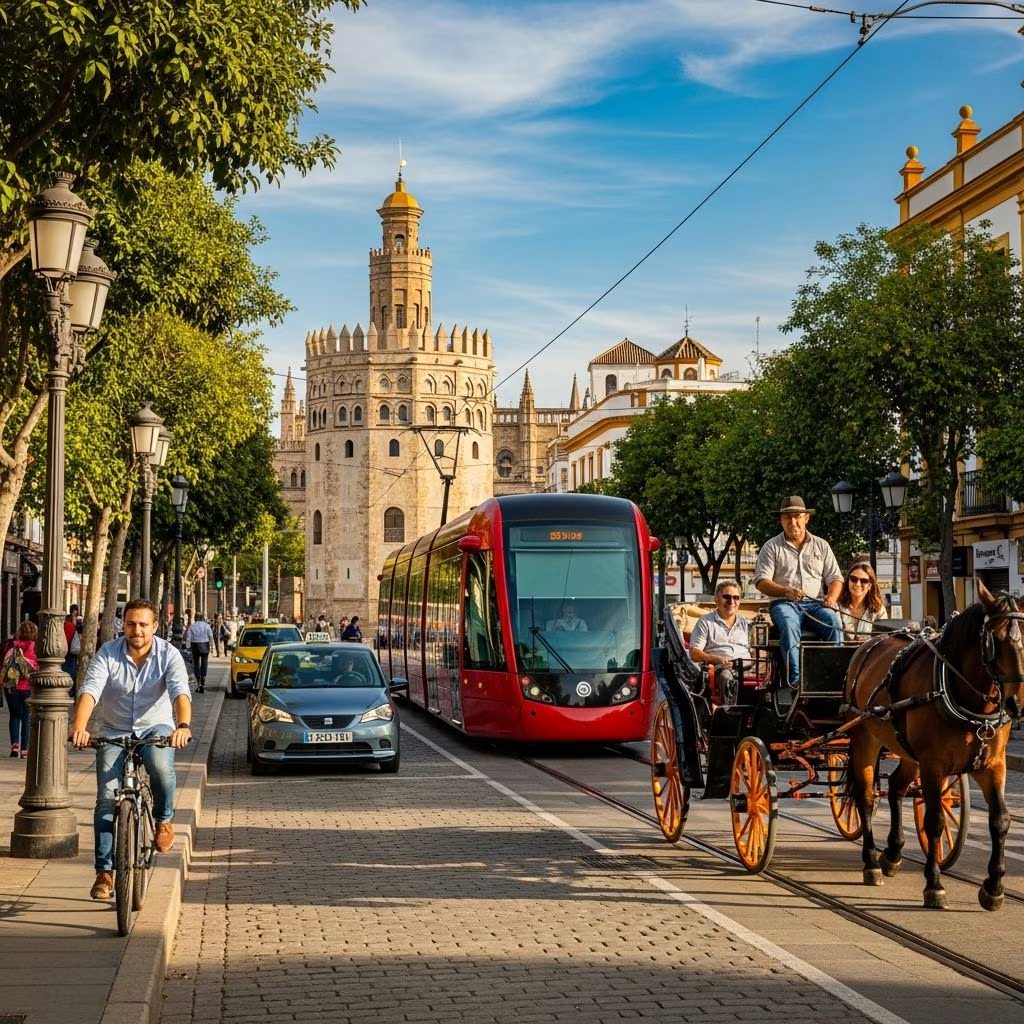
Distinct from the metro system, the MetroCentro tram offers a charming and practical way to traverse the city’s core. This dedicated light rail line spans approximately 1.4 kilometers and connects Plaza Nueva to the Avenida de la Constitución, passing directly by the Cathedral and several other significant landmarks. The tram stops at Archivo de Indias, Puerta de Jerez, San Sebastián, and San Bernardo before reaching its terminus near Nervión, home to Sevilla FC’s stadium following a 2024 extension.
Operating between 6:00 AM and 11:30 PM, the MetroCentro provides both practical transportation and an enjoyable sightseeing experience. The open-air design of certain sections allows passengers to observe the city while traveling. A single journey ticket costs €1.20, purchasable from platform machines where you validate your ticket before boarding.
Plans for future expansion include connecting the tram line to Sevilla-Santa Justa train station, further enhancing its utility for visitors arriving by train.
Seville’s extensive bus network represents the city’s most comprehensive transportation system. With 44 daytime routes and 9 nighttime routes, buses reach virtually every neighborhood and suburb. Most routes operate from 6:00 AM until 11:00 PM daily, though hours extend an hour later on public holidays. Night buses continue service until 2:00 AM, ensuring transportation is available throughout the evening.
The frequency of service varies by route, but most buses arrive every 15 to 20 minutes during standard operating hours. Primary dispatch points include Puerta de Jerez, located south of the city center, and Plaza Ponce de León to the east. Several key circular routes, designated C1 through C5, navigate the ring roads surrounding and penetrating the historic center, making them particularly useful for visitors.
Bus 32 provides direct connection from Estación Santa Justa, the primary train station, to Plaza Ponce de León near the Las Setas shopping and cultural center. The north-south routes, buses 1 and 3, flank the eastern and western edges of Centro respectively, while bus 5 connects the Triana neighborhood to the southern periphery of the historic zone.
Circular routes offer both transportation function and scenic value. Buses C3 and C4 follow ring roads around the old city center, providing comprehensive views of the peripheral historic areas. The smaller C5 route traces a path through the heart of Centro itself, useful for shorter hops between nearby attractions.
Individual bus tickets are available directly from drivers at €1.30 or from ticket kiosks located throughout the city. For those planning multiple journeys, the Tarjeta Multiuso rechargeable card offers better value. Long-term residents enrolled in the city’s database can obtain a 30-day card (Tarjeta 30 días) for €35.30, valid for unlimited travel across the first 30 consecutive days of use.
Those traveling between towns in the greater Seville metropolitan area can purchase a green rechargeable card through Consorcio de Transporte Metropolitano Area de Sevilla, valid across inter-urban buses, city buses, trams, and the metro system. Contactless payment is also accepted on both buses and trams, streamlining the boarding process for modern travelers.
Seville’s climate and relatively flat topography make it exceptionally suited for cycling. The city operates Sevici, a comprehensive bike-sharing program with stations distributed throughout urban neighborhoods. This system provides an economical and environmentally conscious transportation alternative for exploring beyond the walking zone.
The most attractive feature of Sevici is its first-30-minute complimentary period, allowing short journeys at no cost to registered users. This makes the service ideal for brief trips between neighborhoods or for testing whether cycling appeals to your travel style. Beyond the initial 30 minutes, reasonable fees apply for extended usage.
Registering for Sevici typically requires a mobile device and valid payment method. Numerous online resources provide step-by-step instructions for international visitors unfamiliar with the system. The bikes themselves are sturdy and designed for urban navigation, with baskets for carrying light belongings.
Taxis in Seville operate under regulated metering systems, with fares generally considered affordable compared to other European cities. Official taxis display white exteriors with distinctive yellow stripes, making them easily identifiable among street traffic. Multiple taxi stands near tourist attractions and transportation hubs provide convenient access to these services.
For airport arrivals, taxis charge fixed rates of approximately €28-30 for transfer to city center locations, with journeys typically requiring 15 to 20 minutes depending on traffic conditions. Short urban trips typically cost between €7 and €8. Rates increase during nighttime hours, weekends, and public holidays, with the meter clearly displaying all charges.
The Seville Travel Card represents an integrated option for visitors, bundling airport taxi transfer with optional three-day public transportation access, beginning at €45. This package includes an English-speaking driver meeting you at baggage claim with a name sign.
Travelers arriving at Seville Airport have several transportation options for reaching the city. The EA airport bus service connects directly to major transit hubs including Estación Santa Justa train station and Plaza de Armas bus station, providing straightforward transfers to the broader public transit network. This budget-friendly option eliminates the need for separate transportation arrangements upon arrival.
For visitors wishing to explore beyond Seville’s boundaries, the AVE (Alta Velocidad Española) high-speed rail service connects the city to destinations throughout Spain. Early booking often yields competitive fares, making rail travel economical compared to rental vehicles or domestic flights. Sevilla-Santa Justa station serves as the primary departure point for these intercity services.
Multiple bus stations serve intercity routes. Plaza de las Armas functions as the primary terminus for long-distance bus services to other Spanish cities, while Prado de San Sebastián serves as the hub for local bus operations.
| Transportation Mode | Best For | Operating Hours | Cost Range | Coverage |
|---|---|---|---|---|
| Walking | Historic center exploration, cultural immersion | 24/7 | Free | Centro and immediate surroundings |
| Metro | Rapid suburban connections | Until 2:00 AM on weekends | €1.35+ per journey | 22 stations, primarily suburban |
| MetroCentro Tram | Central routes with city views | 6:00 AM – 11:30 PM | €1.20 per journey | Plaza Nueva to Nervión |
| Bus | Comprehensive citywide coverage | Until 2:00 AM (night routes) | €1.30+ per journey | 44 day routes, 9 night routes |
| Cycling (Sevici) | Independent exploration, short trips | 24/7 availability | First 30 min free | Throughout main neighborhoods |
| Taxi | Point-to-point, convenience | 24/7 | €7-8 (short), €28-30 (airport) | Citywide |
Walking through the historic center is completely free and offers the most authentic experience. For multiple trips, purchasing a Tarjeta Multiuso rechargeable card provides discounted rates across buses and trams. Sevici bike-sharing offers free 30-minute rides, making it unbeatable for short distances.
Seville’s public transit system operates reliably until late evening and into early morning hours. Metro service continues until 2:00 AM on weekends and holidays, while buses run on night routes until the same hour. As with any city, standard safety precautions apply, including remaining aware of surroundings and traveling in populated areas when possible.
A personal vehicle is unnecessary for most visitors. The combination of walkable Centro, comprehensive bus network, and bike-sharing provides sufficient mobility for exploring major attractions. Parking in the historic district is challenging and expensive, making car-free travel more practical.
Most bus drivers and station attendants are accustomed to international visitors. Digital transit maps are available online and through mobile applications. Many taxis and official transportation services, particularly the Seville Travel Card option, offer English-language assistance.
The MetroCentro is a separate tram system (confusingly named despite lacking metro connections) that serves the city center, while the metro is a subway system connecting suburban areas. The tram is ideal for central sightseeing, whereas the metro provides rapid suburban transit.
Effective navigation of Seville involves matching transportation modes to specific journey requirements. Most visitors spend their first days on foot, exploring the rich architectural and cultural zones within Centro. As comfort with the city increases and the desire to explore peripheral neighborhoods grows, bus or metro services extend travel possibilities.
For those planning extended stays or frequent journeys, investingment in rechargeable transit cards provides both convenience and cost savings. Multi-day passes bundled with airport transfers represent good value for visitors arriving by air.
Evening entertainment and nightlife often necessitate late-night transportation options. The availability of night buses and extended metro hours on weekends ensures visitors can enjoy Seville’s vibrant evening culture without concerns about stranded return journeys.
Ultimately, Seville’s transportation network reflects a city designed for human-scale exploration. Whether you choose walking, cycling, public transit, or a combination approach, the city remains accessible and welcoming to visitors of all transportation preferences.
