

 Travel Essentials
 Travel Essentials

Explore efficient ways to travel Spain: high-speed AVE trains, affordable buses, domestic flights, ferries, rideshares, and driving tips for every itinerary.
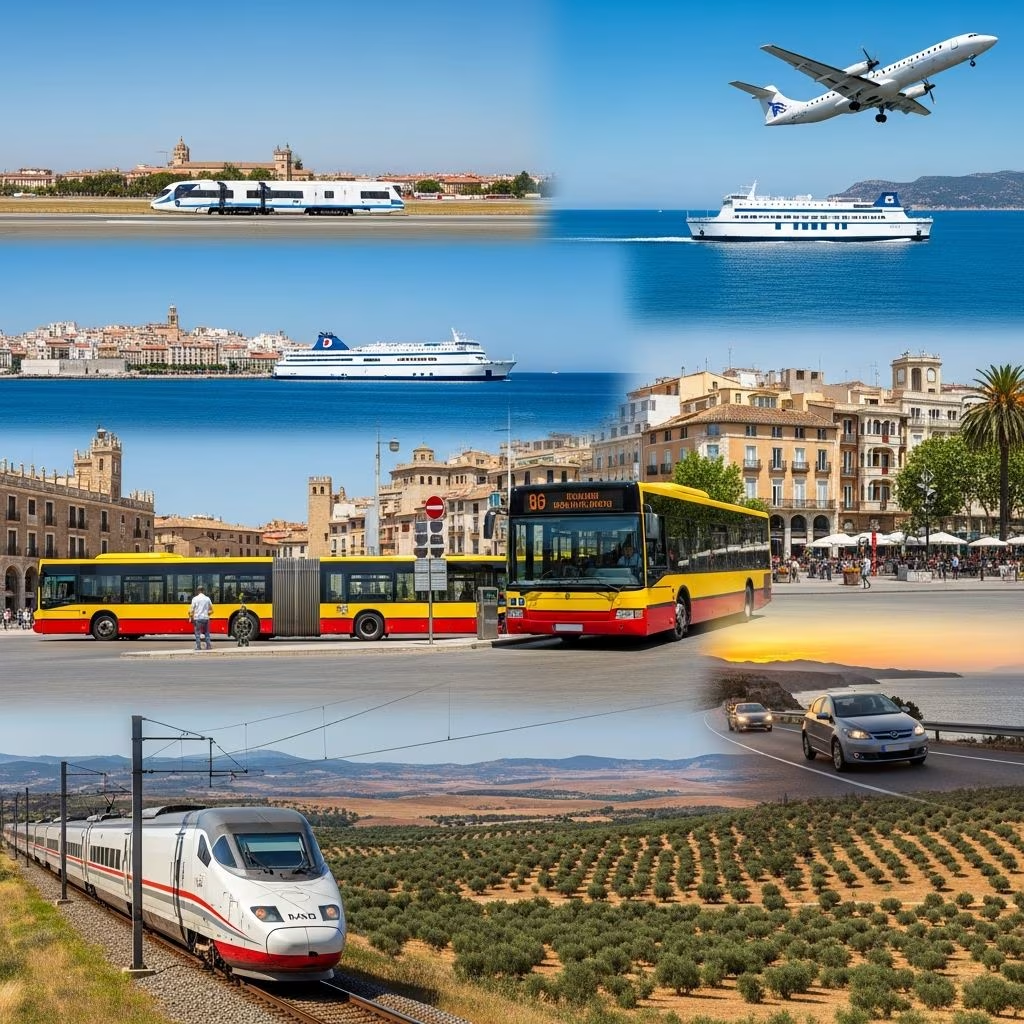 Travel Essentials
Spain boasts one of Europe’s most robust public transportation networks, making it easy for visitors to explore its diverse landscapes from bustling cities to remote villages. Whether you’re dashing between Madrid and Barcelona on high-speed rails or hopping on a bus to hidden gems, options abound for every budget and pace.
Spain’s rail system, primarily operated by RENFE, stands out for its speed and reliability, with around 5,000 daily services connecting major hubs. The flagship **AVE (Alta Velocidad Española)** network revolutionizes cross-country journeys, reaching speeds up to 310 km/h (193 mph). From Madrid’s central hub, AVE links to Barcelona in just 2.5 hours over 600 km (373 miles), Seville, Valencia, and more.
Complementing AVE are Alvia trains for northern routes and Avant for mid-range trips, ideal for day excursions like Seville to Cordoba in 45 minutes. For accessibility, low-cost Avlo services feature platform-level entrances, wheelchair spaces, and adapted facilities. Tickets start affordably if booked early via Renfe.com, which supports English and credit card purchases.
| Popular AVE Routes | Duration | Distance | Approx. Price (EUR) |
|---|---|---|---|
| Madrid-Barcelona | 2.5 hours | 600 km | 20-100 |
| Madrid-Valencia | 1.75 hours | 350 km | 15-80 |
| Madrid-Seville | 2.5 hours | 470 km | 25-90 |
| Barcelona-Seville | 5.5 hours | 1,050 km | 40-150 |
Note: Prices vary by demand; book 60-90 days ahead for deals.
Beyond high-speed lines, Media Distancia and Cercanías trains serve shorter routes and suburbs. Cercanías networks in 12 major cities like Madrid and Barcelona reach offbeat towns but can’t be pre-booked—purchase on-site and brace for crowds during peaks. These are perfect for spontaneous side trips, offering scenic views at a relaxed pace.
For rural connectivity, combine with buses, as trains skip thousands of villages.
Buses fill gaps in rail coverage, excelling for small towns and cost savings. Operators like ALSA provide nationwide comfort with recliners, Wi-Fi, and films on long hauls—Madrid to Santander for €30 in 6 hours. Locals favor them for reliability and reach.
Buy tickets online via Movelia.es for schedules in multiple languages or from drivers, but reserve popular routes early. Services run from provincial capitals, often more frequent than trains.
Local city buses cost €1-2, essential for campsites or outskirts.
For far-flung spots like the Canary Islands or Balearics, low-cost carriers like Vueling, Ryanair, and Iberia Express shine. Flights from Madrid to Palma de Mallorca take 1.5 hours versus 24+ by ferry. Airports like Madrid-Barajas and Barcelona-El Prat connect efficiently, though factor in security time—often comparable to AVE for mainland hops.
Book via airline sites or aggregators; budget fares from €20 one-way, but add-ons inflate costs.
Spain’s maritime options link mainland to islands and Andalusia’s ports. Balearia and Trasmediterranea sail Ibiza-Formentera (30 mins) or Barcelona-Palma (7 hours). Seasonal routes offer car transport, with onboard dining and lounges. Check directferries.com for comparisons; prices €40-150 depending on vehicle.
Cities thrive on car-sharing like BlaBlaCar for intercity lifts—post or join rides to split fuel. Taxis/Uber/Cabify operate widely; apps ensure fixed rates. Metro/tram systems in Madrid, Barcelona, Valencia provide cheap urban transit (€1.50-2/single).
Rent via Hertz, Sixt (from €25/day) for countryside freedom—trains/buses thin out in Extremadura or Pyrenees. Tolls on AP-7 (Costa Blanca) add €20-50; fuel ~€1.70/liter. International permit advised; drive right-side, watch ZTL zones.
| Rental Tips | Details |
|---|---|
| Age | 21+ (25+ cheaper) |
| Insurance | Opt full coverage |
| Documents | License + IDP |
| Peak Season | Book 2 months ahead |
Most transport accommodates disabilities: AVE’s level boarding, bus ramps. Eco-tip: Trains emit less CO2 than flights/cars—opt rail for green travel. Apps like Citymapper integrate options.
Platforms: Renfe.com, Omio, Trainline for multi-modal search. Buy 2-3 months early; Eurail Spain Pass for 3+ trips (from €233). Avoid holidays when services swell.
AVE train: 2.5 hours.
Yes, especially short routes; ALSA often undercuts Renfe.
Yes, Balearia accommodates vehicles.
Google Maps or Renfe/ALSA apps.
For 4+ long trips; otherwise, point-to-point cheaper.
