

 Travel Essentials
 Travel Essentials

Comprehensive guide to ferries, buses, trains, and alternative transport options for exploring the Amalfi Coast efficiently and affordably.
 Travel Essentials
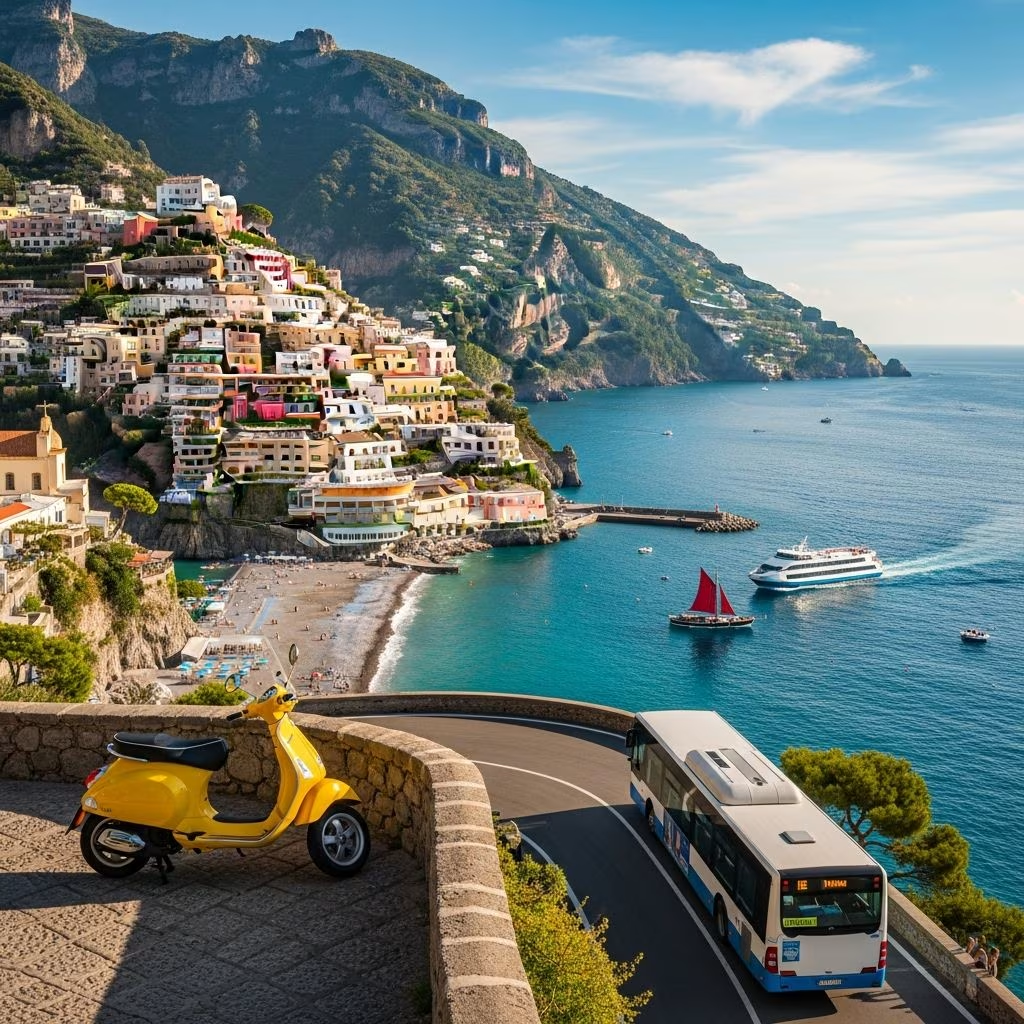
The Amalfi Coast stretches across 60 kilometers of dramatic Italian coastline, featuring picturesque cliffside villages and winding mountain roads that connect charming towns like Amalfi, Positano, and Salerno. Successfully traversing this stunning region requires understanding the diverse transportation options available to visitors. Whether you’re arriving from a major airport or already positioned elsewhere in Italy, multiple interconnected transit systems provide reliable and cost-effective ways to explore the coast.
Visitors arriving in southern Italy have several established pathways to reach the Amalfi Coast, each with distinct advantages depending on your departure location and priorities.
The train network provides one of the most economical entry routes to the region. The Circumvesuviana train connects Naples Central Station directly to Sorrento, serving as a reliable gateway for travelers flying into Naples Airport. This regional train typically completes the journey in approximately one hour and offers a cost-effective alternative to driving. However, during peak summer travel periods, these trains experience significant overcrowding, which can create a less comfortable experience.
For those seeking an alternative rail option, the metropolitan train from Naples Central Station reaches Vietri sul Mare directly in roughly one hour, costing approximately €5.10. This destination represents one of the larger settlements on the coast, famous throughout Italy for its distinctive handcrafted ceramic traditions. The town itself showcases beautiful ceramic-adorned architecture that reflects this cultural heritage.
The third rail option departs Naples Central Station bound for Salerno, completing the journey in under 40 minutes at a cost between €10 and €20. Salerno functions as a critical transportation hub for the entire coast, offering multiple onward connections via bus and ferry services.
Passengers landing at Naples Airport (Capodichino) can access the coast through several mechanisms. The most affordable approach involves combining the Circumvesuviana train to Sorrento with a subsequent SITA bus transfer. While economical, this multi-leg journey can prove taxing during crowded summer months.
Alternatively, direct airport bus service operates between Naples Airport and Salerno, requiring approximately 90 minutes and costing €5.10 per ticket. Though limited to only a few daily departures, this option suits travelers whose flight schedules align with published timetables. Upon reaching Salerno, passengers can seamlessly connect to ferry or bus services extending throughout the coast.
Salerno stands out as the primary transportation nexus for accessing the Amalfi Coast. The city’s strategic location south of Naples, combined with excellent rail connections to major Italian cities, makes it an ideal staging point for coastal exploration. Train travel from Rome typically terminates in Salerno, from which all coastal towns become accessible through integrated bus and ferry networks.
The SITA bus system constitutes the primary public transportation backbone linking all settlements along the coast, offering the most comprehensive coverage at the lowest price point. This regional bus operator maintains year-round service connecting mountain villages, clifftop towns, and seaside communities that ferries cannot reach.
SITA operates multiple routes tailored to different travel patterns. The primary coastal route connecting Sorrento, Positano, and Amalfi runs consistently from early morning until late evening, typically between 6 AM and 10 PM, with buses departing every 15 to 30 minutes. The journey from Amalfi to Positano via this route requires approximately 40 minutes and costs €2.40.
Beyond the main coastal highway, SITA extends service into inland communities such as Ravello and Bomerano, enabling visitors to experience the region beyond the dramatic cliff-edge settlements. These inland routes provide access to cultural attractions, traditional villages, and mountain hiking opportunities that define the broader Amalfi experience.
SITA tickets can be purchased at multiple authorized locations including tobacco shops (tabaccherie) and coffee bars throughout the region. Single journey fares range from €1.50 to €5.50 depending on distance traveled, with typical coastal routes costing €2 to €2.90 per trip. Multi-day passes offer better value for extended exploration, with single-day passes available for €8.
The UnicoCampania mobile application provides a convenient digital alternative for ticket purchasing, allowing travelers to select appropriate pass types directly through their smartphones. This modern solution eliminates the need to locate physical ticket vendors during busy periods.
Summer months between June and August witness dramatic increases in passenger demand, frequently resulting in buses reaching full capacity well before departure times. Travelers visiting during peak season should budget additional time in their itineraries to accommodate potential wait times for subsequent departures. Ferry services often provide viable alternatives during these congested periods, as seaborne transport typically offers more frequent sailings and greater passenger capacity.
Seasonal ferry services operate between major coastal communities and represent a distinctive travel mode that combines transportation with scenic enjoyment. These vessels provide relief from road congestion while offering passengers an alternative perspective on the region’s dramatic landscapes.
Ferry operations activate seasonally from April through October, aligning with peak tourism demand and favorable Mediterranean weather. Hydrofoils and conventional ferries depart from major ports including Salerno, Amalfi, Positano, and Praiano, with select services extending to the island of Capri. The 25-minute ferry journey between Amalfi and Positano costs approximately €10 and provides one of the most visually stunning short-distance transport experiences available.
Ferry scheduling concentrates on afternoon and early evening departures, with the last sailings from Positano typically departing in the late afternoon during high season. Winter season experiences significantly reduced service frequencies, making buses the primary reliable transport option during low-tourism periods.
Transportation experts recommend utilizing ferry services strategically rather than exclusively. Many travelers reserve ferry journeys for one-directional routes, appreciating the relaxation and scenery while ensuring return trips via more predictable bus services. This balanced approach maximizes the psychological benefits of seaborne travel while maintaining schedule reliability.
Motor scooters represent a flexible option for independent travelers seeking complete autonomy over their movements. These vehicles navigate the narrow winding roads with greater ease than automobiles and provide convenient access to remote villages and scenic overlooks. However, scooter travel demands experienced riding skills, particularly on roads that feature hairpin turns and significant elevation changes throughout their 60-kilometer length.
Taxi services and private vehicle hire options exist for travelers prioritizing comfort and avoiding public transit experiences. These premium services command significantly higher costs than public transportation but eliminate concerns regarding schedule adherence and crowding. Private transfers prove particularly valuable for visitors with mobility limitations or those traveling with substantial luggage quantities.
While private automobile rental technically provides transportation optionality, driving personal vehicles on the Amalfi Coast presents substantial challenges that generally discourage this approach. Narrow roads accommodate single-vehicle passage in many sections, requiring extensive reversing maneuvers when encountering oncoming traffic. Parking availability remains severely restricted, particularly during summer months, with available spaces commanding premium hourly rates reaching €12 or higher during peak periods. These factors combine to make personal driving far less practical than public transportation alternatives for most visitors.
Visitors prioritizing cost efficiency should construct itineraries centered on SITA bus utilization, supplemented by occasional ferry journeys during optimal conditions. Multi-day passes provide superior value compared to individual tickets, particularly for travelers planning multiple daily movements between communities. Strategic timing that avoids peak summer months (July and August) further reduces the likelihood of encountering service delays and capacity constraints.
Journey duration varies considerably depending on chosen transportation modes. The 40-minute bus journey between Amalfi and Positano contrasts dramatically with the 25-minute ferry equivalent, enabling visitors to compress exploration timelines when ferries operate. Conversely, bus services provide year-round reliability, making them essential for travelers visiting outside the April-October ferry season.
The region’s transportation infrastructure demonstrates excellent integration across modal boundaries. Train arrivals in Salerno align conveniently with onward bus and ferry departures, while ferry terminals connect seamlessly to SITA bus networks. This interconnected design ensures that most viable journeys require minimal waiting between sequential transit legs.
Transportation experiences vary dramatically across seasons. Summer peak season witnesses crowded buses, frequent ferry operations, and parking scarcity, requiring patience and flexible scheduling. Winter months offer reduced passenger volumes, enabling more relaxed travel experiences, though limited ferry service reduces transportation optionality. Spring and autumn shoulder seasons provide optimal conditions, balancing operational reliability with reduced crowding.
Modern travelers benefit from digital resources that streamline navigation and ticketing. Mobile applications facilitate advance ticket purchasing, while online schedule databases enable route planning from home. Tourist information centers in major communities provide printed schedules and personalized routing advice for those preferring traditional research methods.
SITA bus passes offer the lowest per-kilometer cost, particularly when multi-day passes replace individual ticket purchases. Combining bus travel with selective ferry usage on optimal-weather days balances economy with experience quality.
Ferry operations run seasonally from April through October, with service frequencies varying based on weather conditions and tourism demand.
No, tickets must be purchased in advance at authorized vendors including tobacco shops, coffee bars, or through the UnicoCampania mobile application.
Narrow winding roads, limited parking, and expensive parking rates make public transportation substantially more practical for most visitors.
Successfully navigating the Amalfi Coast requires matching your transportation preferences to available options and seasonal conditions. Budget-conscious travelers should prioritize SITA buses, while those valuing scenic experiences may incorporate ferry travel during operational months. Planning flexibility regarding travel timing and mode selection enables all visitors to optimize their coastal experiences while managing costs and logistics effectively.
