

 Travel Essentials
 Travel Essentials

Discover efficient ways to traverse the United States, including driving, trains, buses, flights, and eco-friendly options, tailored for every traveler's needs and budget.
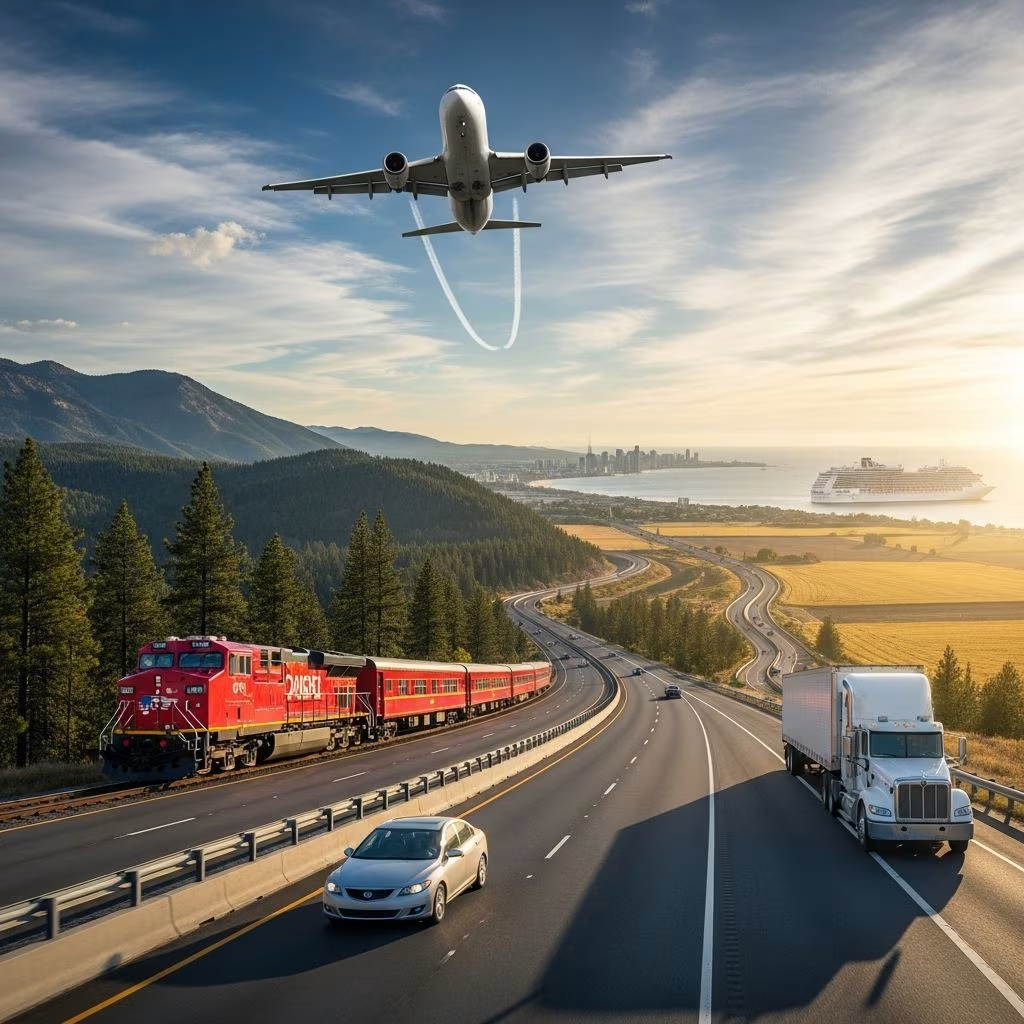 Travel Essentials
The United States spans over 3 million square miles, making transportation a critical part of any journey. Whether you’re chasing city lights, national park trails, or coastal highways, choosing the right mode of travel ensures flexibility, affordability, and memorable experiences. This guide breaks down options from self-drive adventures to public networks, helping you craft itineraries that match your pace and pocket.
Renting or owning a car offers unparalleled independence in a country where distances dwarf those in Europe or Asia. Ideal for road trips through the Southwest deserts or Appalachian mountains, cars let you detour to hidden gems inaccessible by public transit. Fuel costs hover around $4 per gallon, with rentals starting at $45 daily or $245 weekly for compact models, often with unlimited mileage.
Book early via major companies like Hertz or Enterprise for deals, especially in peak seasons. Consider vehicle size: SUVs suit rugged terrains like Yellowstone, while hybrids cut fuel bills on long hauls. Interstate highways like I-10 (coast-to-coast) or I-95 (East Coast) form the backbone, but scenic byways like Route 66 add nostalgia. Watch for tolls on bridges and urban expressways; apps like Waze provide real-time alerts.
| Vehicle Type | Daily Rate (USD) | Best For |
|---|---|---|
| Compact | 45-60 | City hopping, solo travelers |
| Midsize | 50-70 | Couples, moderate luggage |
| SUV | 70-100 | Families, off-road parks |
| Van/Camper | 100-150 | Groups, camping trips |
International drivers need a valid license; many states accept foreign ones for 3-12 months. Insurance is key—rental firms offer it, but credit cards often cover basics. Parking varies: free in rural spots, pricey ($20-50/night) in Manhattan. Electric vehicles are rising, with chargers expanding via Electrify America networks.
Amtrak’s network blankets the Northeast and select Western routes, connecting hubs like New York to Chicago or Seattle to LA. Though not the quickest, routes like the California Zephyr offer panoramic views of Rockies and canyons. Fares start low for short hops; USA Rail Passes grant 10-30 days of unlimited travel (from $499), perfect for multi-stop itineraries.
Trains run daily on majors, less on others; sleeper cars add luxury for overnight legs. Thruway buses extend reach to parks like Yosemite. East Coast corridors excel for speed (Acela hits 150mph), while West gaps favor flying or driving. Book via amtrak.com; apps track delays, common in freight-heavy areas.
Buses dominate affordable intercity travel, linking 90% of destinations via Greyhound, FlixBus, Megabus, and Peter Pan. Tickets from $20 one-way NYC to Boston; book ahead for $1 deals on Megabus. Routes crisscross the nation, with expresses skipping small stops for speed.
Modern buses feature AC, restrooms, outlets; overnight options save hotel costs. Stations vary—some urban eyesores, others modern. Night arrivals? Use rideshares. Alternatives like Green Tortoise add adventure: foam bunks, group vibes on West Coast loops ($500+ for 11 days). Reliability improves yearly, but build buffers for delays.
For time-crunched travelers, air trumps all—cross-country in 5 hours versus days by land. Budget carriers like Spirit, Frontier, Allegiant offer $50 fares; Southwest and JetBlue prioritize comfort. Hubs: Atlanta (Delta), Dallas (American), Chicago O’Hare.
Apps like Google Flights compare; flexible dates yield steals. Fees sting for bags ($30-60), so pack light. Smaller airports cut stress; Brightline high-speed rail supplements Florida flights. Security: TSA PreCheck ($78/5yrs) speeds lines. Regional jets serve parks like Glacier.
Mega-cities boast robust transit. NYC’s subway ($2.90/ride) blankets boroughs; Chicago’s L trains loop downtown. San Francisco’s BART/BART links SFO; DC Metro reaches monuments. Passes (daily $10-20) unlimited rides. Beyond: streetcars (New Orleans), ferries (Seattle).
Rideshares (Uber/Lyft) fill gaps, $10-30 urban trips. Bikeshares (Citi Bike NYC, Divvy Chicago) cost $4/30min. Walking thrives in pedestrian-friendly zones like Boston’s Freedom Trail. Avoid cars in traffic-choked cores—fines and frustration await.
Cycle tours immerse in landscapes: pedal Blue Ridge Parkway or Pacific Coast Highway. Supported outfits like Trek America haul gear on minibuses, camping en route (7-35 days, West-focused). Solo bikers average 50 miles/day; helmets mandatory, share roads cautiously.
Hiking trails link via shuttles (Zion NP); kayaks/paddleboards rent $20/hour beacheside. Packages blend transport: raft Grand Canyon, bus Vegas. Eco-tip: e-bikes extend range sustainably.
For hassle-free exploration, tours bundle transport, lodging, meals. Intrepid, G Adventures run small-group vans through parks (Alaska to Everglades, $1500+/week). Rail/bus hybrids suit seniors; adventure firms add hikes. Compare via Road Scholar for 50+ focus.
Budget $0.20-0.50/mile driving; buses $0.10/mile; flights vary. Apps: Rome2Rio plans routes; Kayak aggregates. Passes save: Amtrak Rail, Greyhound Discovery. Off-peak (Jan-Mar) slashes prices 30-50%.
| Mode | Cost Example (NYC-LA) | Time |
|---|---|---|
| Drive | $400 gas + rental | 40 hrs |
| Bus | $200-350 | 3 days |
| Train | $250-500 | 3.5 days |
| Flight | $100-300 | 6 hrs |
Buses like FlixBus or Megabus, often under $150 coast-to-coast if booked early.
Yes for most; shuttles exist in Grand Canyon/Yosemite, but limited schedules.
Scenic yes, punctual mixed—plan buffers.
Midweek, budget airlines, via Hopper app predictions.
Sparse; combine buses with local shuttles.
Opt trains/buses over solo drives; carpool via BlaBlaCar. EVs: Tesla Superchargers nationwide. Offset flights via nativeenergy.com. Pack reusables, support local transit.
