

 Travel Essentials
 Travel Essentials

Comprehensive guide to getting around Washington DC using Metro, buses, bikes, and other transportation options for visitors and residents.
 Travel Essentials
Washington DC has evolved into one of America’s most accessible cities for travelers without personal vehicles. The capital’s well-developed transportation infrastructure makes it simple to explore world-class museums, historic landmarks, vibrant neighborhoods, and cultural attractions. Whether you’re visiting for a weekend or planning an extended stay, understanding your transit options will enhance your experience and help you move efficiently through the city.
The foundation of DC’s public transportation network is the Metrorail system, commonly referred to as the Metro. This modern subway system opened in 1976 as an ambitious urban planning initiative designed to reduce automobile congestion and create connections between the downtown core and surrounding suburban areas. Today, the Metro has become indispensable for both daily commuters and visitors, transporting over 600,000 passengers on an average weekday.
The Metro’s infrastructure spans across four quadrants of DC, extending into neighboring Maryland and Virginia, making it the backbone for car-free exploration of the region. The system connects directly to both of Washington’s major airports, providing seamless access for travelers arriving by air.
The Metro operates six distinct color-coded lines, each radiating outward from the downtown core. This hub-and-spoke design ensures that passengers can reach virtually any destination with minimal transfers, often requiring just a single connection between lines.
Metro service begins early and runs extensively throughout the day. Weekday operations extend from 5 a.m. to midnight, while Friday and Saturday service continues until 2 a.m.. Late-night trains typically arrive every 15-20 minutes, allowing visitors to plan evening outings with confidence.
The Metro accepts multiple payment methods to accommodate all travelers. Visitors can tap directly at faregates using credit cards, debit cards, or mobile payment options like Apple Pay and Google Wallet. For extended visits, purchasing a SmarTrip card offers unlimited travel options, including one, three, or seven-day passes available through fare machines at any station.
Be aware that fares are higher during rush hour periods, so traveling during mid-day or evening hours can result in cost savings. The real-time Metro Trip Planner tool helps optimize routes and reduces time spent in transit, while MetroPulse.wmata.com provides immediate updates on train and bus arrival times.
Before the Metro’s construction, Washingtonians relied on an extensive streetcar and bus network to navigate the city. Today, the Metrobus system continues this tradition as one of the country’s largest and most comprehensive bus networks, providing over 400,000 trips daily across more than 11,500 stops. The fleet of over 1,500 buses operates on 325 routes extending throughout DC, Maryland, and Virginia.
The Metrobus system offers different route types designed to serve various travel patterns and needs:
A standard Metrobus ride costs $2.25, payable via SmarTrip card, credit or debit card, or exact cash fare. When transferring from Metro to bus—or vice versa—SmarTrip card holders receive free transfers within two hours of their initial boarding. Cash fare users should note that free transfers are not available for their payment method.
The Metrobus system recently underwent a major redesign that launched on June 29, 2025, emphasizing frequent and consistent service while making routes and schedules more intuitive for new riders. Additionally, the bus fleet has transitioned to eco-friendly vehicles, with over 1,400 buses now using compressed natural gas or hybrid electric systems that produce approximately 45% fewer hydrocarbons than traditional diesel.
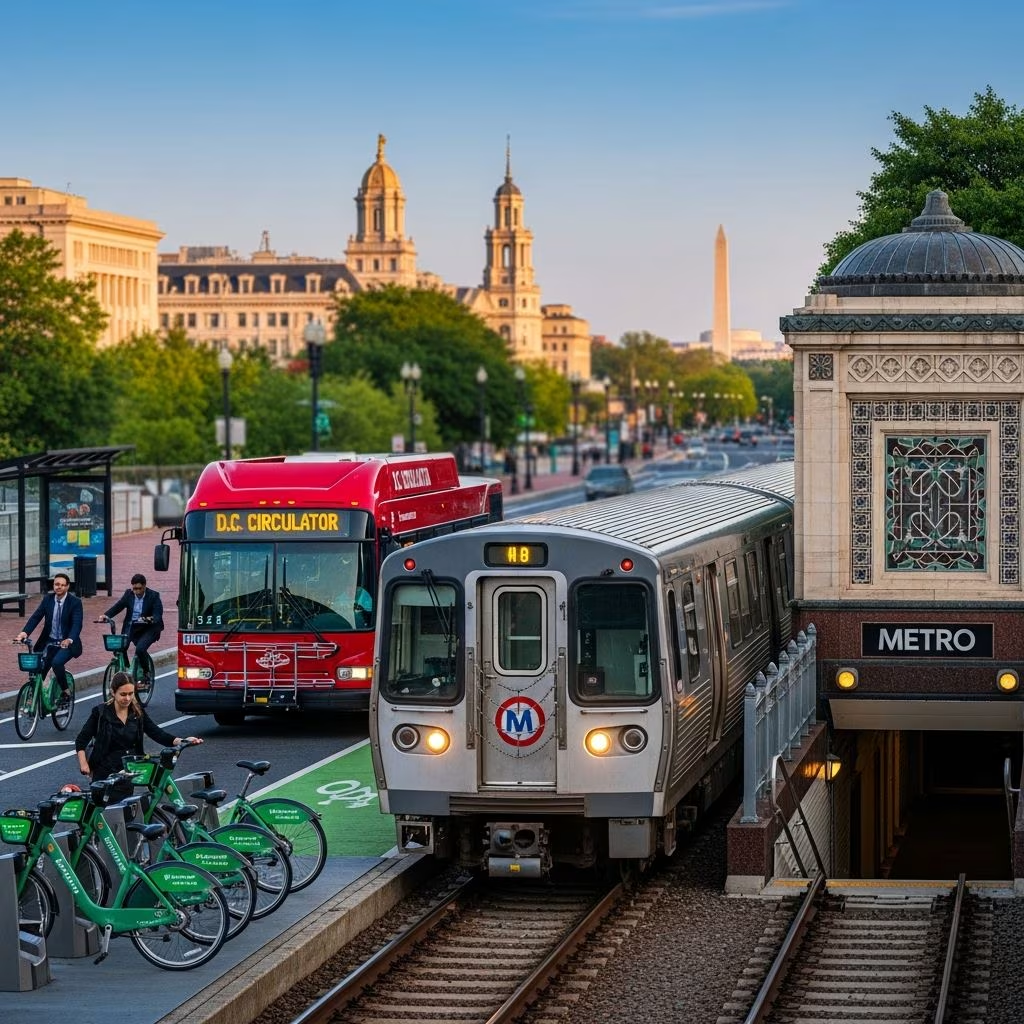
For short trips connecting major tourist attractions, the DC Circulator offers a dedicated solution designed specifically for visitors. This separate bus system operates bright red and yellow buses on popular routes at an affordable flat fare of just $1 per ride.
The Circulator routes include a National Mall loop that connects the Smithsonian museums and memorials, a Georgetown-Union Station line serving two of DC’s most visited neighborhoods, and a route between Eastern Market and L’Enfant Plaza for shoppers and sightseers. Buses operate approximately every ten minutes from early morning through evening hours.
When transferring from Metrobus or Metrorail to the Circulator, SmarTrip users receive discounts or free transfers, making it economical to combine systems for comprehensive city exploration.
Beyond the Metro system, visitors can access nearby destinations through regional rail services that provide scenic routes and historical attractions:
Both MARC and VRE offer flexible ticketing options including single rides, ten-trip packages, and monthly passes, all purchasable through vending machines accepting cash or credit cards.
One of the best ways to experience Washington DC is simply on foot. The city earned recognition as the 6th most walkable city in the United States, with 58% of commuter trips made via walking, biking, or public transit. Wide sidewalks wind past inspiring monuments and museums on the National Mall, while intimate neighborhoods feature world-class theaters and spectacular gardens.
DC has developed into a top-ranked bike-friendly community with 160 miles of dedicated lanes and trails throughout the city. The Capital Bikeshare system operates over 3,000 bicycles available 24/7 to members, with membership options ranging from day passes to year-long subscriptions.
The Bikeshare pricing model charges no fee for the first 30 minutes of each trip, with additional charges only for usage exceeding that timeframe. This structure makes short trips across neighborhoods exceptionally affordable and provides an economical way to explore DC’s diverse districts.
Beyond traditional bikeshare, renting motorized scooters or mopeds offers another quick and economical transportation option for navigating DC’s expansive geography. These alternatives work particularly well for visitors wanting to cover greater distances without the cost of taxi services or ride-sharing apps.
The most convenient payment method is a SmarTrip card, which allows unlimited ride options and provides free transfers between Metro and bus systems. Visitors without cards can use contactless credit cards or mobile payment apps at all faregates and bus readers.
Yes. The Metro connects directly to both airports: the Silver Line serves Washington Dulles International Airport, while the Yellow Line connects to Ronald Reagan Washington National Airport, both with covered walkways from terminals.
Popular sightseeing stops include the Smithsonian museums (Orange, Silver, and Blue lines), Woodley Park-Zoo and Adams Morgan (Red Line), and Gallery Place-Chinatown (Red, Green, and Yellow lines).
Although the Metro doesn’t directly serve Georgetown, the Metrobus system covers this neighborhood through core routes, and the DC Circulator provides a dedicated Georgetown-Union Station connection.
The Metro operates until midnight on weekdays and 2 a.m. on Fridays and Saturdays. After Metro closes, Night Owl bus routes provide transit coverage throughout the city.
Successful navigation of Washington DC requires understanding which transportation modes work best for different situations. For coverage of major attractions and efficient movement between distant neighborhoods, the Metro provides the fastest and most reliable option. For local neighborhood exploration and destinations not directly served by the Metro like Georgetown, buses offer comprehensive coverage.
Walking connects you personally to DC’s unique character and monuments, while bikesharing provides a middle ground between walking’s pace and transit’s efficiency. Use the Metro Trip Planner to optimize routes, and download offline maps to ensure connectivity when navigating between neighborhoods.
By combining these various transportation methods strategically, you’ll experience Washington DC like both residents and frequent visitors do—efficiently moving between world-class attractions while discovering the city’s authentic character and hidden neighborhoods.
