

 Travel Essentials
 Travel Essentials

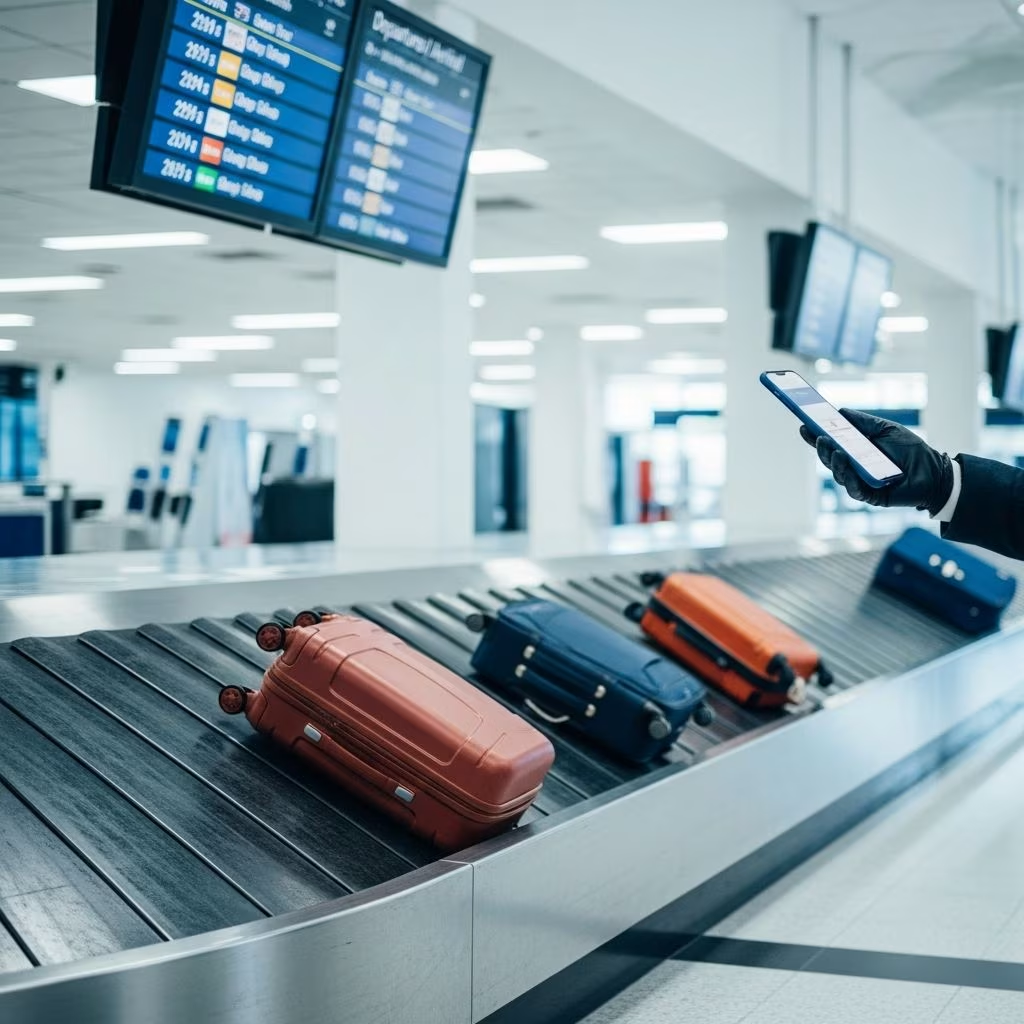
Learn expert strategies and insider tips to optimize your baggage handling and get your luggage first at the carousel.
 Travel Essentials
The moment an aircraft lands, hundreds of passengers rush toward the baggage claim area with one common goal: retrieving their luggage as quickly as possible. While the baggage handling process may seem random and unpredictable, airport workers and frequent travelers have identified several practical strategies that can meaningfully improve your chances of being among the first to collect your bags. Understanding how baggage is sorted, loaded, and unloaded reveals opportunities to position your luggage for faster retrieval.
The journey of your suitcase through an airport’s baggage system follows a specific protocol that most travelers never consider. When bags arrive at the check-in counter, they enter a sorting system based on multiple factors including destination, flight number, passenger status, and special handling requirements. Baggage handlers follow a methodical process when loading aircraft, typically placing standard bags deeper in the cargo hold while strategically positioning bags with special designations on top or near the door for easier access upon arrival.
During unloading, this reverse priority becomes crucial. Bags positioned near the cargo door exit first, while those packed deeper in the hold require additional time to retrieve. Ground crews work systematically to unload baggage and transport it to the carousel, a process that can take anywhere from 10 to 30 minutes depending on aircraft size, ground crew efficiency, and baggage volume. Recognizing this sequence opens the door to strategic positioning of your luggage.
Among all the techniques available to travelers, special baggage tags represent the most reliable method for accelerating baggage claim. These official labels, issued by airlines or their ground handlers, communicate specific instructions to the baggage system and personnel. When you request a fragile or priority tag during check-in, you’re essentially flagging your bag for different handling protocols.
Requesting a fragile tag is surprisingly effective despite seeming counterintuitive. When luggage receives a fragile designation, handlers load it last into the cargo hold to prevent crushing from heavier bags. This positioning near the cargo door means your bag emerges among the first items unloaded when the aircraft arrives at its destination. The fragile tag also signals to handlers that contents require careful treatment, resulting in more attentive handling throughout the baggage process.
For this approach to work effectively, ensure the fragile sticker is prominently displayed on a flat surface of your suitcase rather than wrapped around a handle where it might go unnoticed. Many travelers report consistent success with this method, particularly at smaller and mid-sized airports where baggage processes remain more standardized.
Airlines systematically prioritize certain passengers through their frequent flyer programs and premium cabin offerings. When you hold elite status or travel in business or first class, the airline automatically attaches a priority tag to your checked baggage. These tags integrate into the airline’s digital system, triggering automated recognition at baggage handling facilities. Priority-tagged bags are intentionally loaded last and unloaded first, with frequent travelers reporting that such bags often appear within the first few minutes at the carousel.
Even economy passengers can access this advantage. Many airlines allow you to purchase priority baggage tags during the booking process or at check-in, while others offer this service through premium travel credit cards. Since the system recognizes these tags automatically at airports, you receive the same treatment as elite frequent travelers.
The precise moment you drop off your luggage significantly influences where it sits in the cargo hold’s loading sequence. Bags checked close to departure time are loaded last and positioned near the cargo door, making them accessible first when ground crews begin unloading. This “last in, first out” principle represents a straightforward yet often overlooked strategy.
However, timing requires careful balance. Checking in too early means your bag disappears into the deepest sections of the hold under subsequent luggage. Checking in too late risks missing the baggage cutoff deadline and potentially being separated from your flight. Airport insiders recommend checking in approximately 60 to 90 minutes before departure, a window that positions your bag closer to the door without creating unnecessary stress or missing the cutoff window.
This strategy works most reliably on smaller aircraft where cargo holds contain fewer bags and the loading sequence matters more significantly. On larger international flights with hundreds of checked bags, the timing advantage may be less pronounced, though it still provides some benefit.
Gate checking occurs when the airline checks your carry-on bag at the gate rather than at the ticket counter, typically due to overhead bin capacity limits. While this might initially seem inconvenient, gate-checked bags enjoy a significant advantage in baggage claim speed. These bags bypass the main baggage system entirely and are unloaded separately from the cargo hold, often arriving at the claim area before standard checked baggage.
On smaller regional aircraft in particular, gate-checked bags frequently appear first at the carousel. If an airline offers gate checking, accepting this option provides a legitimate pathway to faster baggage retrieval. Baggage handlers themselves often recommend this approach when asked about personal baggage strategies.
Modern baggage tracking technology provides visibility into your luggage’s journey and confirms when it reaches the baggage claim area. Attaching small tracking devices like Apple AirTags or Tiles to your suitcase sends notifications when your bag leaves the aircraft and moves toward baggage claim, providing real-time awareness of your luggage’s location.
Some airlines have implemented RFID tracking systems that monitor bags throughout the entire journey from check-in scanning through cargo hold placement and final scanning into the baggage claim area. These systems provide automated updates to passengers, eliminating the uncertainty of whether your bag arrived with your flight. While tracking doesn’t physically speed up baggage retrieval, it offers invaluable peace of mind and documentation if baggage becomes lost or delayed.
Beyond strategic tactics, several preparation steps optimize your baggage experience during check-in:
Several baggage manipulation tactics circulate among travelers but prove ineffective. Adding homemade “priority” or “handle with care” stickers doesn’t influence baggage handling since ground crews and automated systems only recognize official airline-issued labels. Similarly, attempting to manually reposition your bag during the check-in process violates security protocols and accomplishes nothing.
No legitimate trick guarantees your bag arrives first every single time, as baggage handling involves numerous variables beyond passenger control, including aircraft configuration, ground crew efficiency, and operational priorities. However, combining multiple strategies creates a substantially better outcome than relying on chance alone.
While prevention remains preferable, understanding airline policies regarding delayed baggage provides recourse when your luggage doesn’t arrive promptly. Some airlines offer mileage compensation for bags failing to appear within specified timeframes after aircraft arrival. For example, certain carriers provide bonus frequent flyer miles to passengers on domestic flights when checked baggage doesn’t appear within 20 minutes of the aircraft door opening. Familiarizing yourself with your airline’s policy and the process for filing compensation claims ensures you receive available benefits.
When asked what they personally do to retrieve their own baggage quickly, airport workers consistently mention the same strategies: securing official priority or fragile tags, checking in during the optimal 60-to-90-minute window before departure, and removing old baggage tags to prevent scanning errors. These approaches, though individually modest, collectively create meaningful advantages in the baggage claim process.
While no single technique provides absolute certainty, combining these evidence-based strategies substantially improves your chances of being among the first passengers to collect their luggage. The unpredictability of baggage handling means that even optimal execution doesn’t guarantee first-arrival status, but these methods represent the closest thing to a reliable system within the baggage process framework.
