

 Travel Essentials
 Travel Essentials

Learn how to recreate airline meals at home with bold flavors, classic tray-table recipes, and simple tips inspired by in-flight dining science.
 Travel Essentials
Airline meals have long been a staple of air travel, evolving from simple boxed lunches in the 1930s to sophisticated multi-course offerings served today. Recreating these at home allows you to capture the unique flavors shaped by high-altitude conditions, where low humidity and cabin pressure dull taste buds by up to 30%, making bolder seasonings essential. This guide draws on aviation history and culinary science to help you master airline-inspired dishes without leaving your kitchen.
At cruising altitude, the air inside a plane is drier than the Sahara Desert, with humidity levels around 10-20%. Combined with lower air pressure equivalent to 6,000-8,000 feet elevation, this environment suppresses sweet and salty tastes while amplifying umami. Airlines compensate with extra salt, MSG, and spices—up to 30% more than ground-level meals. To replicate this at home, boost flavors aggressively: add umami-rich ingredients like soy sauce or mushrooms, and pair with fruit-forward wines that cut through the muted palate.
Test this by preparing a basic chicken dish normally, then amp it up with extra soy, ginger, and chili for the “cabin version.” Studies confirm passengers perceive these tweaks as gourmet.
Airline meals trace back to October 11, 1919, when Handley Page Transport served cold boxed lunches—sandwiches, fruit, and cake—for £3 (about $10 today) on London-Paris flights. Weight limits prevented onboard kitchens, so food was simple and cold. By 1928, Luft Hansa heated meals in insulated containers from Berlin to Paris, marking the shift to hot food.
In 1936, United Airlines pioneered the first onboard galley, offering fried chicken or scrambled eggs with hot coffee. Post-WWII, Pan Am introduced frozen meals in aluminum trays, reheated in-flight ovens—inspiring U.S. TV dinners. These were multi-course affairs with fine china on Boeing 747s. Today, giants like LSG Sky Chefs produce 591 million meals yearly across 210 centers, blending global cuisines with logistics precision.
| Era | Key Innovation | Sample Meal | Home Recreation Tip |
|---|---|---|---|
| 1919-1930s | Cold boxes | Fried chicken, cake | Picnic-style assembly, no reheating |
| 1940s-1950s | Frozen trays | Multi-course gourmet | Pre-portion and freeze |
| 1960s+ | Onboard galleys | Haute cuisine | Microwave or oven for authenticity |
To mimic airline catering, stock tools that echo massive flight kitchens producing thousands of identical meals daily. Focus on uniformity, portability, and reheating efficiency.
Pro tip: Label trays with “departure times” for fun, multi-stage reheating like a real flight service.
Economy meals prioritize cost, nutrition, and reheatability. Here’s a beef stroganoff inspired by 1970s standards—creamy, saucy to combat dryness.
Prep: 20 min | Cook: 30 min | “Flight time:” 40 min
Boost umami with MSG (1 tsp) for authentic cabin zing. Pairs with fizzy apple juice to mimic muted bubbles aloft.
A spiced staple since 1950s Pan Am days. Use 30% more curry powder.
Science tweak: Acidic yogurt cuts richness perceived at altitude.
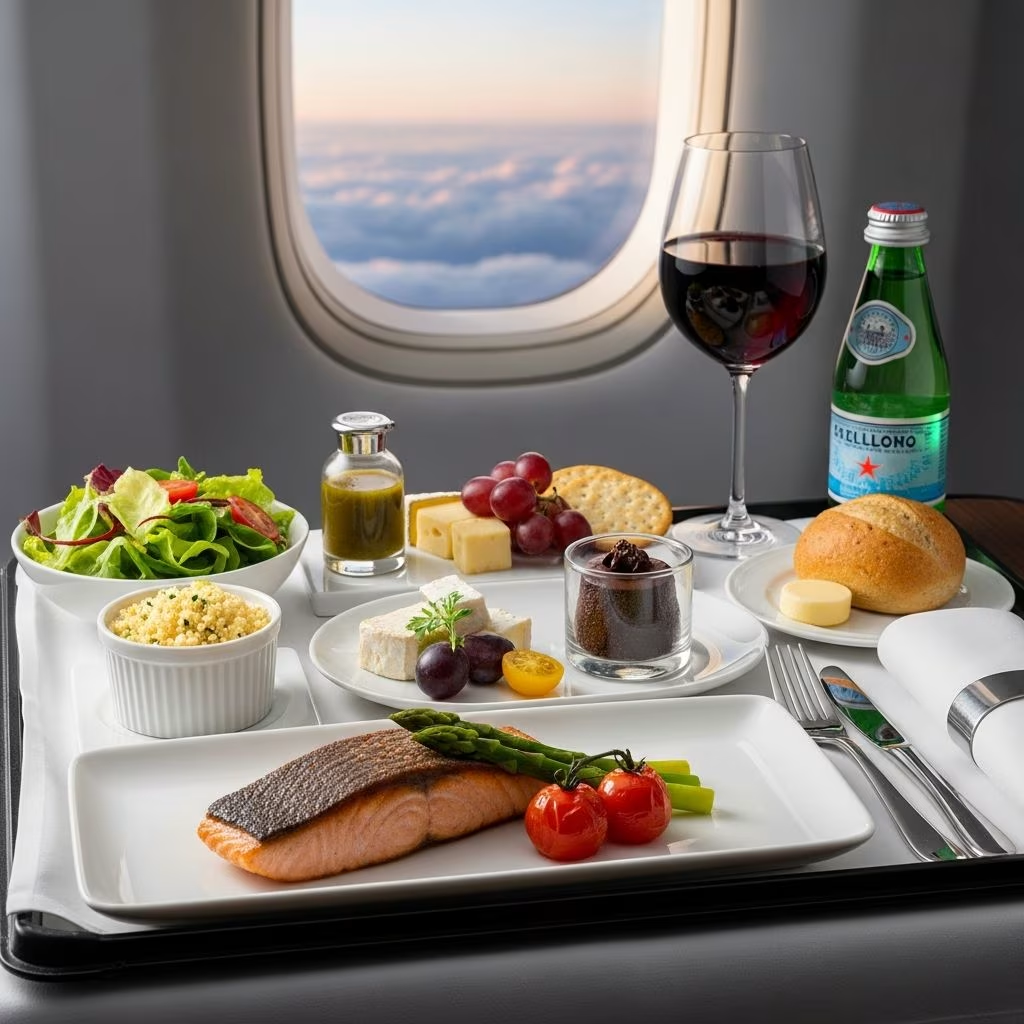
First-class harkens to golden age glamour—think Pan Am’s eight-course Boeing 747 feasts with linen and silver.
Luxurious, reheats beautifully. Serves 2.
Historical nod: 1956 Maxim’s collaboration elevated frozen seafood.
Tender, sauce-heavy for flavor pop.
Grill 6-oz filets rare; whip béarnaise (tarragon, shallots, extra salt). Truffle mashed potatoes side. Reheat gently to avoid toughness.
Modern airlines offer 25%+ veggie options. Try Indian paneer tikka masala: marinate paneer in yogurt/30% extra garam masala, grill, sauce with tomatoes/onions. Quinoa salad for light meals—add feta, olives, lemon zest for zing. Asian bentos: teriyaki salmon, edamame, sticky rice—umami overload essential.
Airlines select wines for altitude: fruitier reds (Pinot Noir), crisp whites (Sauvignon Blanc). Bubbles flatten, so sparkling wines with high acidity shine. Tomato juice reigns supreme—its umami thrives aloft. Home hack: Chill reds, aerate whites 20 min pre-flight sim.
Heightened umami from seasonings compensates for dulled senses; isolation focuses taste.
Yes, convection mimics even galley heating; avoid microwaves for proteins to prevent rubberiness.
1919 London-Paris cold boxes; hot meals from 1928.
Cumin, chili, ginger—bold profiles cut through pressure effects.
Freeze in trays up to 3 months; thaw overnight for reheating.
Host a themed night: Dim lights, engine sounds via app, sequential tray service. Scale for 20 guests like LSG’s output. Track reactions—most love the amplified flavors.
