

 Travel Essentials
 Travel Essentials

Learn about current airport security delays, their causes, and practical tips for managing TSA wait times during peak travel periods.
 Travel Essentials
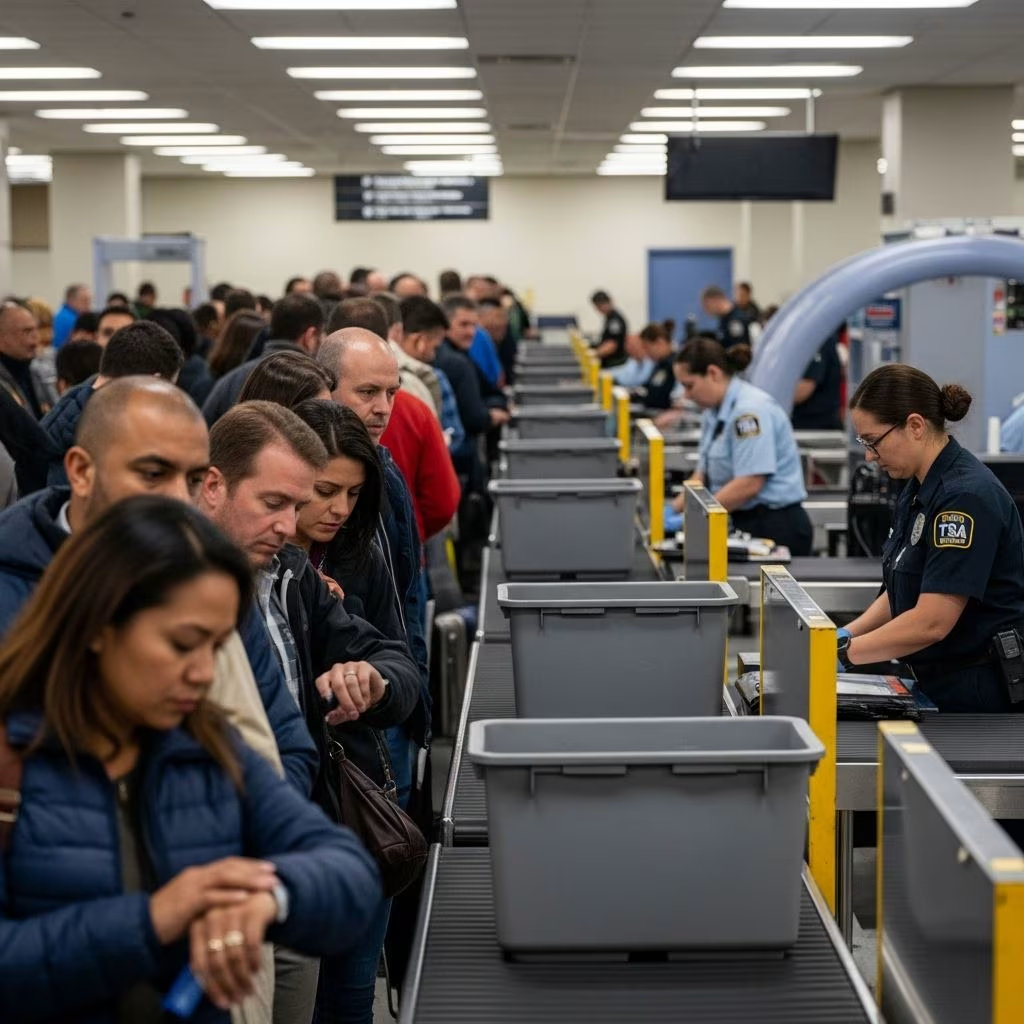
Navigating modern air travel presents numerous challenges, and perhaps none more frustrating than unpredictable security checkpoint waits. Across the nation’s busiest airports, travelers are encountering unprecedented delays that can significantly impact travel plans and create unnecessary stress. Understanding the factors contributing to these bottlenecks and learning practical strategies can help passengers manage their airport experience more effectively.
Transportation security has become increasingly complex in recent years, with airports nationwide reporting extended wait times during peak travel periods. The situation varies dramatically between airports and even between different times of the same day, making it challenging for travelers to predict exactly how much time they should allocate for security screening. Some major metropolitan airports have witnessed wait times exceeding four hours, while regional airports often maintain more manageable queues.
The unpredictability stems from multiple factors working in concert. Staffing levels fluctuate based on various operational considerations, passenger volume varies throughout the day and week, and individual checkpoint efficiency can differ significantly. This combination creates a dynamic environment where wait times are rarely consistent, complicating travel planning for both business and leisure passengers.
One of the primary drivers of checkpoint congestion relates to personnel availability. When screening staff members are unable or unavailable to work, checkpoint throughput decreases proportionally. This creates a cascading effect where remaining employees must process more passengers, potentially leading to slower screening and longer lines.
Staffing shortages can result from various circumstances, including illness, operational constraints, or personnel relocations. Some airports have experienced call-out rates reaching double digits, fundamentally altering their ability to process passenger volume efficiently.
Peak travel periods—including holidays, summer months, and special events—naturally increase checkpoint congestion. Major airports serving as transportation hubs experience particularly severe congestion when multiple flights depart within compressed timeframes. The concentration of passengers arriving within narrow windows overwhelms screening infrastructure regardless of staffing levels.
Not all checkpoints operate with identical equipment and technological capabilities. Some lanes feature advanced screening technology that processes passengers faster, while others rely on more traditional methods. The distribution of technology across checkpoint lanes, combined with maintenance requirements, affects overall screening capacity.
Standard aviation guidance recommends arriving two hours before domestic flights and three hours before international departures. However, current conditions warrant reassessing these benchmarks. Many airports now suggest allowing three hours even for domestic flights during peak periods. Consider arriving even earlier during high-travel seasons or when flying from particularly busy hubs.
Several expedited screening options can significantly reduce checkpoint wait times:
These programs vary in cost, eligibility requirements, and processing times, but all provide meaningful reductions in security delays for qualifying travelers.
Most major airports publish live checkpoint wait times on their official websites. This information, typically updated every 15 minutes, provides valuable insights for planning your airport arrival time. Mobile applications also offer this data in convenient formats.
However, travelers should recognize that published wait times may occasionally lag behind actual conditions, particularly during periods of rapid change. Use this information as guidance rather than absolute certainty when planning your security screening timeline.
Early morning departures typically experience lighter screening volumes than afternoon or evening flights. If flexibility exists in booking flight times, selecting early departures often translates to shorter security waits. Similarly, mid-week travel generally experiences less congestion than weekend flights.
Streamline the screening process by wearing easily removable shoes and minimal jewelry. Avoid clothing with excessive metal components that might trigger additional screening. Place liquids in accessible locations within your carry-on bag rather than buried beneath other items.
Have identification and boarding passes immediately accessible rather than buried in bags or pockets. This simple preparation prevents delays while you search for necessary documents at the checkpoint.
Follow the 3.4-ounce container rule for liquids and keep these items in a clear, quart-sized bag for rapid inspection. Remove larger electronics such as laptops and tablets before reaching the screening table, as these often require separate inspection.
| Checkpoint Type | Requirements | Typical Wait Time | Best For |
|---|---|---|---|
| Standard Security | Valid ID and boarding pass | Varies widely | Occasional travelers |
| TSA PreCheck Lane | TSA PreCheck approval | Usually 5-10 minutes | Frequent domestic travelers |
| Global Entry Lane | Global Entry approval | Usually 5-15 minutes | Frequent international travelers |
| Priority/Elite Lane | Airline elite status | Usually 10-20 minutes | Frequent airline customers |
Wait time experiences differ substantially across the nation’s airport network. Major hubs typically encounter longer absolute wait times due to higher passenger volumes, but secondary airports may experience proportionally worse congestion during peak periods. Smaller airports with limited checkpoint infrastructure can become bottlenecked more easily when demand spikes.
Airports in major metropolitan areas serving as airline connection points often maintain multiple checkpoints and sophisticated queue management systems. These facilities can handle large passenger volumes more effectively than smaller regional airports with limited infrastructure.
Various applications provide checkpoint wait time information, flight status updates, and airport navigation assistance. These tools consolidate information from multiple airports, allowing travelers to compare wait times across different security lanes within the same airport or across different airports.
Most major airports maintain dedicated websites displaying real-time security information. Some provide additional resources such as virtual maps showing checkpoint locations, estimated walking times between terminals, and facility information.
Travelers departing for international destinations should add additional time for potentially more thorough screening procedures. The three-hour pre-departure window becomes especially important for international flights, with some travelers finding four hours necessary at particularly busy airports.
Families with young children may benefit from expedited programs or early arrival strategies. Passengers with mobility considerations or special needs can request assistance at checkpoints, though this typically requires additional time for customized screening.
Travelers with tight connections should prioritize expedited security programs and consider arriving at their origin airport substantially earlier than standard recommendations. Missing connecting flights due to security delays creates cascading problems for subsequent travel.
Arrive at least two hours before domestic flights and three hours before international departures under normal conditions. During peak travel periods, consider adding additional buffer time, potentially reaching three to four hours for domestic and four-plus hours for international flights.
Most airports update published wait times every 15 minutes, though some update more frequently. Remember that these represent estimates based on historical data and may not perfectly reflect real-time conditions.
For frequent travelers, expedited programs typically pay for themselves through time savings within one to two years. Occasional travelers may find the investment less valuable unless they also travel internationally or qualify for complimentary enrollment through airline elite status.
While general patterns exist (weekday mornings typically experience lighter traffic), predicting exact wait times remains challenging. Use published estimates as planning guidance, but build in additional buffer time for important flights.
Contact your airline immediately if you’re concerned about missing your flight. Airlines sometimes hold flights for connecting passengers or can rebook you on alternative flights. Security personnel may also direct passengers to less congested checkpoint lanes if available.
Airport security remains an evolving landscape shaped by passenger volume, staffing availability, technological advancement, and operational procedures. Successful air travel requires staying informed about current conditions, preparing thoroughly before arrival, and building adequate time buffers into travel plans.
By understanding the factors contributing to checkpoint congestion and implementing practical strategies, travelers can significantly improve their airport experience. Whether flying domestically or internationally, investing in preparation and planning transforms security screening from a source of stress into a manageable component of air travel.
The airport environment will continue changing, but principles of early arrival, expedited program enrollment, and strategic planning remain effective approaches for navigating security checkpoints successfully.
